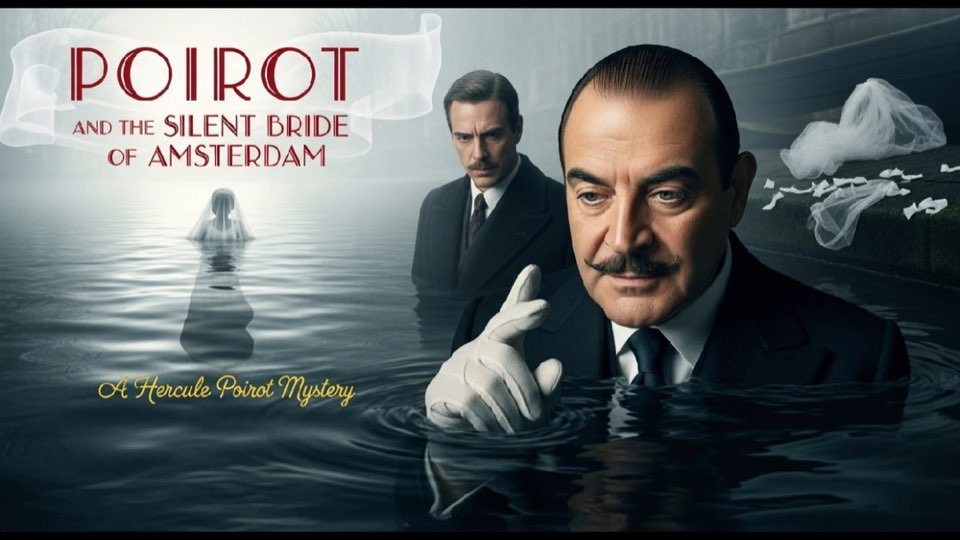
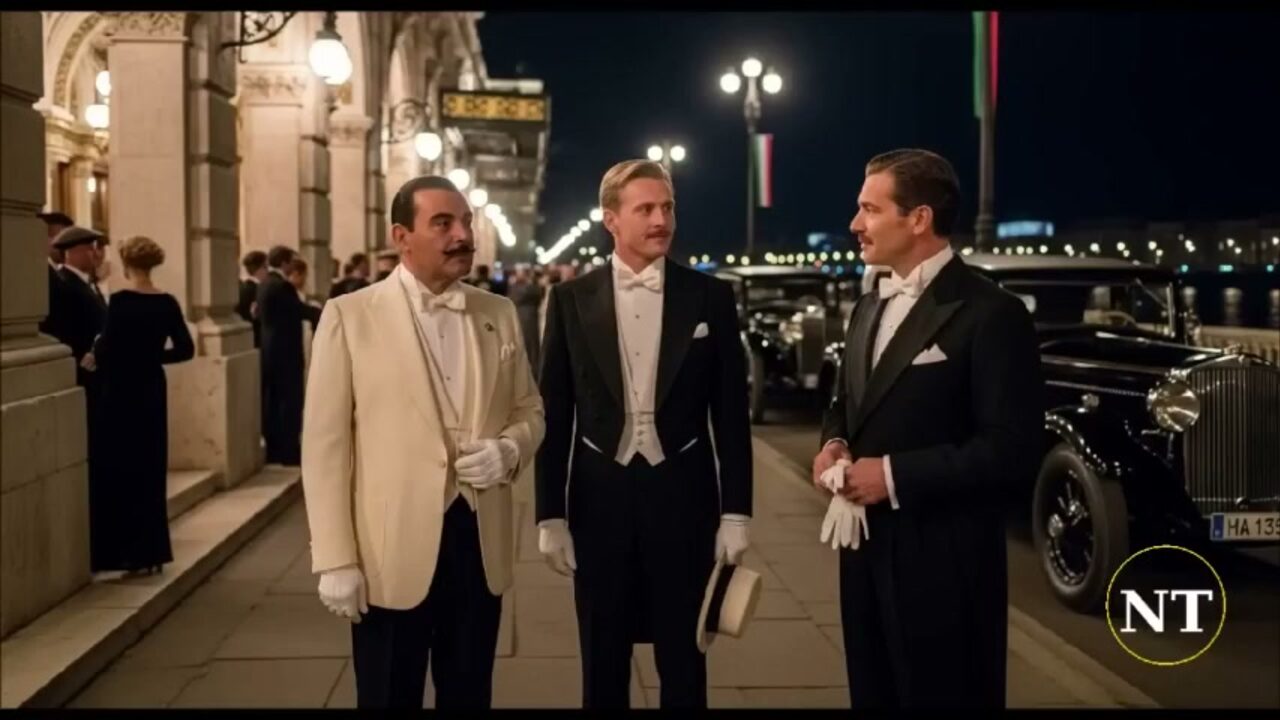
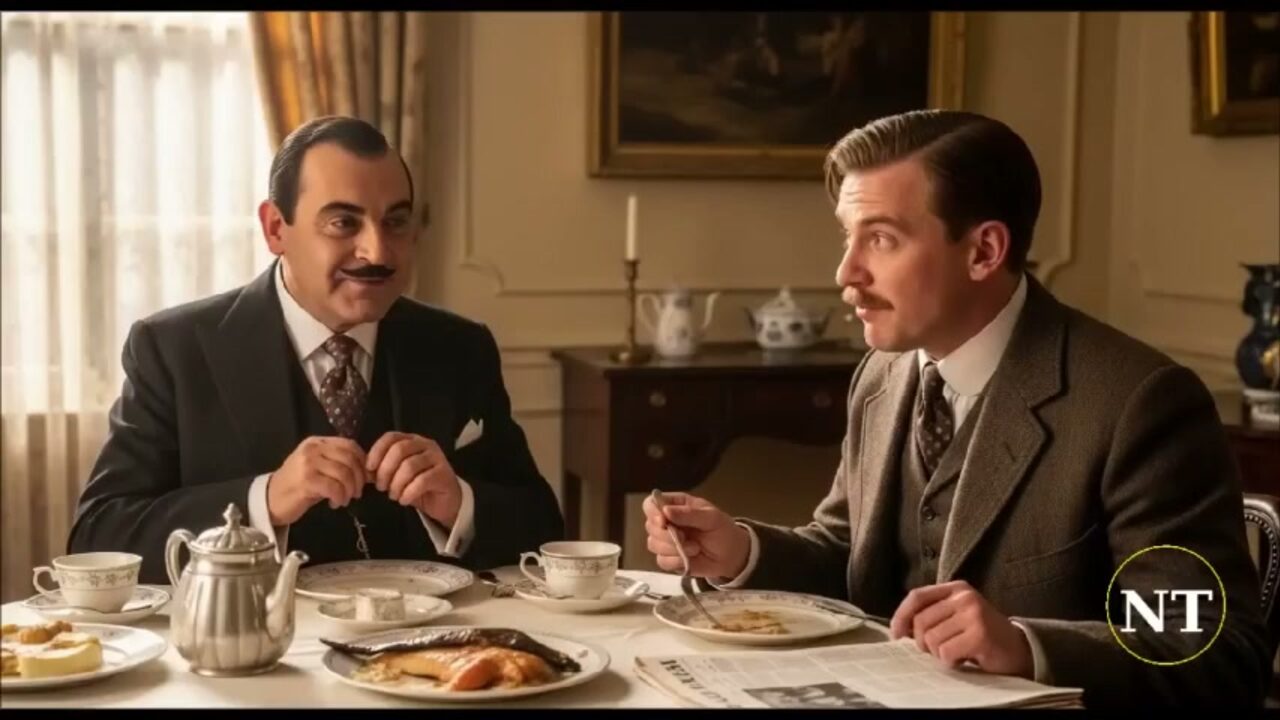
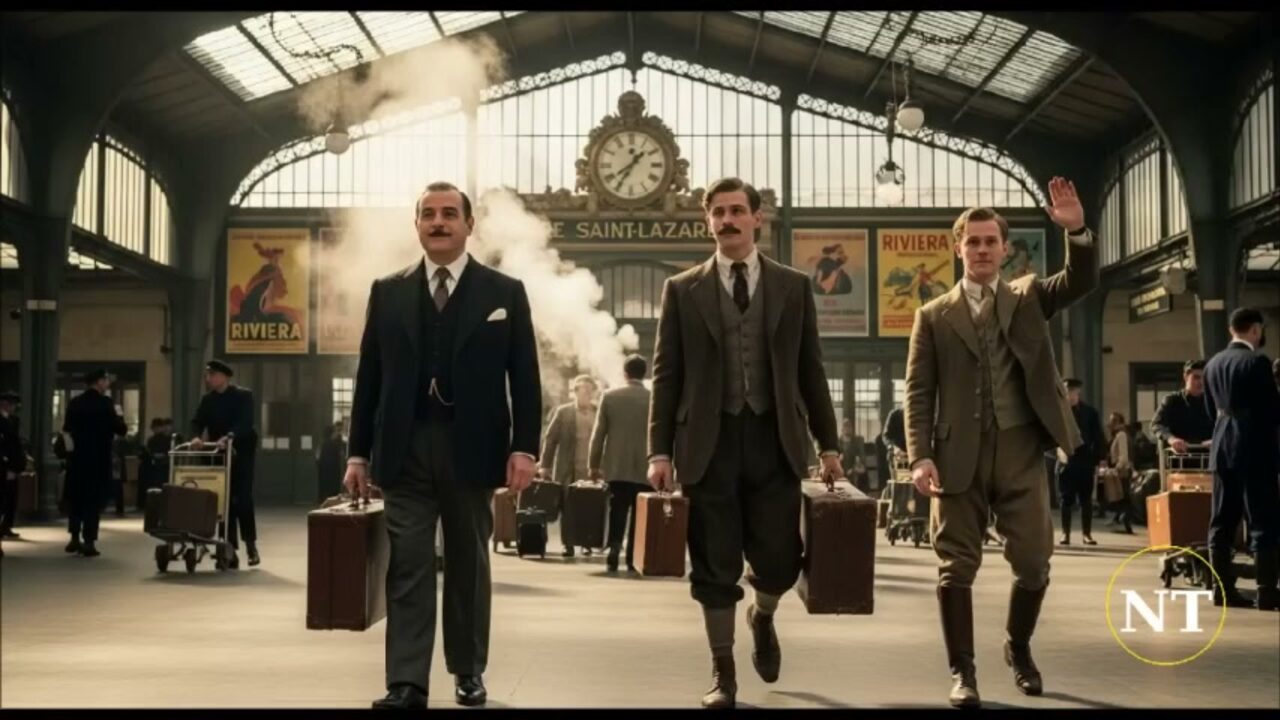
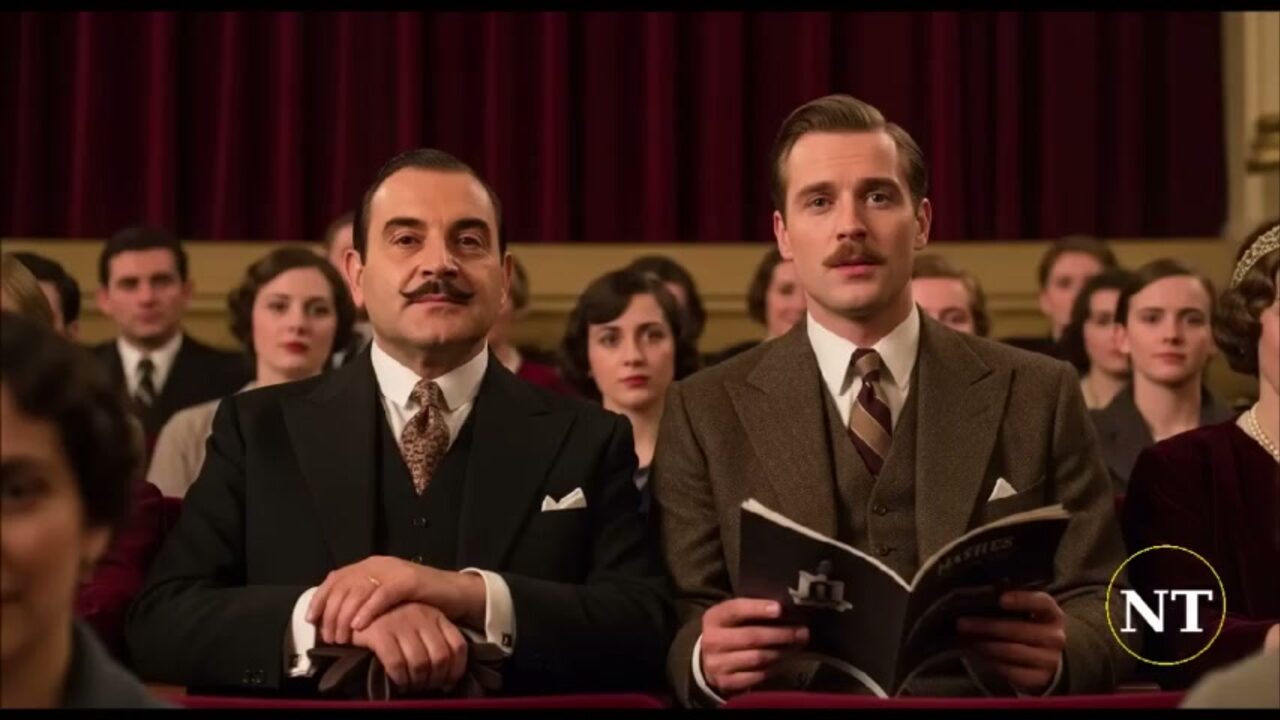
New Orleans, the spring of nineteen thirty-three. There are certain cities which, even before one has committed a crime in them, seem already to know the secret. Arthur and the Belgian Detective have come for a rest.
Mexico City, the summer of nineteen twenty-eight. A banquet is given for the man who is about to become President — a soldier who won a civil war, lost an arm doing it, and has spent the years since collecting enemies with the same efficiency he once collected territory.
A REIMAGINED EDITION — this case first appeared in the second volume of our collected mysteries. We have gone back through it, corrected it, and recorded it properly, so it can be heard as it was always meant to be heard.
Los Angeles after midnight. The white buildings turn grey, the palm trees turn black, and the city finally stops pretending. Veronica Lakewood likes it better that way. At least now it is being honest, she says.
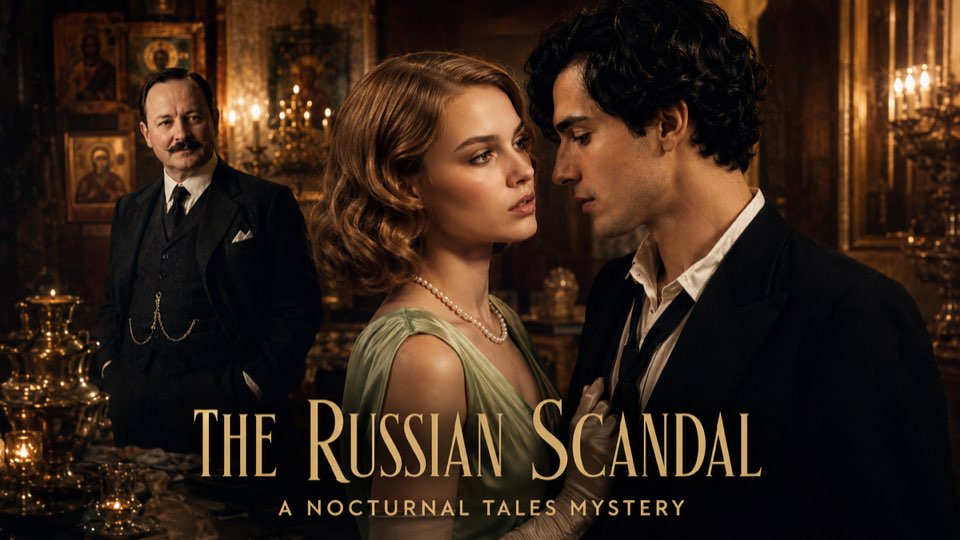
Kenya, 1938. The Muthaiga Club, the Ngong road, and a set of transplanted English aristocrats who travelled six thousand miles in order to behave in ways they could never have got away with at home.
London in November. A fog that makes even respectable streets look faintly conspiratorial. And an opera house where one box has stayed locked for twenty-four years.
There are certain adventures which, looking back, seem to have announced themselves from the beginning. The weather is too fine. The sea is too calm. And the hotel proprietor smiles a little too readily when he assures you that the little motor launch is perfectly reliable.
Moscow, March 1933. The snow is grey with coal smoke, foreign engineers are watched as a matter of routine, and a turbine that simply broke down is no longer permitted to have simply broken down.
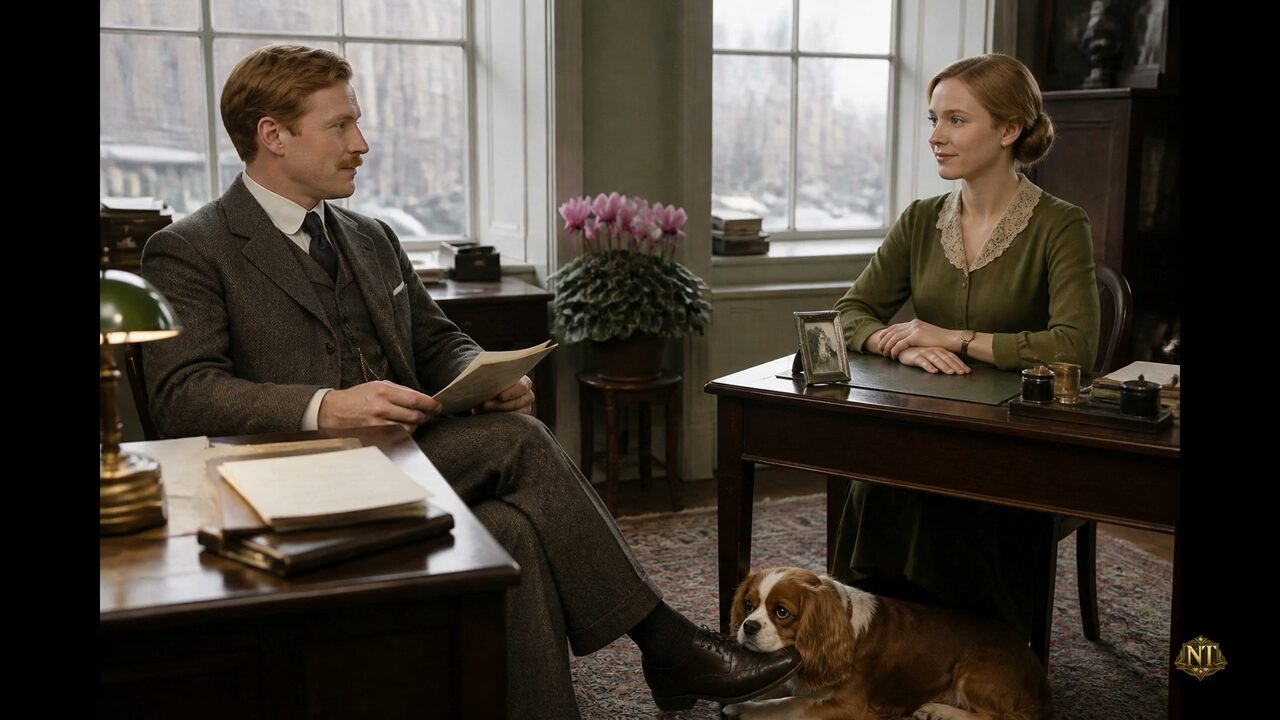
Saint Patrick's Day, Dublin, 1929. Captain Arthur has agreed to perform one simple act of kindness: to walk Lady Eleanor's spaniel down to the dog show at the RDS with a green ribbon on his collar.
A REIMAGINED EDITION — one of our earliest cases, completely rewritten, expanded and newly recorded. If you heard the original, this is a different telling: longer, richer, and with far more of the mountain in it.
There are marriages which fail because husband and wife stop loving one another. And there are marriages which become infinitely more dangerous because they insist on loving in the wrong way.
Dublin, and the agency's newest client arrives carrying a flat leather dispatch case and a reputation he is about to lose. Captain Corrigan was one of the men who prepared the great westward Atlantic flight from Baldonnel aerodrome — a modest figure at the edge of photographs full of more famous men.
São Paulo, February 1929. Carnival has seized the city by the collar: drums and trumpets in the avenues, coffee fortunes discussed before breakfast, a woman dressed as Cleopatra scattering flowers from the roof of a motorcar.
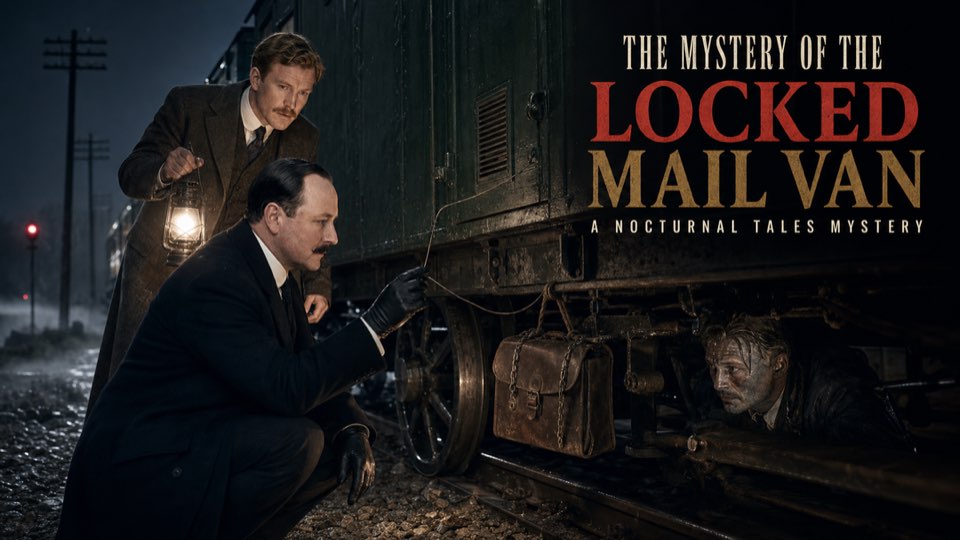
In the spring of 1924, Poirot and Hastings board the Andalucía Express for an overnight journey from Madrid towards Seville. Near the rear of the train, two armed postal clerks guard a locked mail van containing a leather case said to be worth nearly a million pesetas.
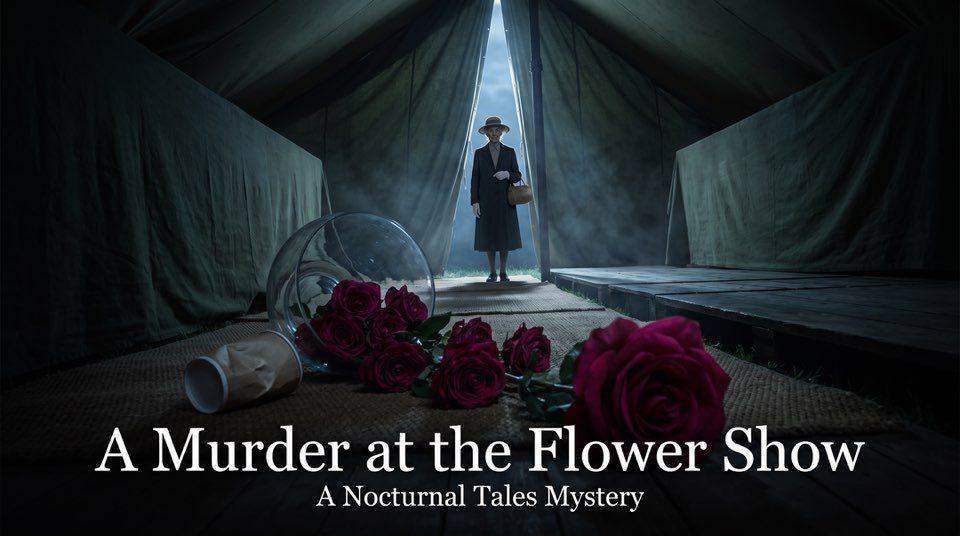
The annual horticultural exhibition is under way in the grounds of the great house, the marquee smells of cut grass and rivalry, and a Major's prize roses have quite obviously been bought rather than grown.
Some woods turn sinister only after something dreadful has happened in them. Hagley Wood was never one of those — it had an air of knowing too much from the very first. " Then boys climbing an old hollow elm put a hand inside the trunk, and bring out a skull.
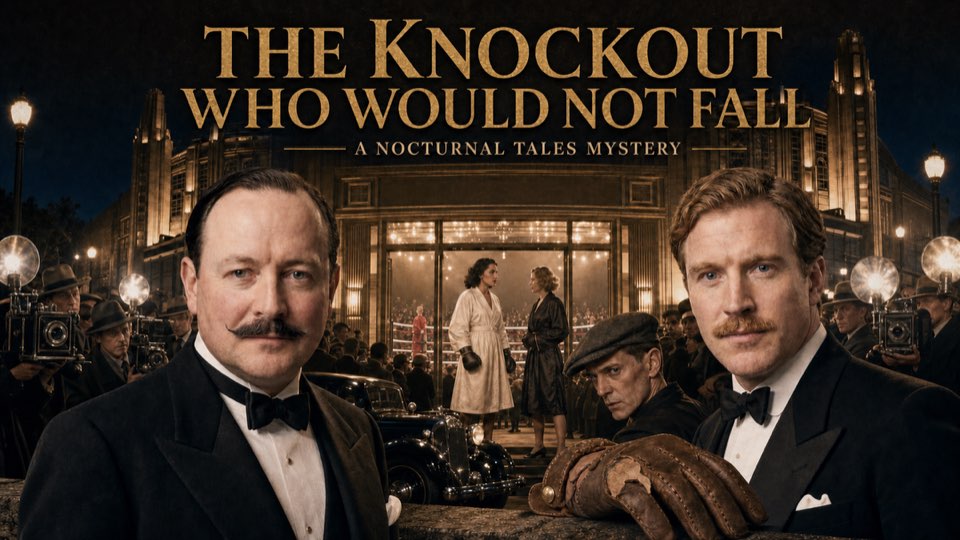
England, the summer of 1934, and the whole country has discovered a subject it knows nothing whatever about and discusses with enormous enthusiasm: women's boxing. Gloria "The Knockout" Moretti and Ruthless Ruth Rowan trade insults for the newsreel cameras.
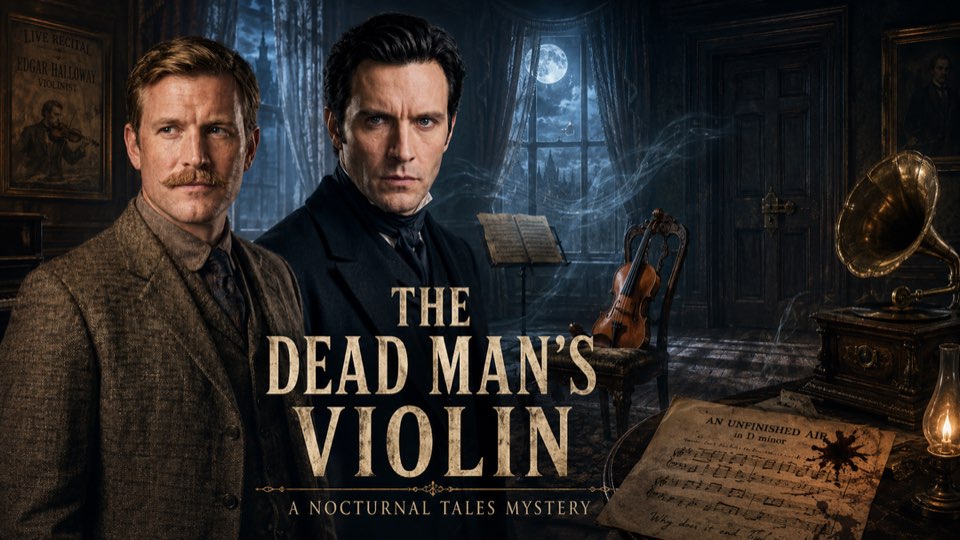
London, November 1898. A black-edged note arrives at Baker Street before breakfast: "My brother has been found dead. Last night I heard him playing in a locked and empty room.
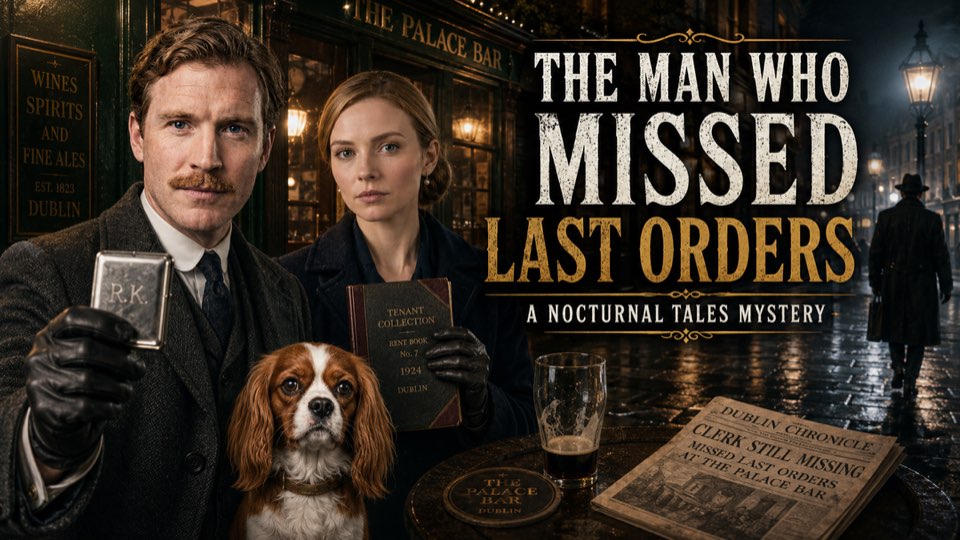
K. He had gone out the night before for one drink only — which became five — at the Long Hall, and somewhere in that companionable haze he agreed to help a mild, wire-spectacled young man named Eamon.
Athens, 1932. Three thousand people crowd outside the Criminal Court to watch four accused people fight for their lives: a beautiful young widow, her formidable mother, a frightened nephew and the servant nobody expects to be believed.
Dublin, and the young Arthur & Anne detective agency takes its second client: Mrs Vale, a handsome, iron-composed widow whose impractical nephew Julian has just announced his engagement to a Hungarian countess.
Dublin, and a decision that arrives at breakfast wearing the wholly unreasonable appearance of having been obvious all along: Captain Arthur will not go back to London. He will stay — and open a detective agency of his own.
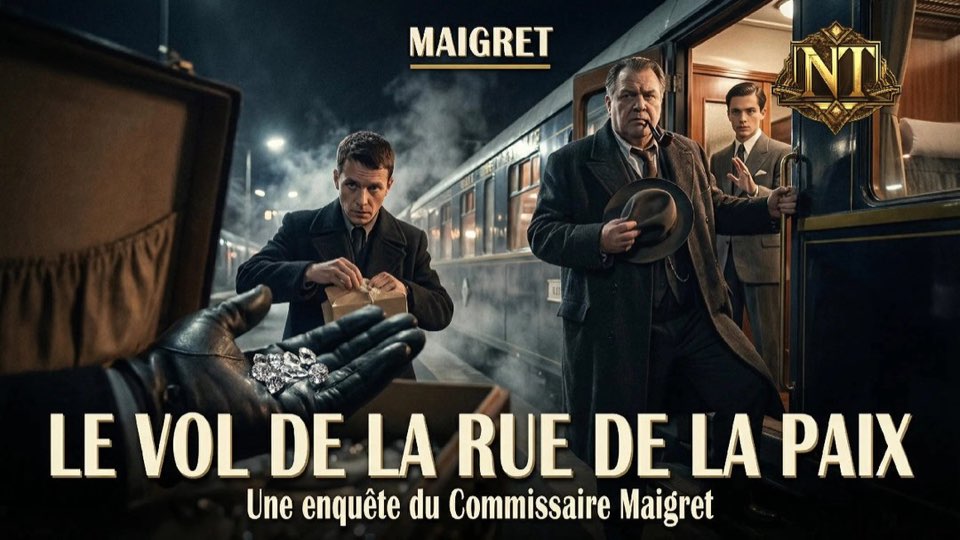
Rue de la Paix brille comme un mensonge poli : vitrines impeccables, lettres dorées, velours noir… et l’illusion que le crime reste dehors. Chez Besson & Fils, le coffre a été ouvert proprement.
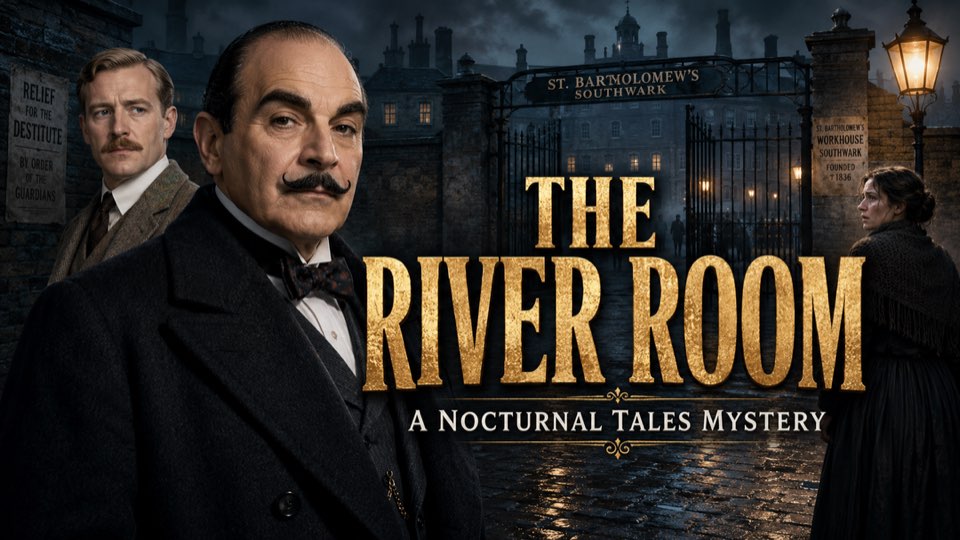
On a fog-bound November evening, Clara Merton comes to Poirot with a death no one considers unusual. Her elderly father has died in St. Bartholomew’s Union Workhouse, officially from heart failure.
Calcutta, in the breathless heat of the hot season: the Belgian Detective and his loyal companion have come east at the invitation of Sir Lionel, only to be handed a case no English court was built to settle — a man has come back from the dead.
New Orleans does not sleep — it sweats. When the newspapers announce that Mrs. Alma Lafitte has buried a second wealthy husband before the age of thirty, the whole city whispers the word it dares not print: murderess.
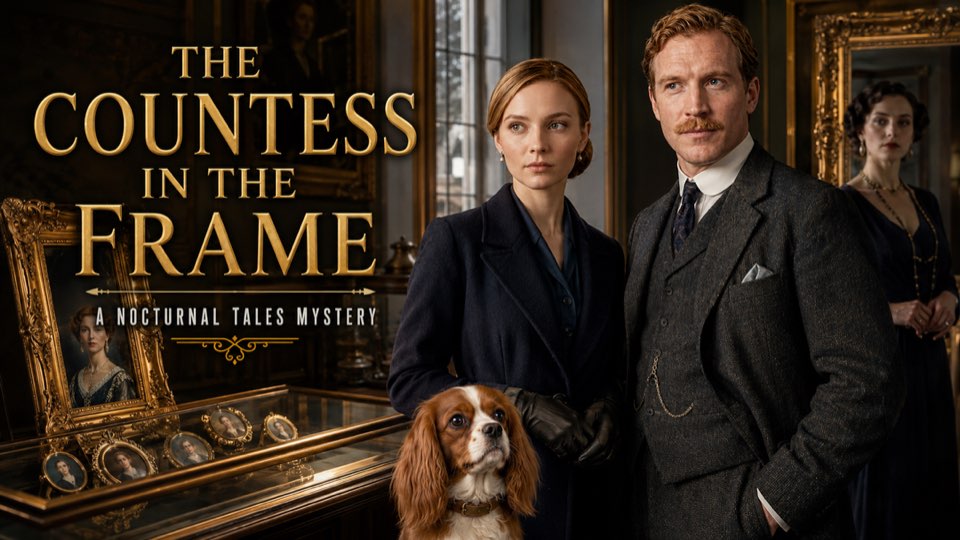
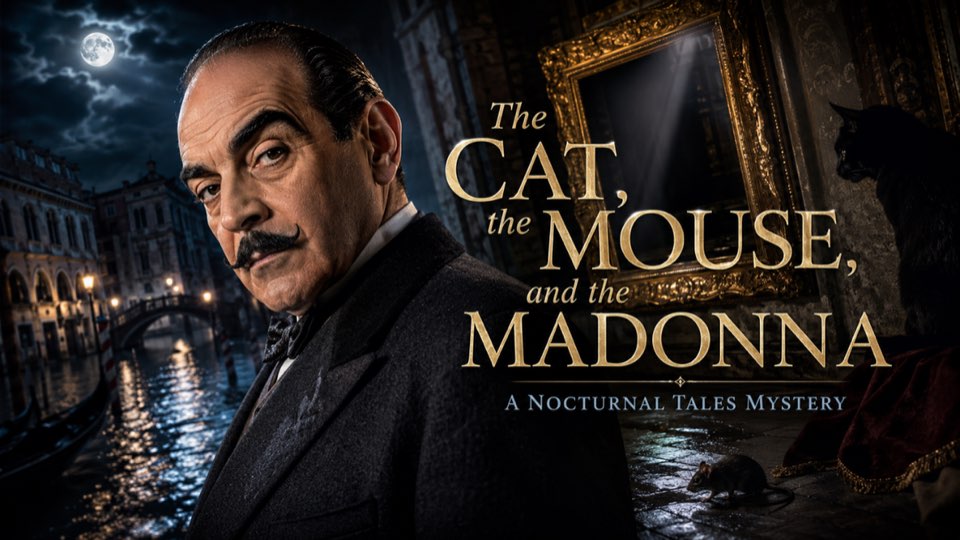
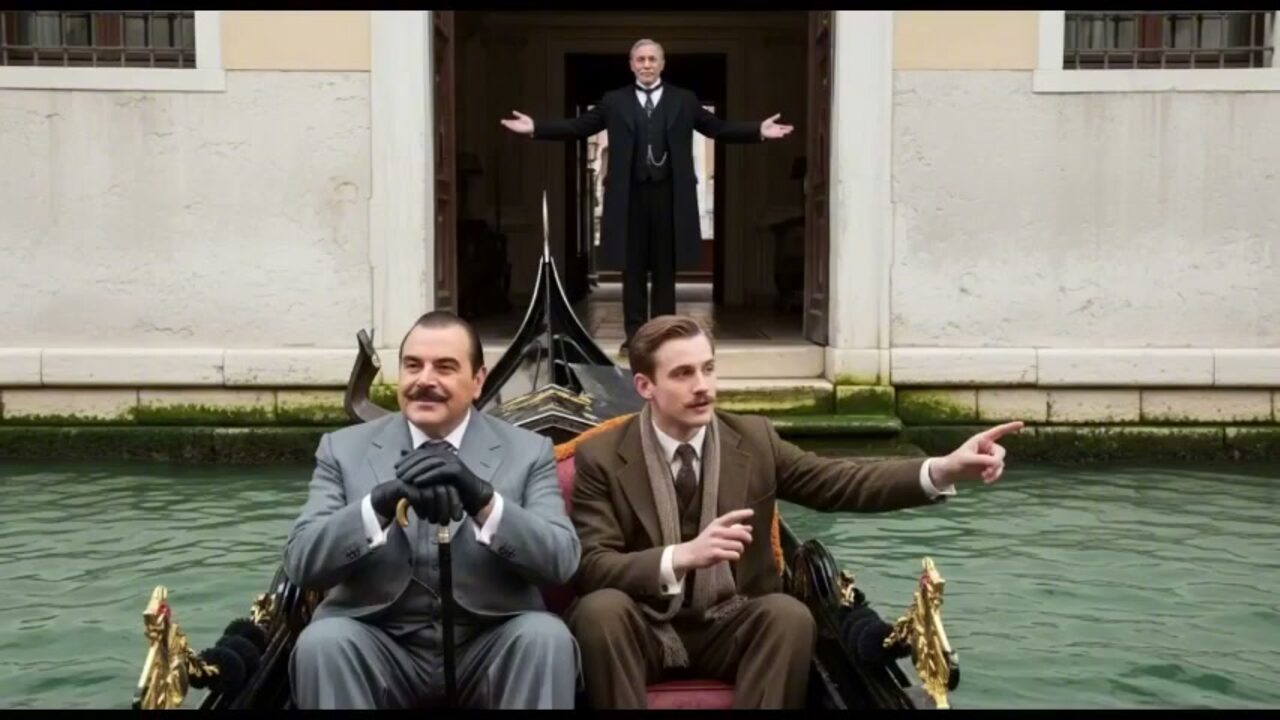
Venice: a city of bridges, bells, damp palaces, and secrets that travel more easily by gondola than by foot. When the Belgian Detective and Captain Hastings are summoned to the Palazzo Varano, they find the formidable Contessa Bianca Varano in a state of magnificent outrage.
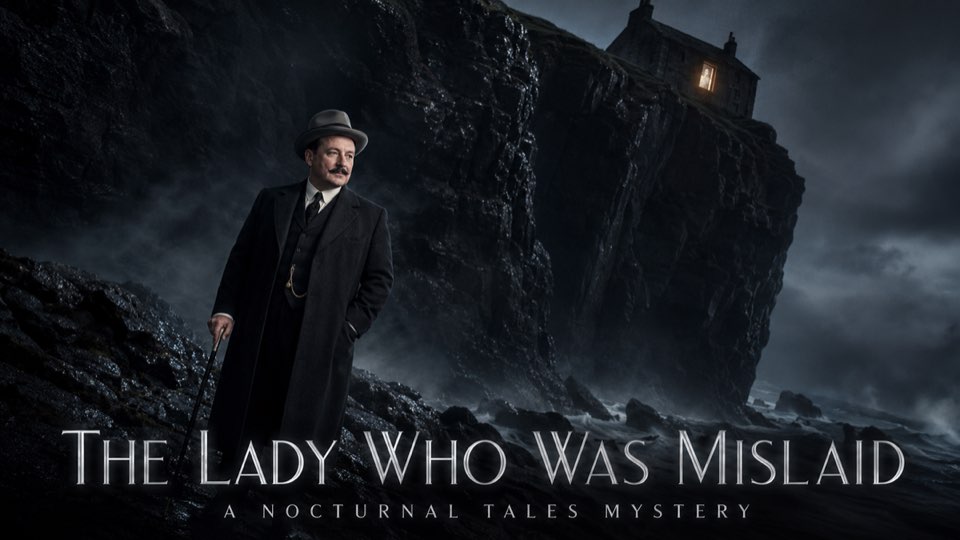
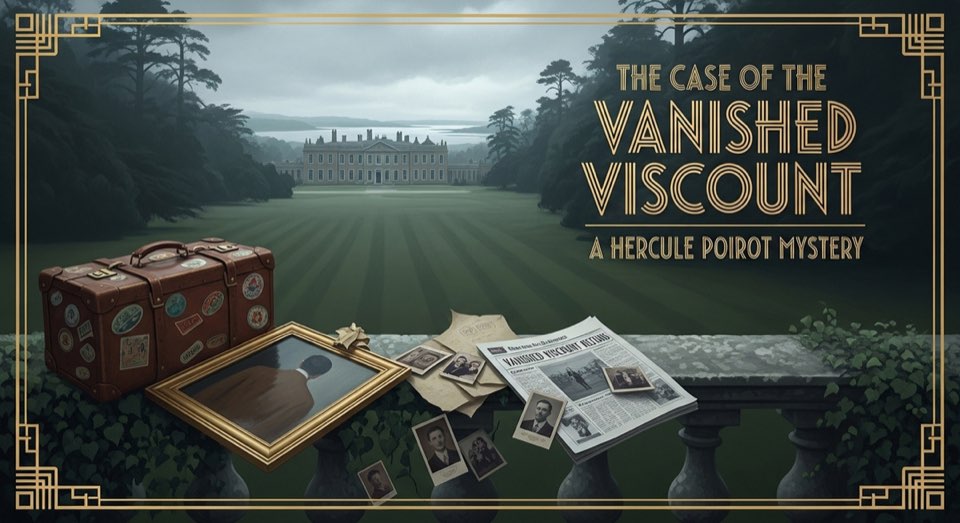
" But the more the detective and his loyal companion look, the less it resembles a runaway wife and the more it resembles something colder: no boots, no maid, no luggage, and yet a journey "by arrangement" to somewhere far away.
Dublin, between the wars: Captain Hastings has come to Ireland to meet the family of Anne Foster, the woman he admires — and quickly decides that being introduced to a houseful of O'Riordans is more perilous than any battlefield.
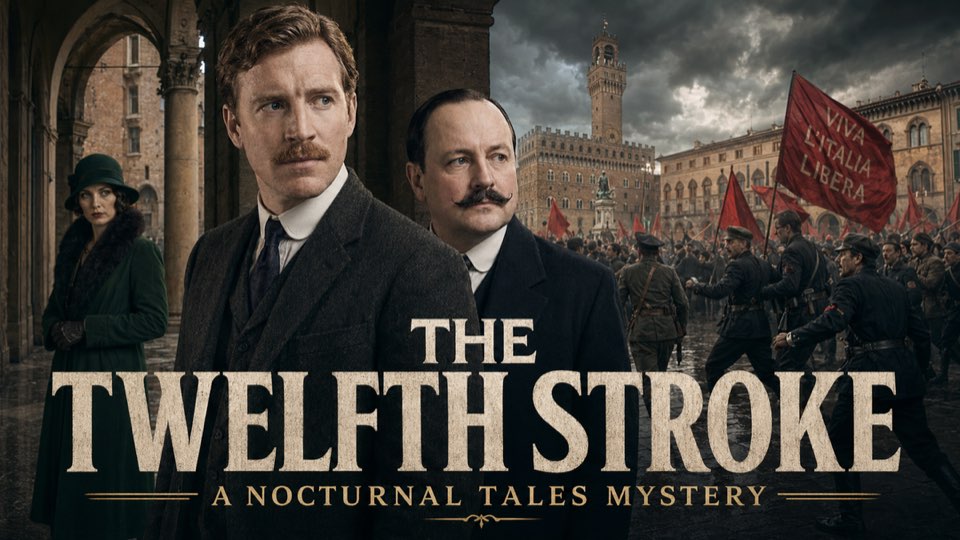
Cairo, spring 1937: jasmine, dust, and intrigue hang over a city where the young men in the cafés no longer lower their voices when the King's name is spoken.
In a white house in Palermo behind iron gates and jacaranda trees, two thieves posing as a married French couple accept a dinner invitation from a wealthy Argentine widow who wears at her throat a necklace of diamonds and sapphires said to have belonged to a Russian grand duchess — they have come to steal it, but before the fish course is cleared the necklace vanishes from the hostess's throat without a hand being raised and a note appears on a silver tray, turning the evening from a planned robbery into a locked-room puzzle involving a bitter ex-lover from one thief's past, a lovesick colonel manipulated by charm, a desperate daughter already stealing from her own mother, and a midnight trail through the backstreets of Buenos Aires to a shuttered restaurant above a gaming house; The Alvarado Necklace is an original Golden Age–style mystery about thieves forced to become detectives by another thief's bad manners — and the unsettling discovery that solving a crime can be as dangerous a habit as committing one.
A stout woman in a plain black dress writes to the Belgian Detective: she has seen a murder before it is committed — the man will die before midnight on Friday, the place is called Greycombe House, and there will be a clock stopped at eleven; at the heavy stone mansion in St John's Wood they find a rich, gouty old man purple with fury that the clairvoyant has dared to return, a pale young wife with restless hands, a nervous nephew and heir, a dark-haired ward whose beauty is spoiled by strain, and a composed doctor who says too little; last week at a séance in this house Madame Celestine Lorrimer went into a trance and said "the clock waits, eleven waits, the hand is on the throat" — then the lights went out and someone screamed; now the clock in the hall has stopped, the master lies dead beneath it, and the hands have been set to eleven, but the clock was meant to strike eleven, and those are not the same thing at all; inspired by the extraordinary case of Helen Duncan, the Scottish medium tried under the Witchcraft Act of 1735 at the Old Bailey (1944), while remaining entirely fictional, The Clairvoyant's Hour is an original Golden Age–style mystery about prophecy, fraud, and the discovery that the most dangerous person in the room is not the woman who sees the future but the man who heard her too well and used the vision as a stage direction for murder.
Dublin, November 1925: a frightened letter summons the Belgian Detective and his loyal companion across the Irish Sea to Dublin Castle, where a former official of the Office of Arms believes that the Star — part of the ceremonial regalia stolen in 1907 and never recovered — is still hidden somewhere in Ireland; at Bedford Tower they find a man lying dead in a dusty chamber with a scrap of faded blue silk ribbon in his hand and a star scratched into the dust beside him; around the body stand a widow whose note disappeared from her own handbag, a retired colonel who received an invitation to watch a disgrace, an archivist whose dead mother once stole from a thief to protect a nation's honour, and a frightened old official who has carried his silence for nearly two decades; a poisoned cigarette, a hollow walking stick, a door painted to match the wall, letters hidden behind a saint, and a jewel that has been waiting eighteen years for someone brave enough or vain enough to bring it home; inspired by the unsolved theft of the Irish Crown Jewels from Dublin Castle (1907) while remaining entirely fictional, The Star in the Castle is an original Golden Age–style mystery about theft, loyalty, and the discovery that some treasures are more dangerous to find than to lose.
The storm has not lifted, the guests have not moved, and the Belgian Detective is ready to explain precisely how a dinner became a death; in Part One a wealthy collector was poisoned at his own table among the silver and orchids, a spoon was exchanged, a glove was found behind the conservatory ferns, and in his breast pocket lay a note promising an announcement before midnight that never came; now, in Part Two, a missing glove becomes an accusation, the late Lady Clara's hidden letters emerge from the strong room with a final instruction — "look to the quiet one" — a loyal butler confesses to seventeen years of silent waiting, a disputed painting hides a network of stolen art and buried debts, and at the stroke of midnight a man believed dead steps forward from behind his disguise, bringing with him a debt that has waited seventeen years to be paid; the quiet figure in the hall, the gloved hand by the sideboard, the servant always seen from behind — never the face, until now; the conclusion of a two-part original Golden Age–style mystery about art, poison, and the discovery that a man who buries the living should not be surprised when the dead come back to collect.
London, March 1937: an engraved card summons the Belgian Detective and his loyal companion to Harrow Hall in Mayfair — the marble palace of a wealthy collector who made his fortune in the City and spent it on old masters, silver, and social consequence — where the card adds in a bold hand "a matter of some delicacy requires your attention, say nothing to the other guests"; around the glittering table sit a nervous rival collector humiliated once too often, a sharp-eyed journalist whose dead brother left behind a ledger of stolen-art transactions, a son drowning in debt and resentment, a fragile society woman whose hands will not stop shaking, and a cold-eyed business associate who does not flinch when his host falls face-first into the chocolate mousse; a spoon has been quietly exchanged, a smudge appears on the rim of a dish, a black kid glove is found behind the conservatory ferns with a dark stain across its fingertips, and in the dead man's breast pocket lies a note in his own hand reading "one of you has presumed too far upon my silence — that silence ends before midnight"; Part One of a two-part original Golden Age–style mystery about art, poison, and the discovery that a man who collects enemies as eagerly as he collects paintings will eventually acquire the one who kills him.
Pinehurst, North Carolina: pine trees, sand roads, golf courses, and a polished American resort where money attempts not to look vulgar — and where a young bride has just been found dead on a sandy track beyond the pines; Mrs.
London, 1930: a great retrospective is about to open at the Tate celebrating the forgotten women of English art — painters, enamellists, and craftswomen who were ignored, patronised, or exhibited under the shadow of husbands and brothers — and their champion Lady Honoria Haverleigh, patron and reformer, died last year in a private clinic with the certificate recording heart failure during sleep; but a young doctor noticed that on the night she died three old friends visited her room and a glass she had refused for two days was found empty by morning; as the Belgian Detective and his loyal companion enter galleries where pictures lean against walls like patients awaiting diagnosis, they find a missing blue Venetian bottle, notes hidden behind frames reading "Ask them what mercy costs" and "May forgave us," a gifted enameller whose work was signed by her husband, and three women who have carried a terrible secret for a year waiting for someone to ask the right question; inspired by the lives of Lady Christiana Herringham, May Hart Partridge, and the women artists of the Arts and Crafts movement while remaining entirely fictional, The Last Pre-Raphaelites is an original Golden Age–style mystery about art, attribution, and the discovery that the most difficult murder to judge is the one committed by people who loved the victim more than the law allows.
Paris, before Hastings, before Chicago, before any of it: a woman arrives at the Gare du Nord with one suitcase, three false names, and several thousand pounds' worth of stolen jewellery sewn beneath the lining — by the time she reaches the Hôtel Saint-James, Veronica Lakewood no longer exists and in her place stands Madame Valenne, widow, traveller, no forwarding address; in a hotel salon near the Parc Monceau she meets the people who will shape the next years of her life — Dolores Vega, a Cuban singer with a mended green dress and a lover too honest for Paris; Armand Séguret, a melancholy thief watching from the fireplace; and Emilio Vargas, dark, elegant, and dangerous, a man who looks at women as if they were jewels temporarily misplaced; when a midnight knock draws her into a world of stolen papers, opera boxes, hidden curtains, and a powerful woman whose missing hour holds the key to everything, what unfolds is the story Veronica never told anyone — the Paris chapter that made her who she became and the one she spent years trying to forget; Madame Valenne is an original Golden Age–style mystery about reinvention, survival, and the discovery that the most dangerous thing a woman on the run can do is stop running long enough to care about someone.
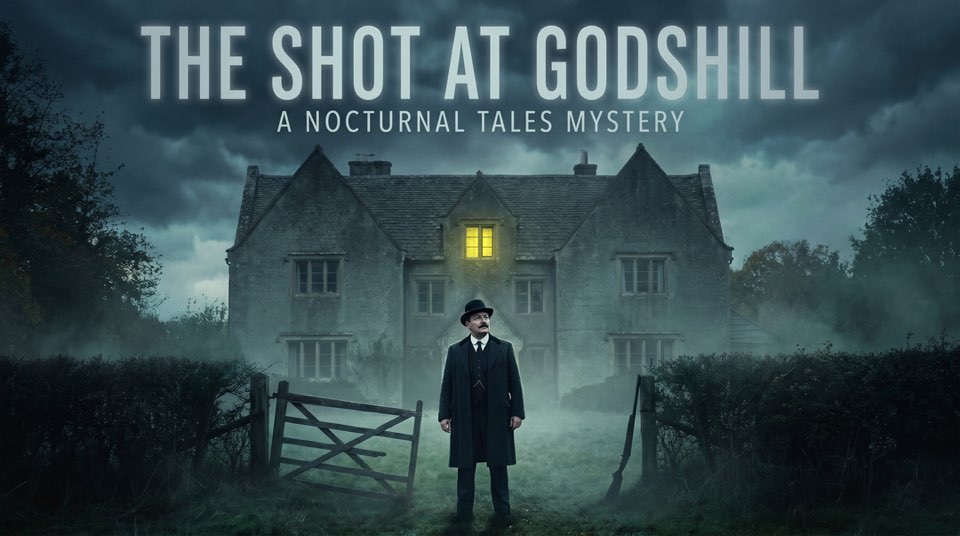
Isle of Wight, 1940: the Belgian Detective and his loyal companion answer a desperate letter from a frightened woman at a quiet farm near Godshill, where a blunt farmer dismisses his sister as hysterical, a pale young housekeeper is hated by everyone in the house for reasons no one will say aloud, and a latch in the gun room was opened in the night; when the farm's one honest man is shot dead in the lower meadow with a scrap of blue dress in his hand, the housekeeper's apron in the barn, and a fired shotgun in the neighbour's pigsty, the evidence points one way too quickly and too neatly — because the gun that killed him was not fired by a hand but fixed in a hedge, tied with a cord, and triggered by a basket filled with mushrooms no one had gathered, placed to lure a man who had seen too much; inspired by the real death of Frank Cave at Godshill (1940) while remaining entirely fictional, The Shot at Godshill is an original Golden Age–style mystery about staged evidence, farm rivalries, and the discovery that the most dangerous person on a quiet English farm is not the stranger but the man who has always been in charge.
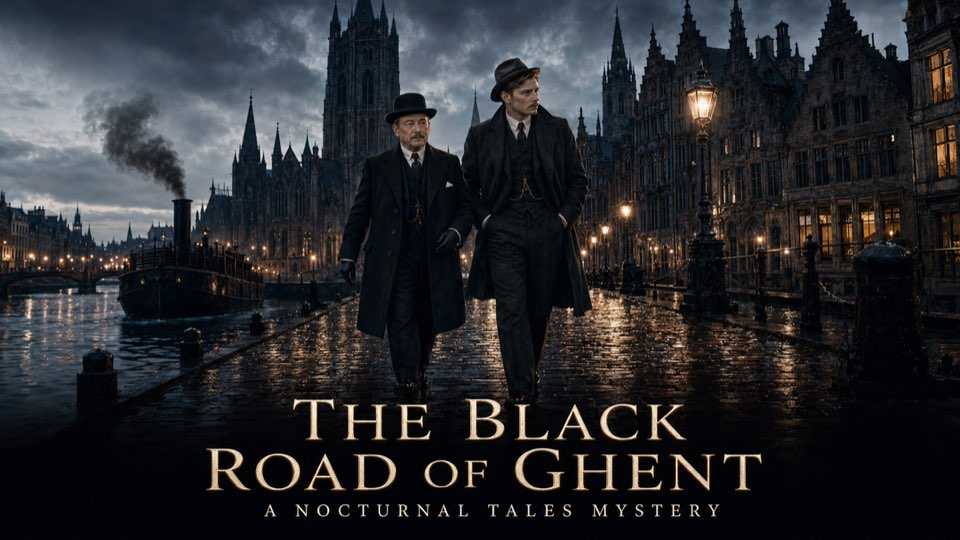
Ghent, 1919: the war is over but the killing has not stopped — in the countryside around Ghent and Bruges farms are raided, homes broken into, and people shot for resisting, and at each scene the police find the same mark, a scrap of black cloth cut into a triangle; when the Belgian Detective and his loyal companion arrive at the urgent request of an examining magistrate, they learn the gang's suspected leader has just escaped from custody with one guard dead, and then a body is found by the canal near Damme with papers identifying it as the very man who escaped the night before; as the detective moves through a wounded city of wet cobblestones, dark canals, and frightened witnesses, he follows brass buttons from coats that belong to no regiment, flour dust in a dead man's lining, a widow who kept wartime accounts she was never meant to survive, and a trusted police inspector whose loyalty hides something far worse than negligence; inspired by the real Van Hoe–Verstuyft Gang of East Flanders (1919–1924) while remaining entirely fictional, The Black Road of Ghent is an original Golden Age–style mystery about postwar chaos, wartime profiteering, and the discovery that the most dangerous man in a broken country is not the bandit in the field but the official who holds the keys.
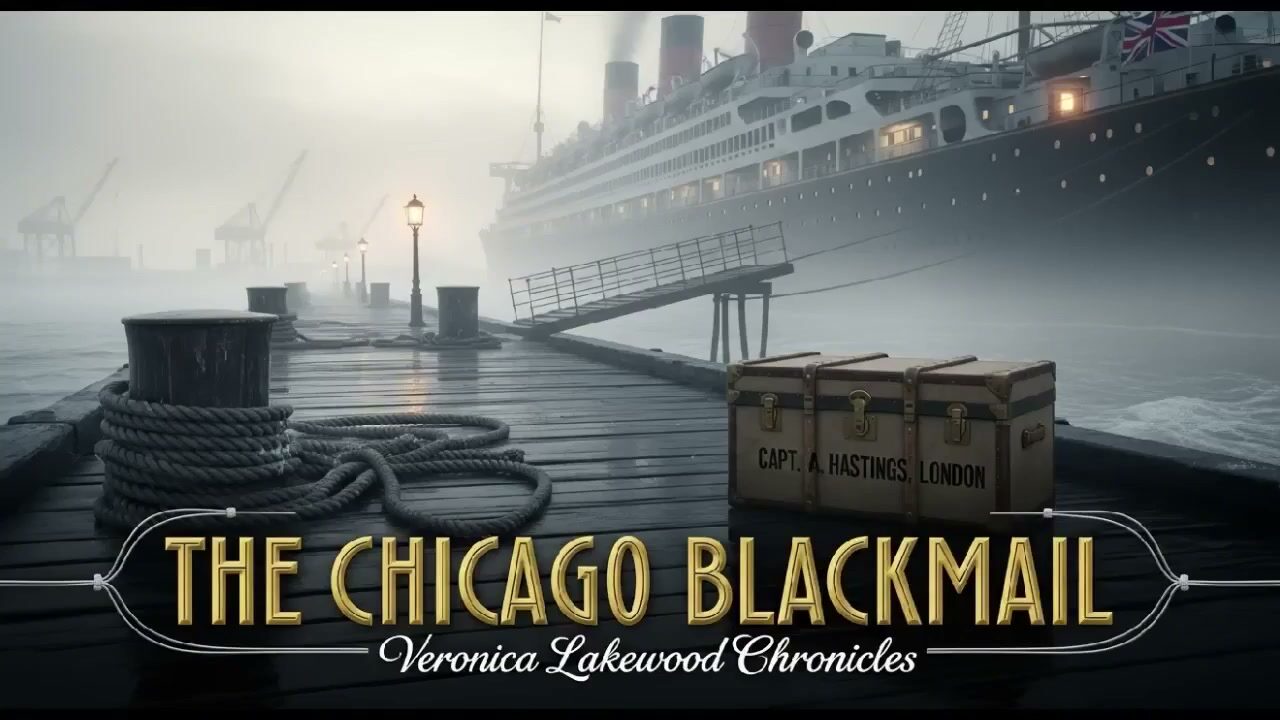
Chicago in the 1930s: a wealthy English widow walks into police headquarters and asks what it would cost to report a murder before it happened — her own; Mrs.
Nassau glitters like paradise but paradise has always contained a serpent — seven years ago a copper king was murdered in his bedroom at a great white villa, there was a fire, a skull wound, a trial that satisfied no one, and the island chose silence; now an American journalist named Eleanor Armitage has crossed an ocean to ask the questions Nassau wants buried, carrying a notebook, a newspaper cutting, and the name of a man who lied at trial, and when she arranges a meeting near Fort Montagu with a stranger who promises proof she does not return; as the Belgian Detective and his loyal companion follow a mismatched pair of gloves, a lipstick warning scrawled on a mirror, a laundry woman who noticed what the police ignored, and the quiet fury of a man who killed not for money but because the woman he loved was about to be called a murderess, they uncover a murder built not on greed but on vanity dressed as devotion; inspired by the unsolved murders of Sir Harry Oakes (1943) and Betty Renner (1950) in Nassau while remaining entirely fictional, The Well at Nassau is an original Golden Age–style mystery about colonial secrets, old lies dressed as loyalty, and the discovery that the most dangerous thing on a beautiful island is a truth someone has spent seven years learning to live without.
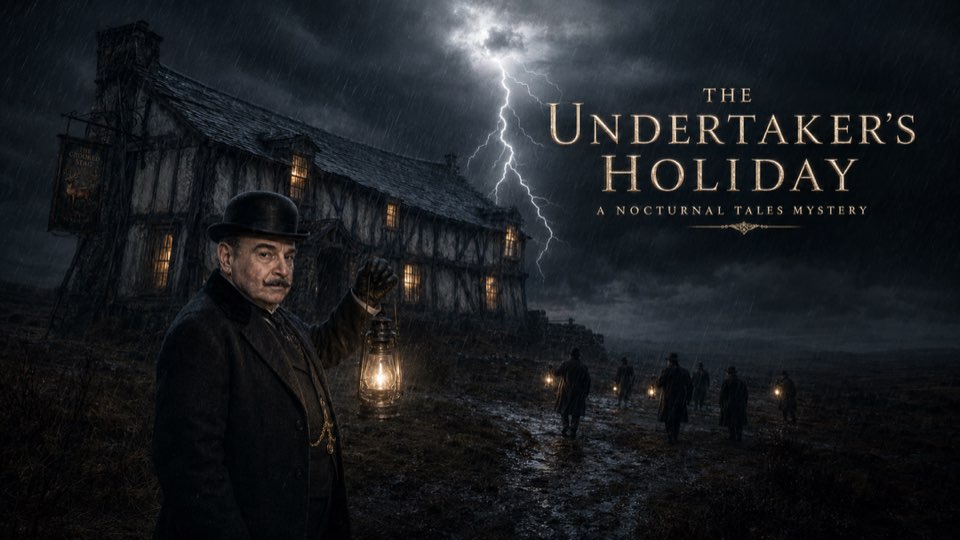
A broken-down coach, a crooked country inn, and a dead man upstairs clutching a card that reads ONE OF US IS ALREADY DEAD — when a motor coach crash strands the Belgian Detective and his loyal companion at The Merry Mourner, a lonely inn at the edge of Brackmere Hollow, they find themselves trapped by a storm with eight strangers and one corpse; the dead man is a blackmailer who summoned this collection of passengers for reasons none will admit, and among them are a widow who has buried three husbands and considers murder an inconvenience, an undertaker on holiday who smiles at death with professional interest, a pale young woman who was declared dead years ago and never told, and a second card slipped under a door reading THE FIRST DEATH WAS ONLY THE CORRECTION OF AN ERROR; as the detective untangles a decades-old fraud, a false burial, stolen inheritance, and the cold logic of a man who believed murder was merely an administrative correction, The Undertaker's Holiday is an original Golden Age–style mystery about stranded strangers, buried secrets, and the discovery that the most dangerous man at the table is the one who handles death for a living.
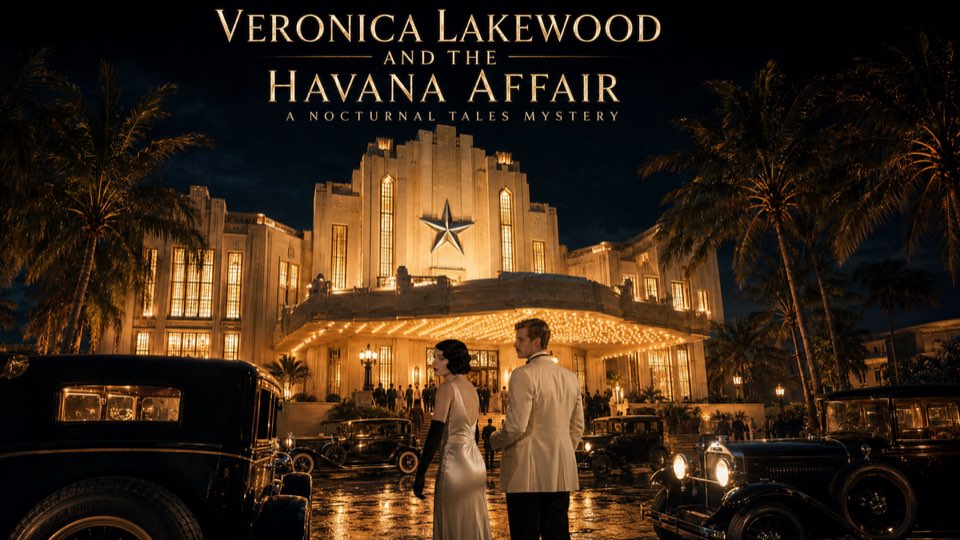
Havana in the 1930s: a white Art Deco casino blazing with light, American millionaires in cream dinner jackets, Cuban officials with diamond pins, and upstairs behind a locked mahogany door a beautiful young heir lies dead with a knife wound below the heart — Julian Ashcroft, son of a shipping magnate, has been stabbed during a private card game in a room locked from the inside with only his father and his father's partner present, no weapon, no witness, and no explanation; as Veronica Lakewood and Captain Hastings follow a black sequin that belonged to no one's gown, a glove scented with orange blossom on a service stair, a private ledger of blackmail now missing, and a Cuban singer whose silence means more than her song, what begins as a locked-room puzzle becomes deeply personal when Veronica's own name appears in the dead man's book and the secrets of a Paris nightclub she thought she'd buried rise through the floorboards of a Havana casino; The Casino Estrella is an original Golden Age–style mystery about old debts, new cruelty, and the discovery that in Havana every crime arrives already wearing a disguise and the most dangerous secrets belong to the people who got out.
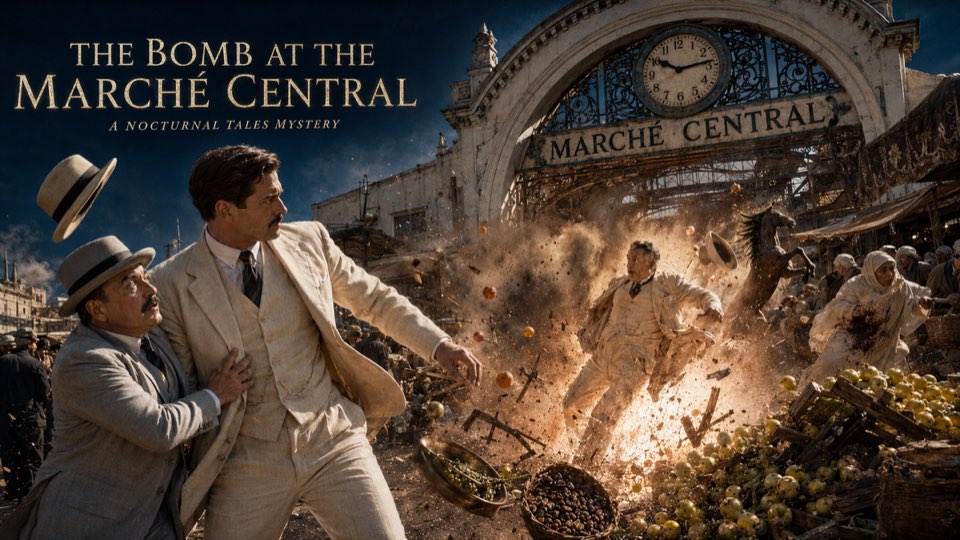
Casablanca, 1930: a bomb explodes in the Marché Central among stalls of oranges, spices, and crowds of French officers, Moroccan merchants, and Spanish workmen — a man in a cream linen suit lies dead, a printed manifesto reading DEATH TO THE PROFITEERS is found scattered nearby, and the police say politics; but the Belgian Detective notices the blast was too small to be a political statement and too precise to be an accident, and as he and his loyal companion follow a woman in a blue dress who placed something in the dead man's pocket moments before the explosion, a clock stopped at eleven past ten, a glove too clean to have been worn, a scrap of silk too obvious to be honest, and a set of stolen financial papers that someone will kill again to recover, they uncover a murder disguised as history and a man who made terror his alibi; inspired by the real bombing of the Marché Central de Casablanca (1953) while remaining entirely fictional, The Bomb at the Marché Central is an original Golden Age–style mystery about colonial fear, public terror as private cover, and the discovery that the most dangerous disguise for murder is the one everyone already wants to believe.
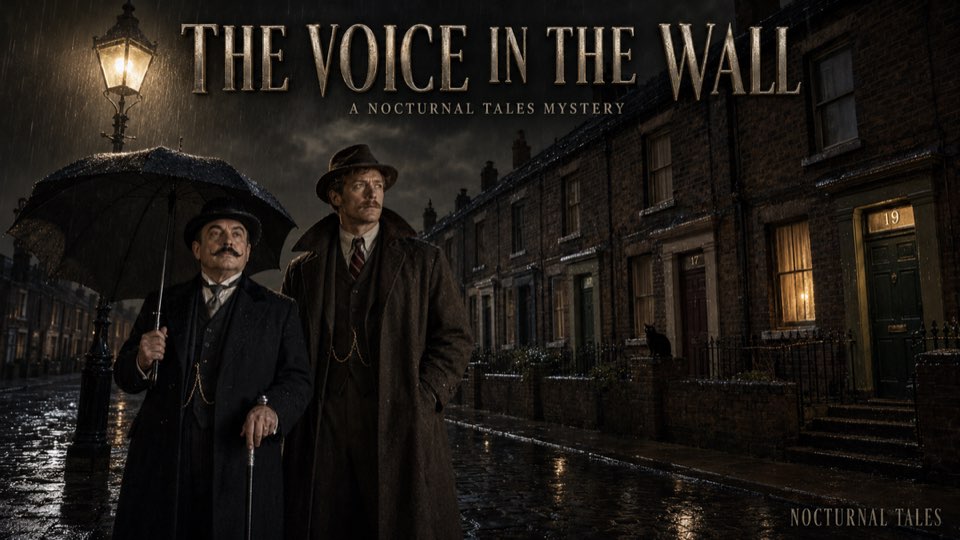
North London: the Belgian Detective and his loyal companion answer a desperate letter from a widow at 19 Marlowe Terrace, a drab narrow house where something has been knocking, scraping, and whispering for weeks — a table moves by itself in the parlour, a thirteen-year-old girl with eyes too old for her face laughs in the dark, and from somewhere inside the walls a dead husband's voice calls his wife by name; as the neighbours say trickery and the children say nothing, a sister who kept secrets she was never asked to explain, a neighbour whose kindness hid something patient and cruel, hidden passages between the houses that no one was meant to find, a severed hand discovered in a toy chest, and a child gone missing in the walls force the detective to separate the living from the dead and the guilty from the merely afraid; inspired by historical crime of its era while remaining entirely fictional, The Voice in the Wall is an original Golden Age–style mystery about haunted houses, hidden passages, and the discovery that the dead do not knock upon walls but the secrets they leave behind never stop speaking.
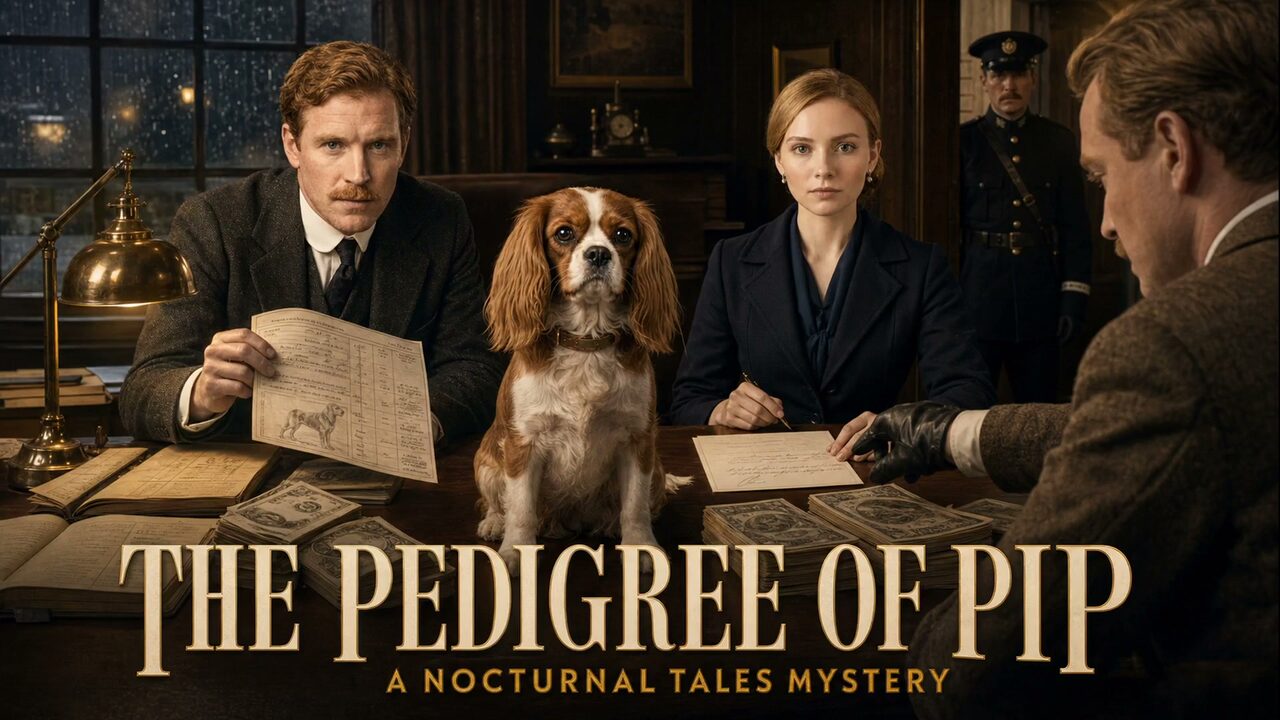
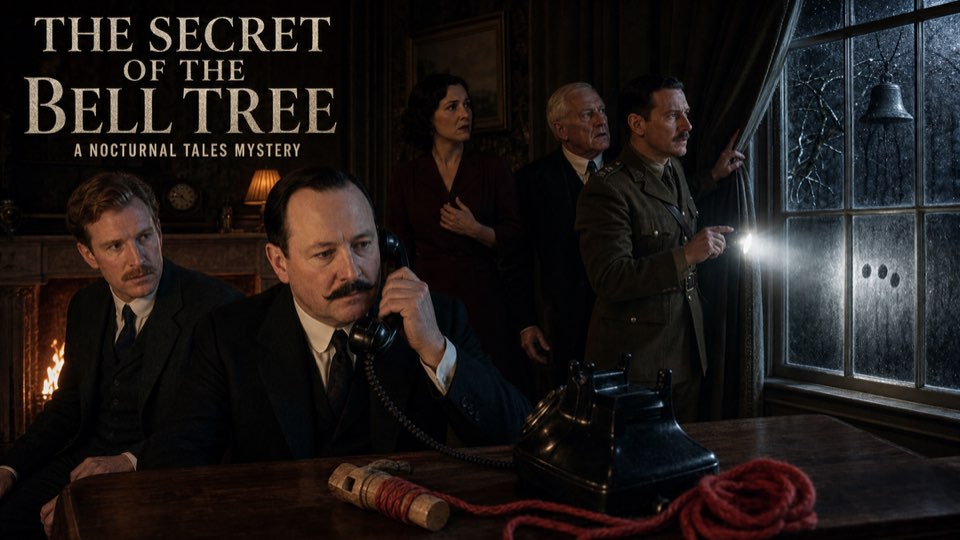
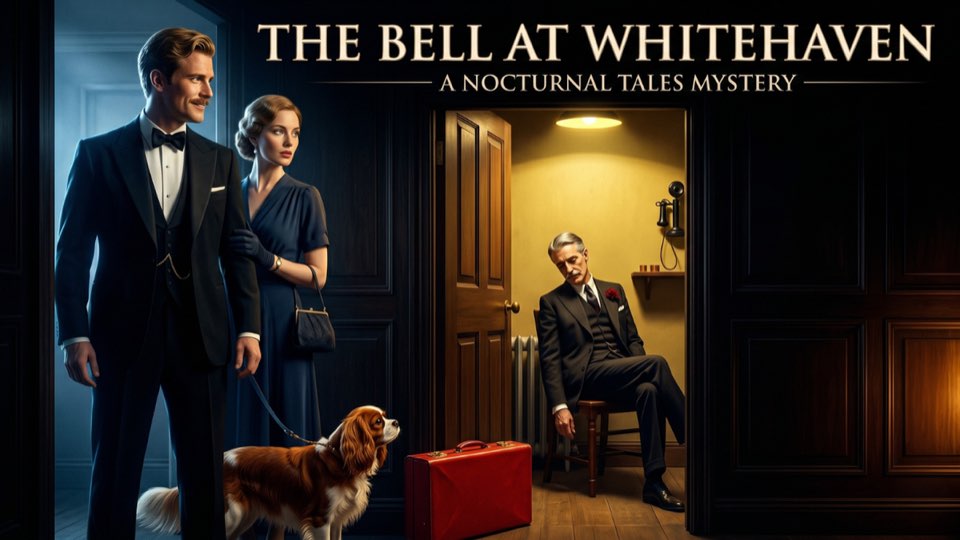
The Belgian Detective is in Brussels, the flat is quiet, and Captain Hastings has just made the mistake of thinking life is ordinary — Anne Foster arrives at Whitehaven Mansions with a message and Pip, a small golden-chestnut spaniel with the moral authority of a Roman emperor; downstairs a charming man with a red leather dispatch case is raising money for a widows' charity that may not exist, a committee meets in the residents' lounge, a bell rings at the wrong moment, a green silk scarf is left on a chair, and by the time the lift doors open again someone is dead in the telephone room with the receiver still in his hand; as Hastings, Anne, and Pip untangle a murder built on blackmail, timing, a single mother-of-pearl bead on the floor, and the discovery that the cleverest killer does not seek an alibi but seeks confusion, Pip and the Bell at Whitehaven is an original Golden Age–style mystery about trust, courage, and a spaniel who uses his nose because it is less easily deceived than the brain.
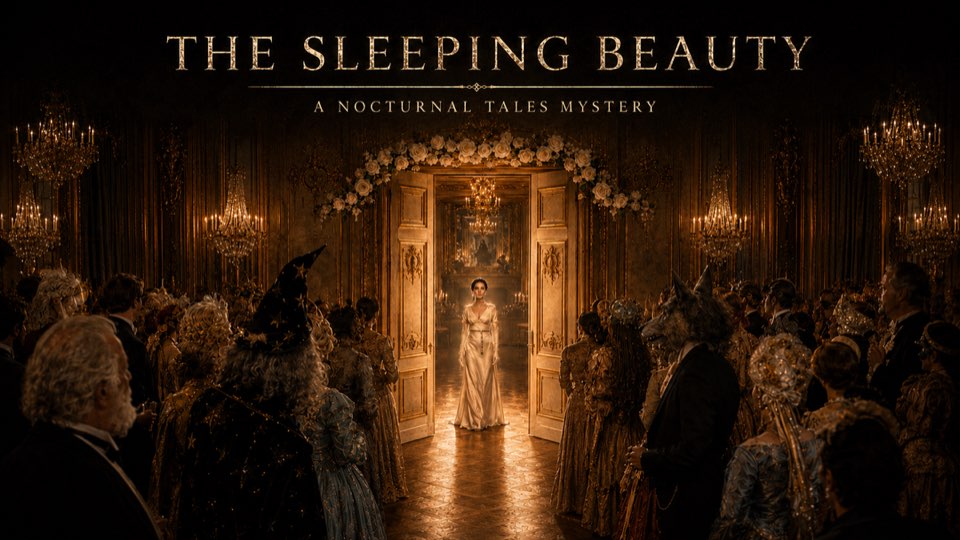
Switzerland, 1930s: the Belgian Detective and his loyal companion arrive at the Grand Hôtel Aurora above Lake Geneva for a restful holiday that lasts approximately one cocktail — Lord Edric Mallory, rich, loud, and dangerously in love, is engaged to a Russian countess who has already buried two husbands and shows no sign of remorse, his children despise her, his doctor watches her too closely, his younger son looks at her with the wrong kind of silence, and when the countess collapses at dinner and falls into a coma that no one can explain, every guest becomes a suspect and every kindness looks like a performance; as a poisoned champagne glass, a switched medical vial, a love letter that was never sent, a Pekingese with unexpected talents, and a doctor whose devotion hides something far more dangerous than medicine converge, the detective must wake the Sleeping Beauty before someone ensures she never opens her eyes again; The Sleeping Beauty is an original Golden Age–style mystery about wealth, desire, and the discovery that the most dangerous person in the room is not the one who hates but the one who loves without permission.
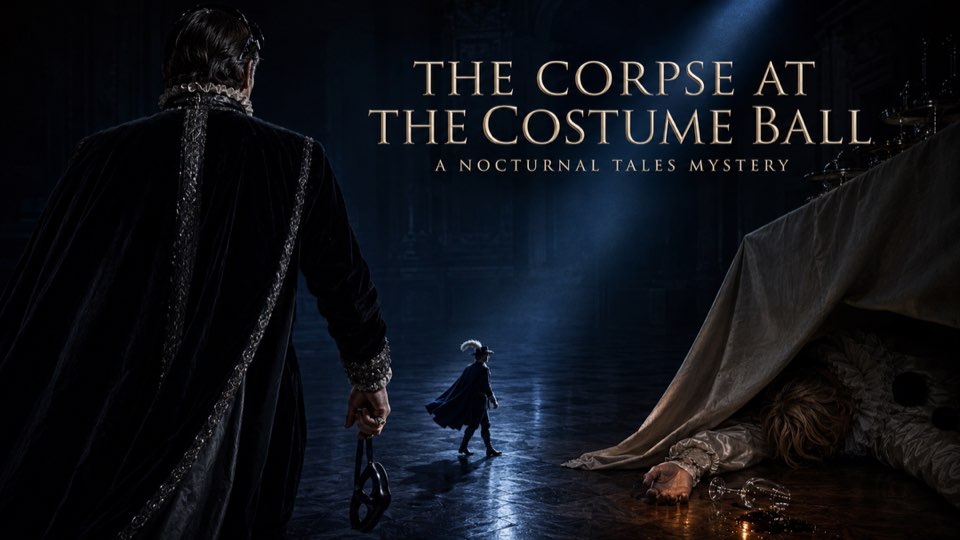
A musketeer, a spaniel, and a murder at the most fashionable charity ball of the season — Captain Hastings is invited to Lady Beatrice Mallory's annual costume ball by the charming Anne Foster and promptly arrives with a borrowed sword, a plumed hat, and Pip the spaniel who was not invited but came anyway; among four hundred guests in masks and finery a man dressed as a harlequin is found dead in the palm room, poisoned, costumed, and posed like a joke no one is laughing at, and with an inspector closing in on the wrong suspect, Anne's sharp eye for detail, a stained glove, a blackmailer's receipts, and Pip's inconvenient talent for finding evidence, Hastings must solve a case built on blackmail, embezzlement, and the desperate lengths a man will go to protect the woman he loves; The Corpse at the Costume Ball is an original Golden Age–style mystery about masks, murder, and the discovery that the most dangerous costume is the one a man wears every day.
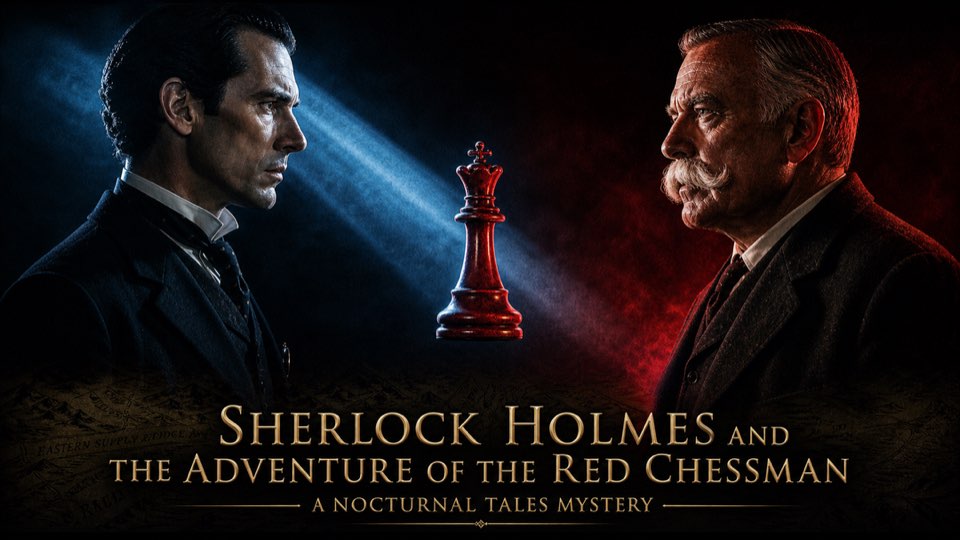
London, 1891: a young woman arrives at Baker Street carrying a chess piece her father tried to burn — a red pawn carved from Indian ivory and stained the colour of old blood — and every Tuesday for seven weeks another piece has arrived by post with no letter and no demand, just the slow deliberate assembly of a game Colonel Sir Alistair Morven cannot bear to finish; as Sherlock Holmes and Dr.
Chicago, 1930s. The notebook marked PART ONE has been opened — and Alice Mercer's small, careful handwriting tells a story the police never heard while she was alive. Moved dresses.
New York, 1920s. A shipping magnate's daughter is seized from her Fifth Avenue mansion by masked men claiming to be political radicals. A printed manifesto denounces the kings of commerce.
” When Poirot and Hastings are summoned by a local solicitor, they expect nerves, gossip, and the usual exaggeration. Instead, they find a family in quiet collapse: a man pronounced dead in the red sitting-room… a locked door… and an empty chair by the fire when they return.
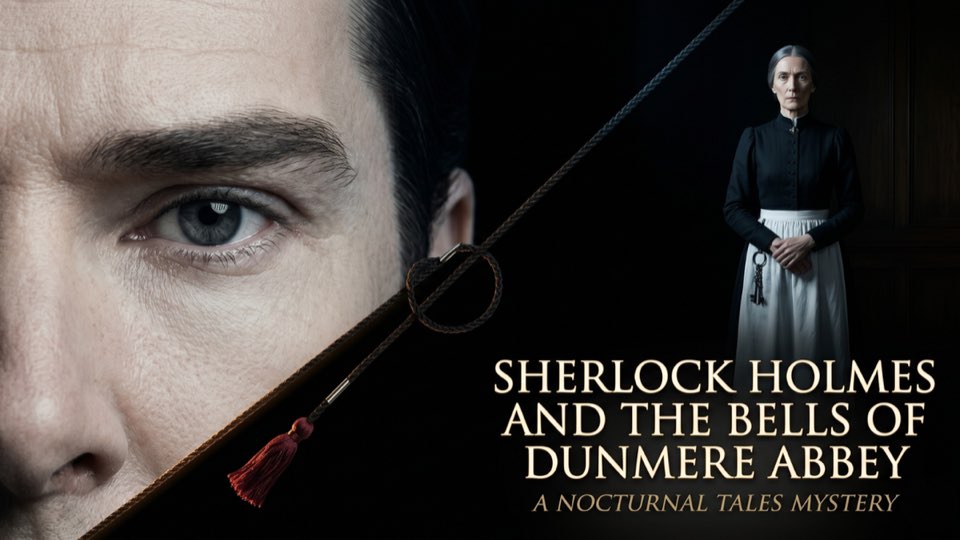
Yorkshire coast, November: a baronet is found dead in his locked study with salt water pooled near the hearth, seaweed pressed beneath the bolted door, and no earthly way in or out — for three consecutive nights before his death a bell tolled from beneath the sea, the drowned monks of Dunmere Abbey ringing judgment upon the house above the cliffs — and when Sherlock Holmes arrives he finds a replaced bell-pull with a new cord married to an old tassel, pale cave sand in a locked drawer, candle wax beneath the desk, the name of a long-wrecked ship no one will speak aloud, and a housekeeper whose thirty-two years of spotless loyalty may have been thirty-two years of waiting; entirely fictional in homage to classic detective fiction, The Bells of Dunmere Abbey is a locked-room mystery about guilt remembered, grief obeyed, and the human habit of dressing wickedness in a shroud when plain clothes would do.
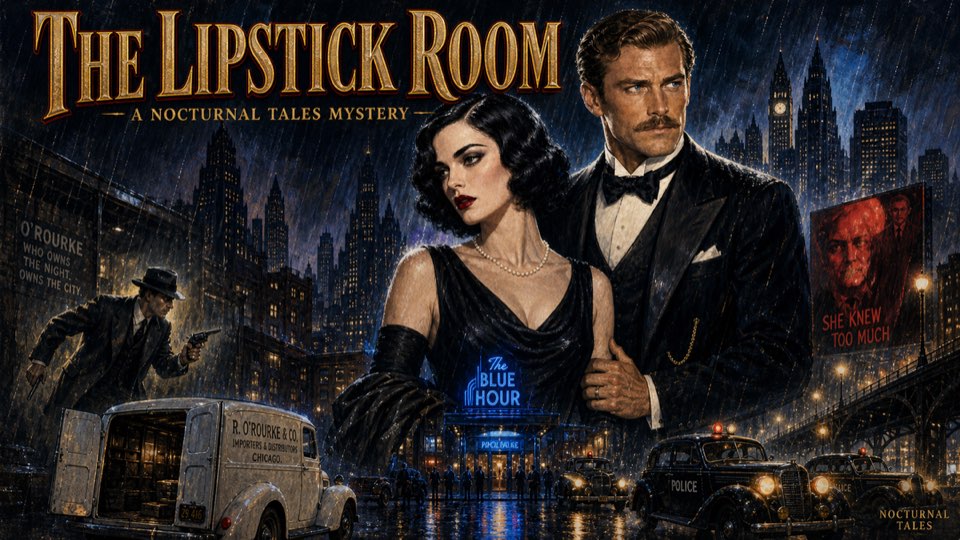
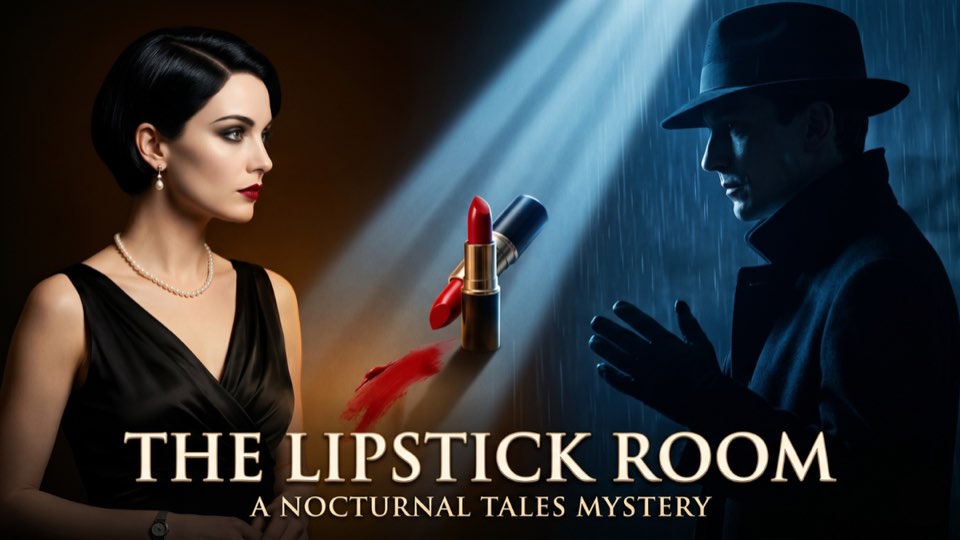
Chicago, 1930s: when nightclub singer Veronica Lakewood returns to her hotel after midnight to find Detective O'Rourke waiting with the news that a young typist named Alice Mercer has been found strangled in her locked room — the words VERA LANE WILL UNDERSTAND written on the dead girl's mirror in lipstick, and a card already waiting at the club reading YOU SING LIKE THE DOOR IS LOCKED.
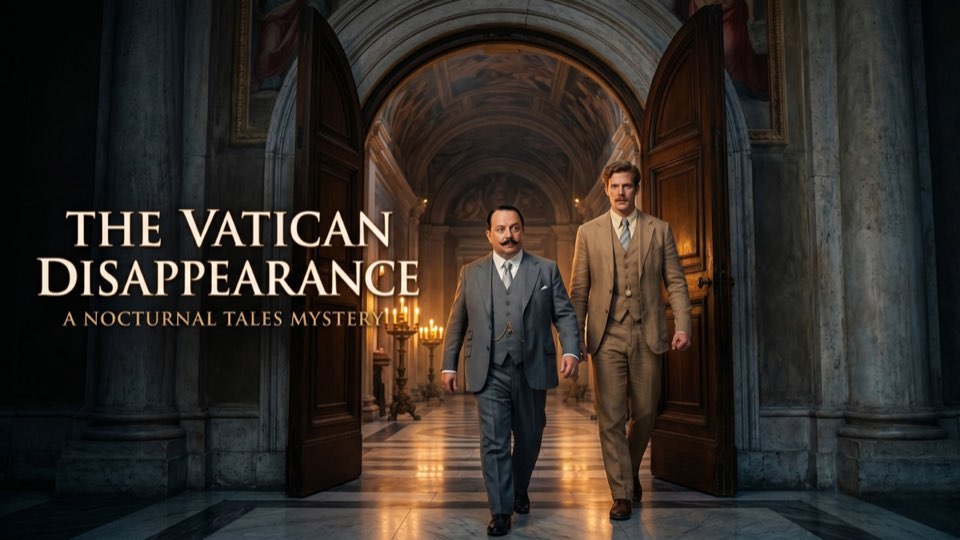
Rome, June 1930s: when fifteen-year-old Caterina Bernardi — dutiful, devout, and entirely without enemies — vanishes after her flute lesson near Sant'Apollinare, leaving behind only a scratched-out name in her notebook and a telephone call home that her sister knew was not entirely free, a brilliant Belgian detective finds himself navigating a city where the Vatican's closed walls and Roman society's overlapping circles conspire to hide an ordinary wickedness behind an extraordinary spectacle; anonymous callers speak of "protection" and "serious matters," journalists begin feeding political rumours, an elegant contessa lies about her alibi, and a woman who knew too much is found dead of a convenient overdose — all of it a staircase of manufactured scandal designed by a cold-eyed fixer to lift one frightened girl so high into the theatre of state affairs that no one thinks to inspect the cellar; the real crime is not espionage, not ideology, but the commonest ugliness of all — a circle of influence that recruits the innocent by exploiting obedience, money, and trust in respectable faces; inspired by the eternal city's layered secrets while remaining entirely fictional, The Vatican Disappearance is an original Golden Age-style mystery about innocence used, truth buried in ceremony, and the theft of simplicity.
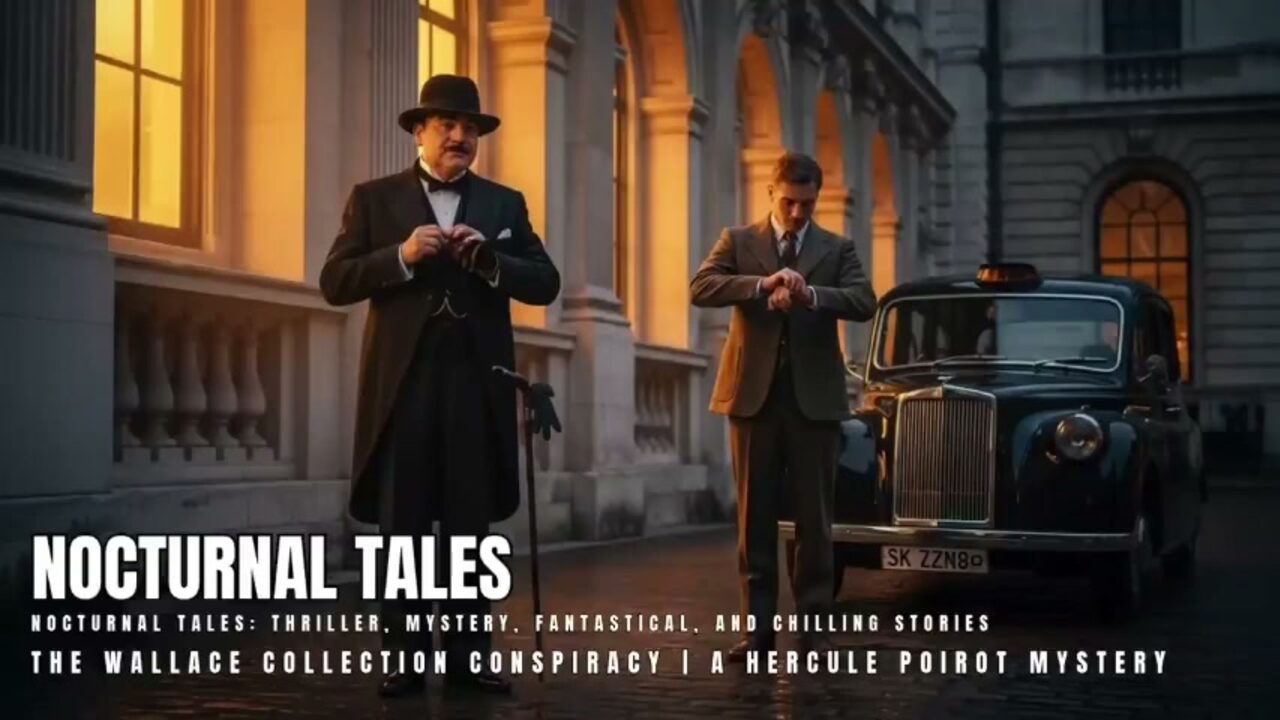
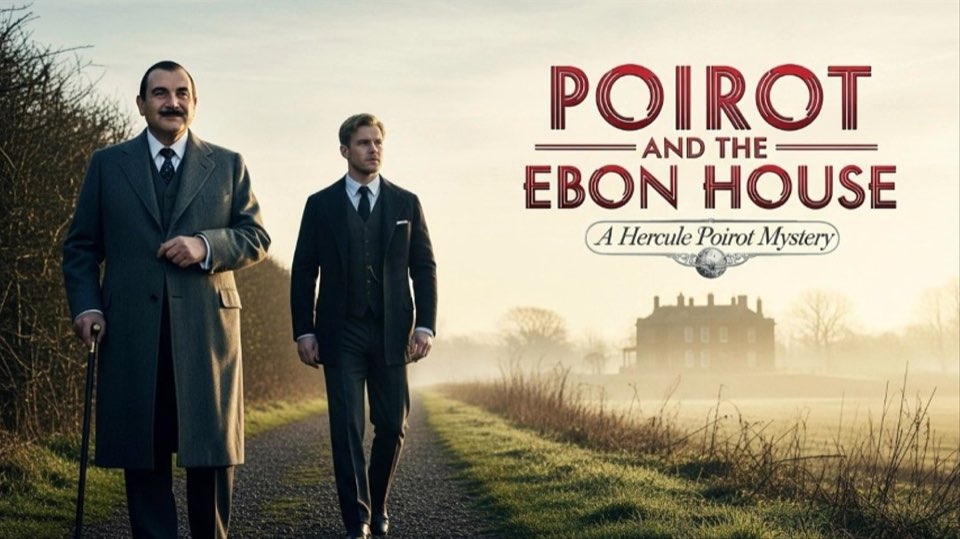
Description Step into 1930s London as Hercule Poirot investigates an audacious art theft at the prestigious Wallace Collection. During a glittering gala, a priceless Venetian mirror vanishes in a perfectly timed blackout.
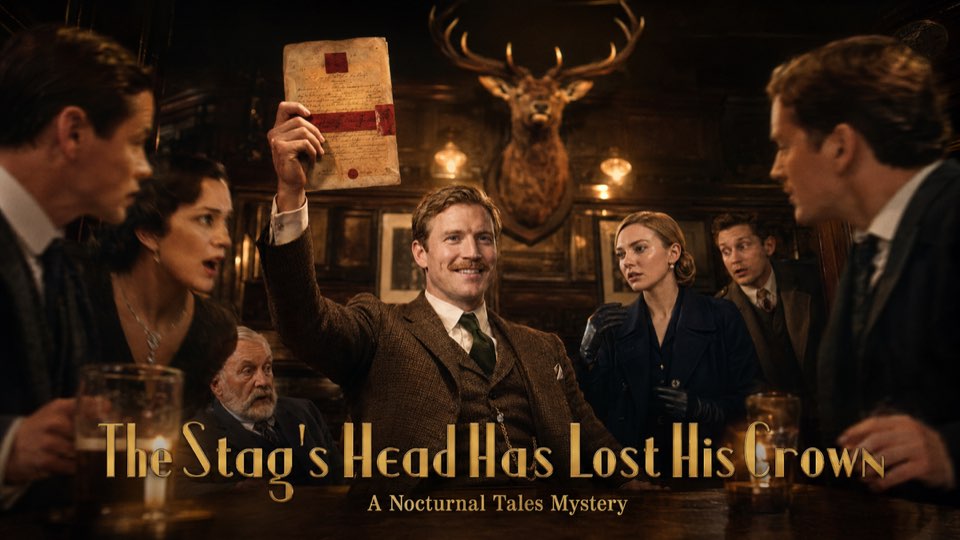
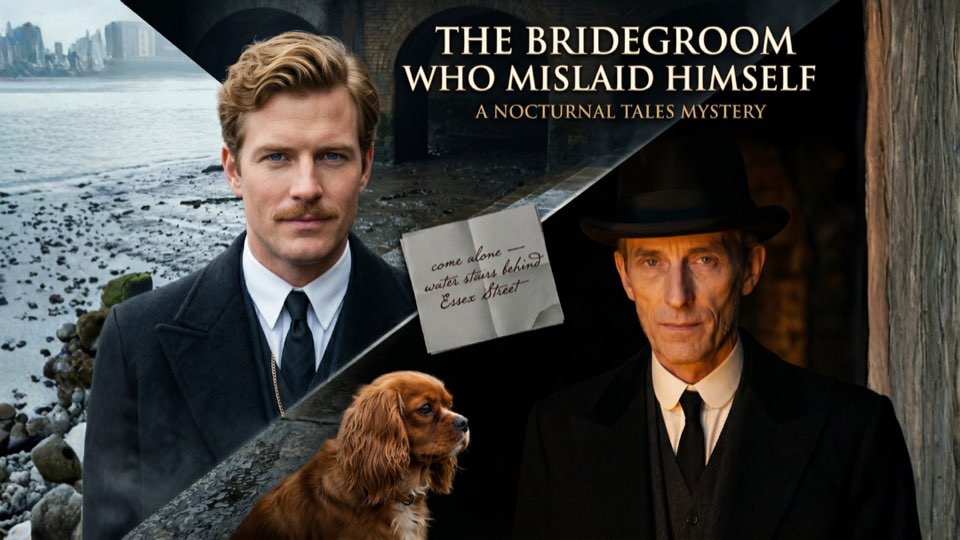
London, spring 1930s: when Captain Hastings attends the stag dinner of Charles Chudley — charming, debt-prone, and hours away from marrying Cynthia Vale — and wakes the following morning with a strange dog on his blanket, the bride's watch in his coat pocket, and no memory of how either came to be there, the race begins to find a missing bridegroom before two o'clock, a church full of hats, and a family full of aunts can ask questions; what begins as a comedy of misplaced evenings becomes something darker as a veiled lady's note at the Marischal Rooms, a private enquiry office in Bloomsbury, and a corrupt solicitor waiting by the Thames water stairs reveal that Charles was not losing his nerve but trying to save his bride's family from blackmail — and that someone very deliberately planted the bride's glove and watch in Hastings's pocket as a reserve scandal to be deployed if needed; narrated throughout by Hastings with his customary mixture of courage, wrong theories, and accidental brilliance, and solved as much by a small golden-brown spaniel named Pip as by anyone who attended Oxford, The Bridegroom Who Mislaid Himself is an original Golden Age-style mystery about loyalty, false appearances, and the lengths to which a decent man will go to spare someone else's blushes.
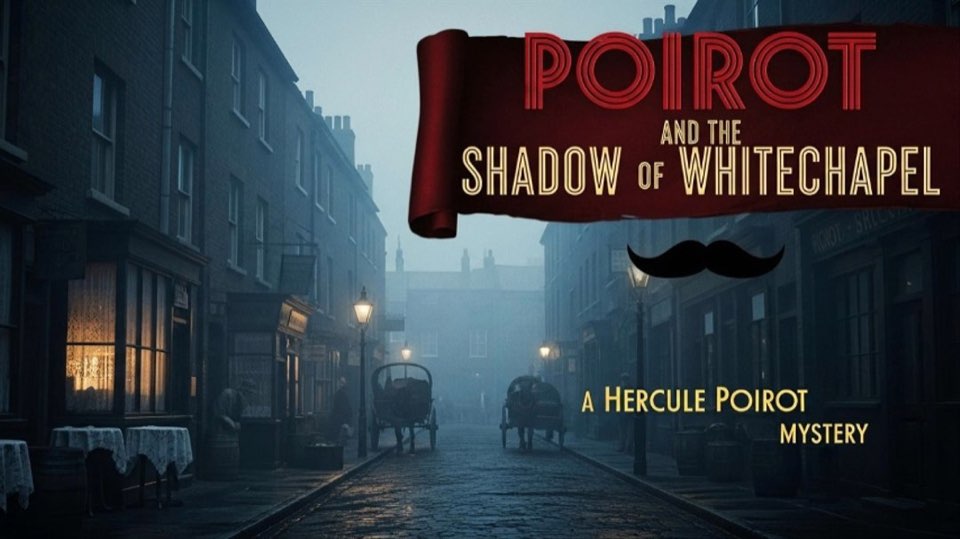
London’s East End remembers. Decades after the terror of Jack the Ripper, workmen in Whitechapel tear down an old house and uncover a dress stiff with age, a broken mirror… and a knife buried in brick and dust.
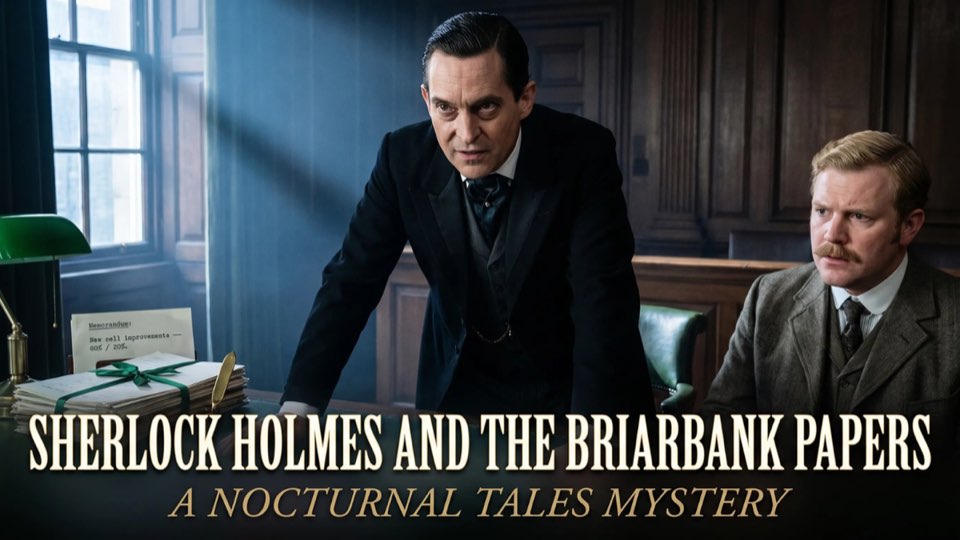
London and Wimbledon, spring 1902: when brilliant electrical engineer Laurence Brooke is found stabbed through the chest with a Moorish paper-knife in the locked study of Briarbank House — his safe unlocked, a sealed packet of technical papers missing, and a jealous painter-husband conveniently placed at the scene by a dog-walker's testimony — Sherlock Holmes and Dr.
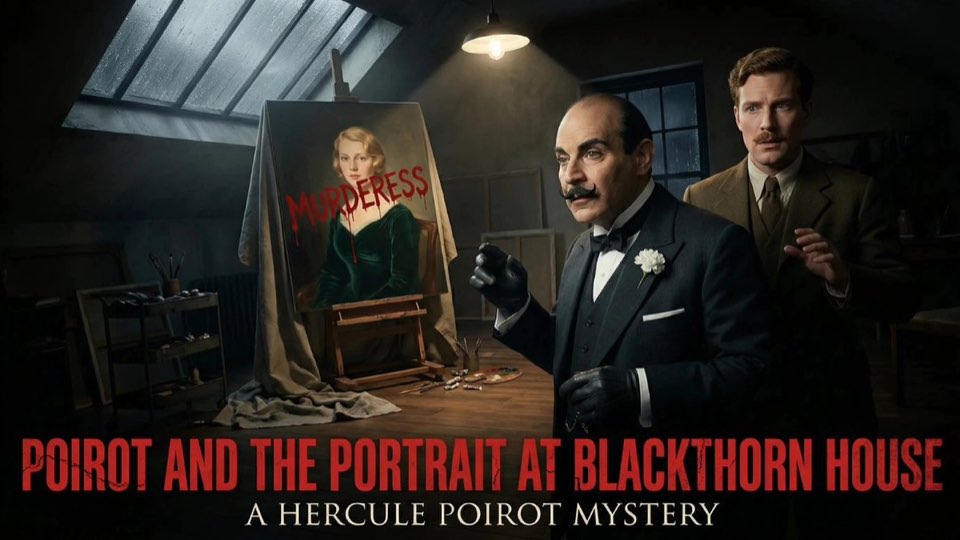
Surrey, England, 1934: when celebrated portrait painter Lucien Vidal is found dead in the locked studio of Blackthorn House — his latest canvas still on the easel, his laudanum tampered with, and a rival artist's cufflink lying conspicuously near the body — a brilliant Belgian detective unravels a web of old scandal and cold hatred buried beneath fresh paint; the key lies not in who is visible in the portrait, but in who has been painted over — a hidden image beneath the surface canvas revealing a woman's throat encircled by gloved fingers, an earlier truth that Lady Frances Welby had desperate reason to destroy before it could speak; inspired by the golden age of country house crime while remaining entirely fictional, The Portrait at Blackthorn House is an original Golden Age–style mystery about obsession, buried secrets, and the treachery of appearances.
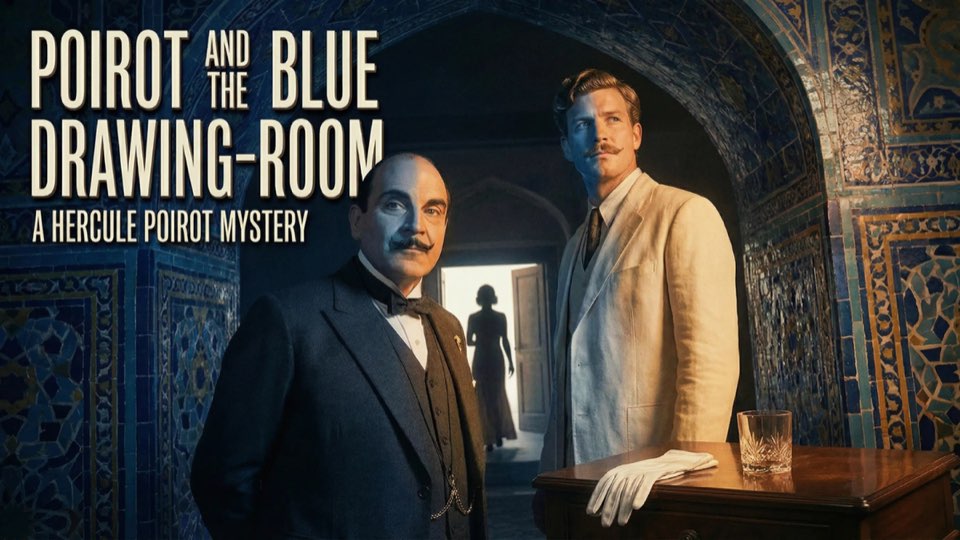
Tehran, 1934: a world-famous American heiress is found strangled in an elegant blue drawing-room after a private quarrel with the heir to the throne, and the city’s officials demand discretion before headlines can ignite an international scandal; as the Belgian Detective and his loyal companion move through garden walls, guarded corridors, and immaculate reception rooms, they follow missing love letters, a terrace door left ajar, a royal cuff link placed too conveniently, and a “perfect” piece of evidence that appears too late to be innocent, revealing a murder shaped not only by jealousy and pride but by the terrifying speed with which a state decides what truth is allowed to exist; inspired by historical crime and political atmospheres of its era while remaining entirely fictional, The Blue Drawing-Room is a tense Golden Age–style mystery about power, reputation, and the violence that hides behind protocol.
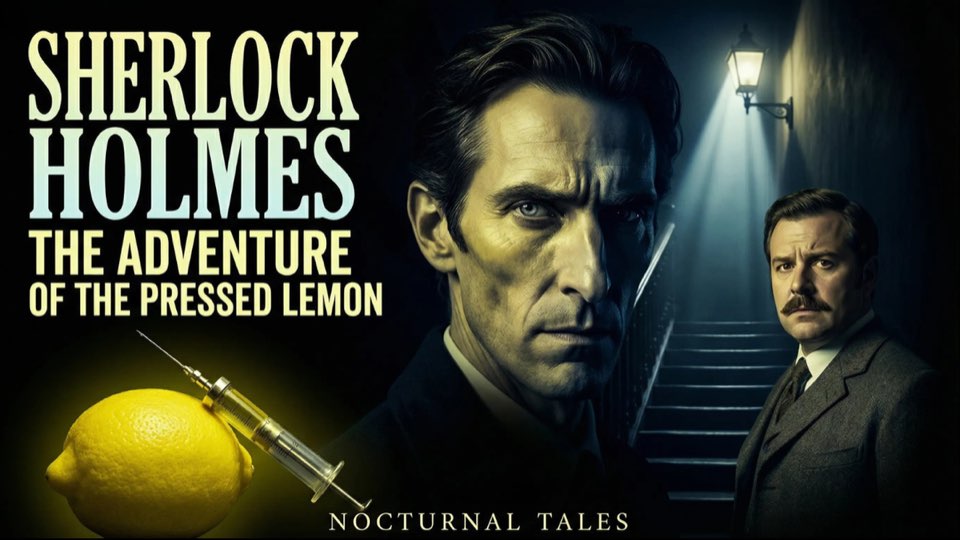
Hertfordshire, 1898: a fifteen-year-old boy dies in sudden agony after luncheon, and the evidence points to an industrial poison linked to his grandfather’s chemical works—until the Victorian Detective notices the household’s smallest routine detail: a daily pressed lemon, a kitchen ice-chest that should have been empty, and fruit injected by syringe; as grief hardens into suspicion inside Maybury House, the inquiry turns from public scandal to private tyranny, where loyalty, dependence, and long-trained silence prove more corrosive than any compound, and a murder meant for one man strikes another instead; inspired by historical crime of its era while remaining entirely fictional, The Pressed Lemon is an original classic-detective mystery about accidental victims, domestic power, and the fatal cost of “ordinary” cruelty.
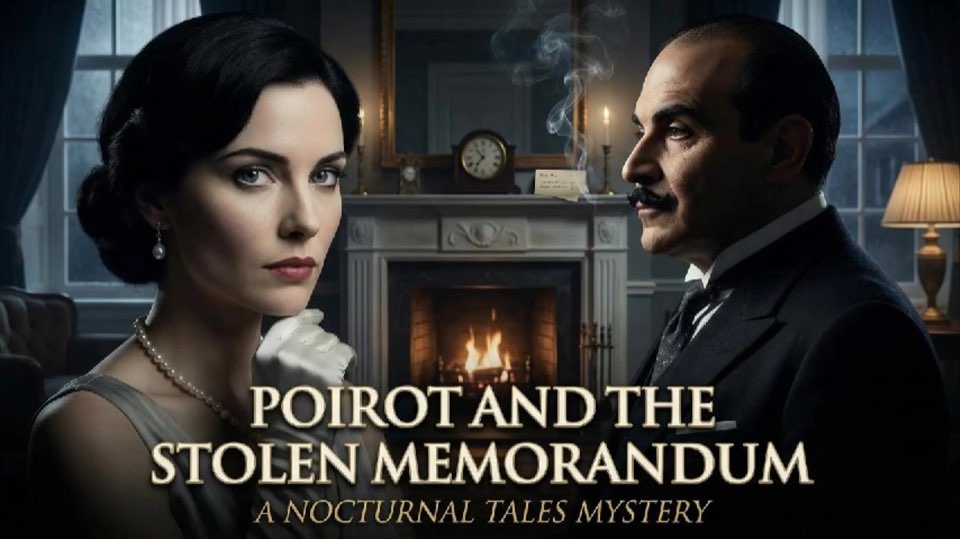
London, winter: a confidential War Office memorandum vanishes from a locked dispatch case and Captain Paul Lévy becomes the “convenient” culprit—punished by whispers, closed doors, and polite disgrace—until an anonymous note points to General Vallon’s dinner and claims the wrong man has paid; the Belgian Detective and his loyal companion follow a trail of keys, access, and carefully managed reputations through official corridors and private loyalties, where the real theft is not only of paper but of a man’s name; inspired by the atmosphere of interwar secrecy and prejudice while remaining entirely fictional, The Stolen Memorandum is an original Golden Age–style mystery about authority, scapegoats, and the quiet violence of respectability.
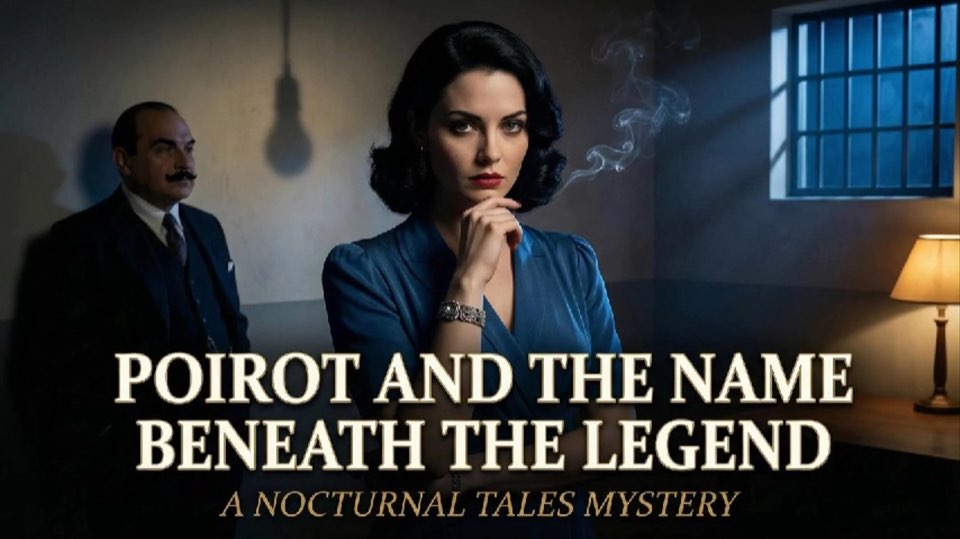
London, 1932: Inspector Japp brings the Yard’s most notorious “criminal lovers” into custody—handsome Leonard Jones and the dark-eyed girl with too many names—and the Belgian Detective senses at once that the public romance is only costume; as witness statements, hotel bills, and staged alibis reveal a pattern of one person being seen while the other vanishes to act, the case turns from jewels and motor-cars to blackmail ledgers, a Grey Street killing, and a Charing Cross hat-box holding disguises, letters, and a photograph that should have been worthless; step by step, the legend collapses into design—two performances, one partnership without trust, and a motive that isn’t thrill or love but the desperate need to control a birth and the name attached to it; inspired by historical crime of its era while remaining entirely fictional, The Name Beneath the Legend is an original Golden Age–style mystery about notoriety as camouflage, vanity as leverage, and the quiet cruelty of making identity something to bargain over.
London society crowns a charismatic American preacher, Reverend Silas Hartwell, as the latest fashion in faith—until a powerful editor drags him into court for “alienation of affection,” and the Belgian Detective with his loyal companion discovers that the courtroom is only a stage where vanity, boredom, belief, and reputation perform their most dangerous roles; as Lady Cecilia’s elegance becomes an alibi, headlines become weapons, and testimony turns into theatre, the case tightens around a husband who edits the story that condemns them all, and a verdict that depends less on sin than on who controls the narrative; inspired by historical crime of its era while remaining entirely fictional, The Trial of Virtue is an original Golden Age–style mystery about scandal, sincerity, and the perfect crime of manners.
On a pale March afternoon in an English village, a pretty young wife arrives at a country house in quiet distress, convinced her jealous husband means her harm and terrified of the reckless young admirer who refuses to stay away.
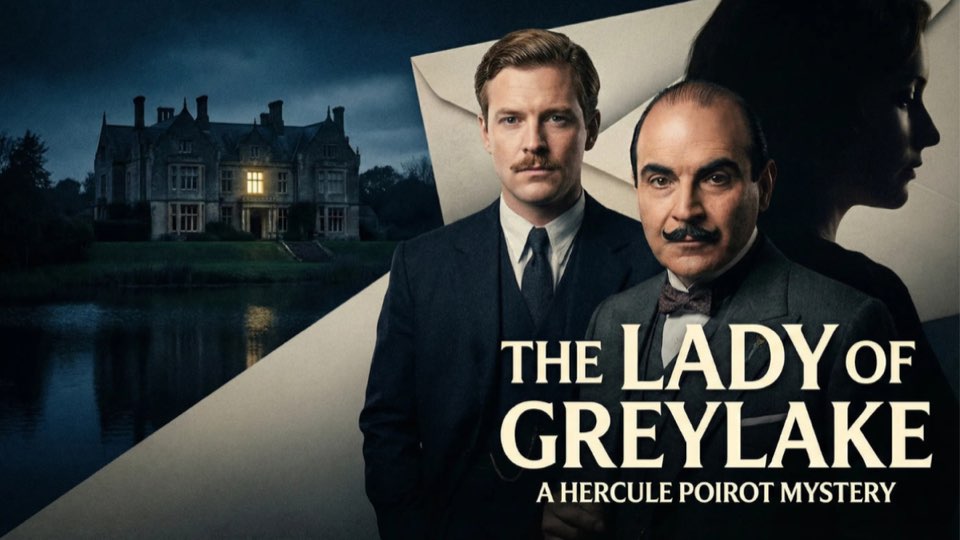
Norfolk, early autumn: at Greylake, a wealthy patriarch is found stabbed in a lakeside “Chinese Room,” the weapon taken from his own curios, the terrace door left tempting open, and suspicion settling neatly on the convenient son-in-law; but the Belgian Detective and his loyal companion notice what the house would rather keep quiet—a missing hand-delivered note, private payments no one can explain, a veiled figure by the old landing-place, and a household trained for years to mistake fear for duty—until wills, alibis, and carefully arranged impressions begin to crack under exact questions; inspired by historical crime of its era while remaining entirely fictional, The House at Greylake is an original Golden Age–style mystery of inheritance, control, and the dangerous things a family will not say aloud.
England, early 1930s: when a precise, chilling letter reaches the Belgian Detective seven days after its sender’s death, he and his loyal companion travel to Blackthorne Hall, where an anxious gentleman had warned that his coming end would be called natural and that a second death might yet be prevented; inside a house of strained inheritances, locked doors, overmanaged illnesses, and dangerous attraction, a woman in green, a compromised heir, a steady young woman burdened with duty, and a doctor who seems too certain of his conclusions all move through drawing rooms and corridors thick with fear; from a study locked from the inside to coffee trays, medicine books, and a death arranged to resemble the work of nature, the case becomes a battle between performance and truth, until the dead man’s final act speaks more clearly than the living ever dared.
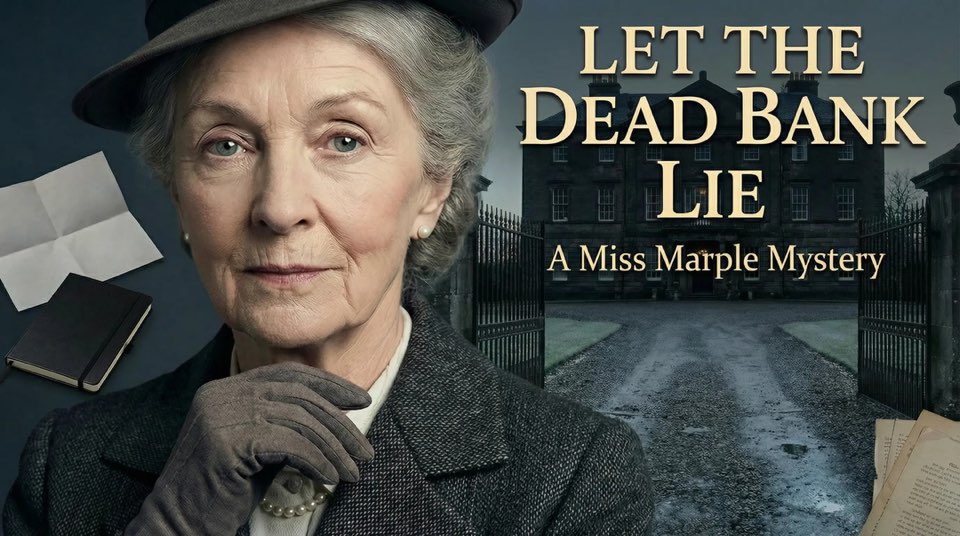
Scotland: after a bitter solicitor dies, his heir inherits not peace but a paper-obsessed legacy—anonymous block-capital threats, a missing green-ribbon packet, forced deed-boxes, and a hidden memorandum book beneath a study floorboard—while a sharp-eyed village sleuth reads the household like a ledger and discovers the danger isn’t an 1811 robbery at all, but a modern, respectable man using old shame as leverage; Let the Dead Bank Lie is an original Golden Age–style mystery about inheritance, fear, and the small mistakes that betray the greedy.
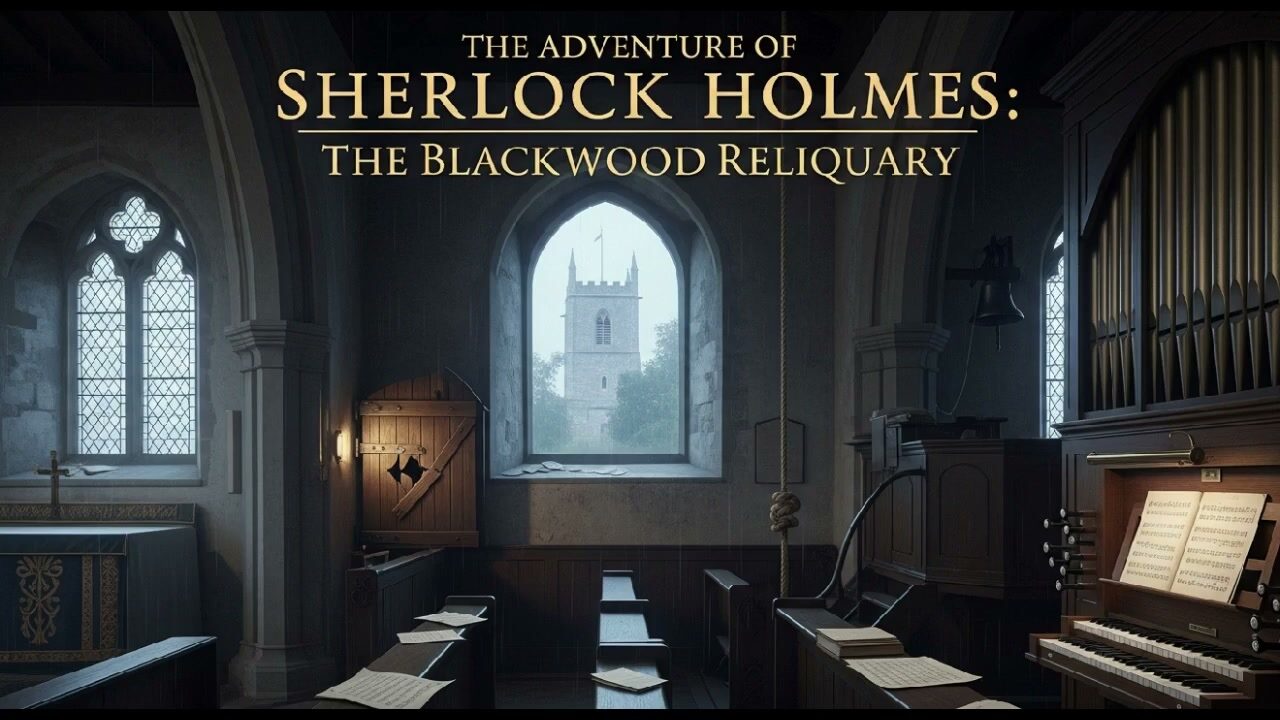
Denham, 1892: a reliquary vanishes and a man dies upon the bell-stair, and the village responds with whispers—devotion, theft, and piety worn like armour—until the Consulting Detective and his loyal companion arrive to read the church itself as evidence: an altered bell-rope, organ pipes that conceal more than music, pawnbroker ledgers, and clues arranged with the tidy discipline of a hymn; The Blackwood Reliquary is an original Victorian-style mystery about quiet motives, misjudgment, and the single small detail that turns certainty into truth.
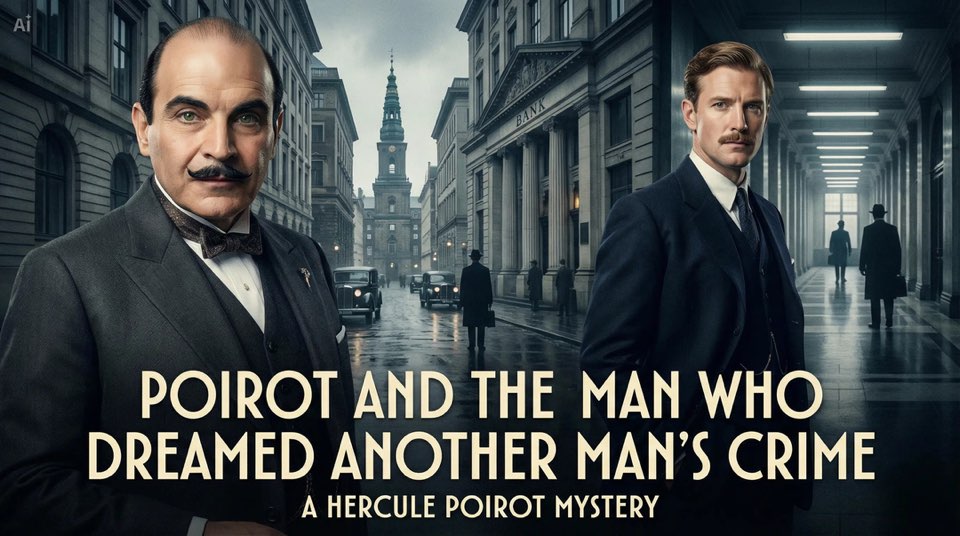
Copenhagen, 1932: a timid bank clerk walks into a branch office with a revolver, leaves two men dead, and insists “he told me I must,” pushing the Belgian Detective and his loyal companion into a chilling case of influence, sedatives, and staged “experiments” where a polished mind-lecturer hides behind props, philosophy, and respectable rooms; as a physician receives anonymous threats, prison visitor signatures repeat in the same careful hand, and a faint medicinal scent clings to a hatband like an invisible fingerprint, the investigation tightens around the question no one wants to face—how far can a weak will be driven, and who is truly guilty when a crime is planted piece by piece; inspired by historical crime of its era while remaining entirely fictional, The Man Who Dreamed Another Man’s Crime is an original Golden Age–style mystery about manipulation, responsibility, and the danger of “fashionable” ideas.
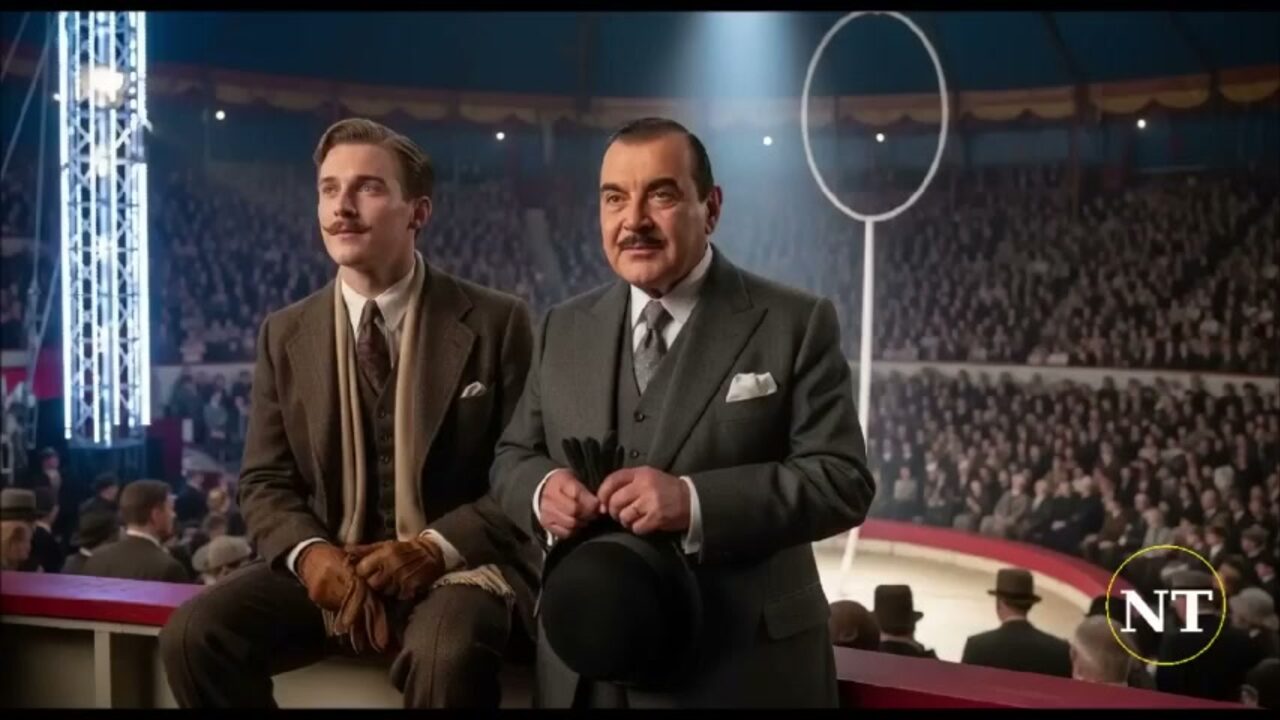
Chicago, 1931: during a packed winter circus performance, a world-famous aerialist plunges from the rigging in full view of thousands—an “accident” blamed on steel, wear, and bad luck—until the Belgian Detective and his loyal companion step behind the curtain and find a different kind of damage: a cable handled at the wrong moment, a dressing-room timeline that doesn’t match the music cue, a missing glove that should have been found at once, and a quiet trail of jealousy and control running from the spotlight to the shadowed wagons by the lake; as the troupe closes ranks and the show insists on going on, the investigation tightens around a husband with too much grief, a rival with too much opportunity, and an understudy whose alibi depends on applause; inspired by historical crime of its era while remaining entirely fictional, The Fall from Heaven is an original Golden Age–style mystery about performance, possession, and the thin line between spectacle and murder.
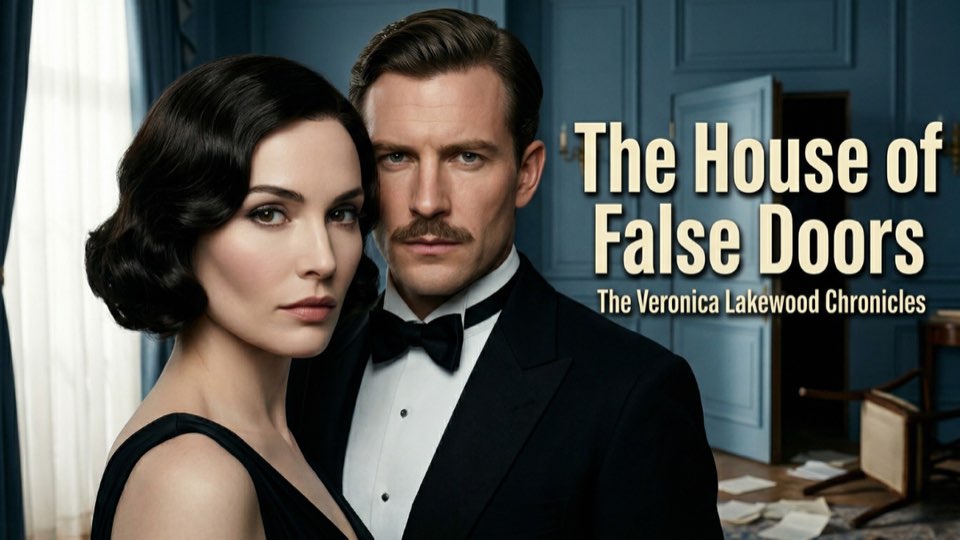
Chicago in the late Jazz Age: a wealthy widow on Prairie Avenue fears she is being watched inside her own immaculate home, and a “respectable” adviser appears at the right moments, speaks with soothing certainty, and knows the house too well; when a hidden panel is discovered behind linen shelves and an allegedly empty house next door proves inconveniently occupied, the investigation turns from simple intimidation into architecture—false doors, rehearsed timings, and a scheme that relies on society’s habit of trusting the confident voice; The House of False Doors is an original Golden Age–style mystery about persuasion, class camouflage, and the moment a victim realises the trap was built into the walls.
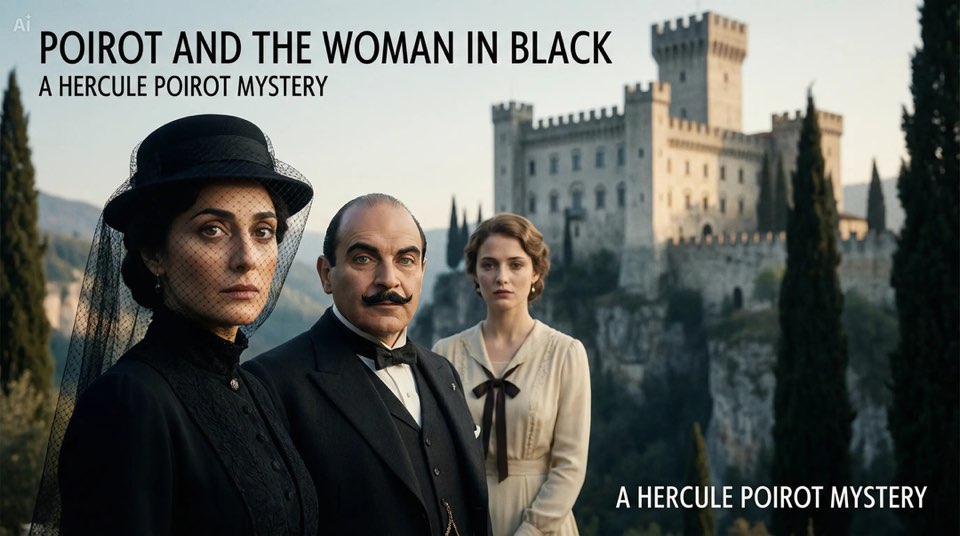
In the hills above Orsano, an ancient castle broods over a gorge and holds its family like a prison, and when a countess summons the Belgian Detective in secret, a stone shatters a window with a dagger-drawn warning that “honour” will be kept in blood; as a forbidden meeting on an upper gallery ends in a violent fall and a “woman in black” vanishes into shadowed passages, the investigation turns from spectacle to paperwork—missing dispatch books, a surgically removed page, and ash in a grate that points to inheritance, legitimacy, and a marriage treated like a treaty; inspired by historical crime of its era while remaining entirely fictional, The Woman in Black is an original Golden Age–style mystery about tyranny disguised as tradition, the ruinous cost of secrecy, and the moment a household chooses violence to keep its silence.
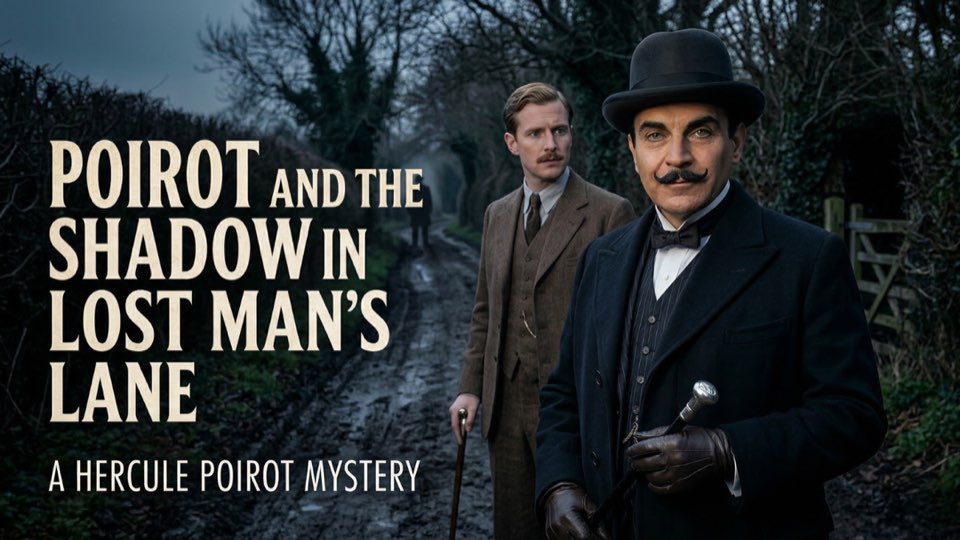
In late autumn 1929, a practical woman’s letter draws the Belgian Detective and his loyal companion to a Sussex village gripped by superstition and half-buried scandal: a deserted house reopened, anonymous warnings, cries after dark, and a pale figure seen clutching its throat in a lane no one will walk at night; as old papers are disturbed at Black Reeds and threats insist that “the dead” should remain undisturbed, the investigation tightens around a hidden recess, a missing fragment, a staged haunting, and a well that finally gives up its secret at midnight; inspired by historical crime of its era while remaining entirely fictional and respectfully inspired by classic mystery tradition, The Shadow in Lost Man’s Lane is an original Golden Age–style mystery about blackmail, inheritance, performance, and the danger of letting a place become an excuse for what people do in the dark.
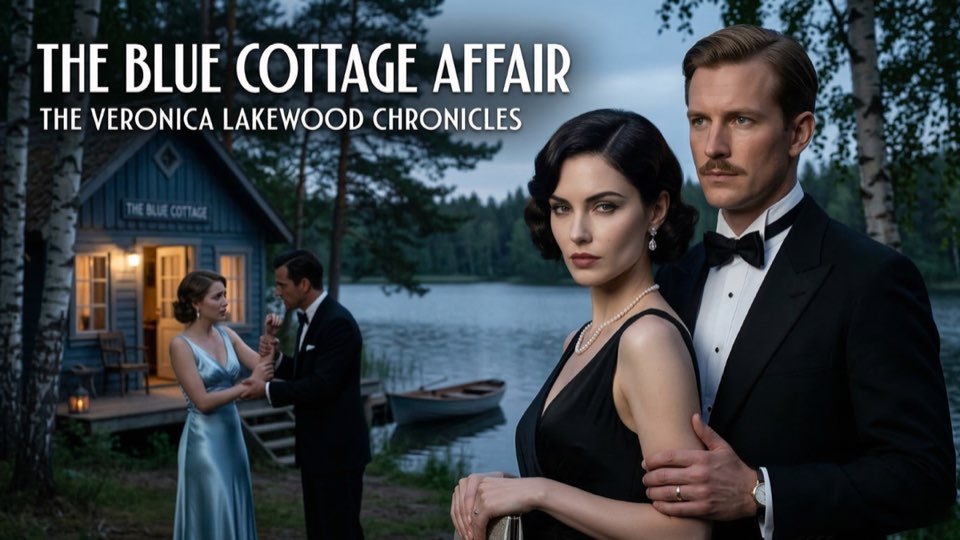
A “restful” three-day escape to Briar Glen House curdles into scandal when a hunted young widow knocks at the wrong window after midnight, insisting that the man posing as her brother is controlling her money, her movements, and a missing letter that could ruin him; as secret meetings multiply around a blue cottage and a lake-side boat-house, a missing shoe, a dropped compact, and a third man on the path turn a romantic quarrel into a carefully staged disturbance where every guest is playing a part and the hotel’s sharp-eyed hostess refuses to let gossip write the verdict; inspired by historical crime of its era while remaining entirely fictional, The Blue Cottage Affair is an original Golden Age–style mystery about coercion, inheritance, and the dangerous ease with which a “helpful” man becomes a jailer.
On the sun-drenched Riviera, the Belgian Detective arrives from Monte Carlo to find his loyal companion arrested after a charming American is discovered dead in a hotel suite, and what should be a simple, flattering story for the authorities becomes a sharper puzzle of lying staff, timed movements, cigarette ash that tells the wrong tale, and a photograph powerful enough to ruin reputations from Nice to Paris; as blackmail, forbidden love, and social theatre collide beneath bougainvillaea and bright sea air, the investigation turns on who controlled the narrative first—and who needed the Riviera to “forget” by morning; The Lion of the Riviera is an original Golden Age–style mystery about scandal, leverage, and the danger of mistaking charm for innocence.
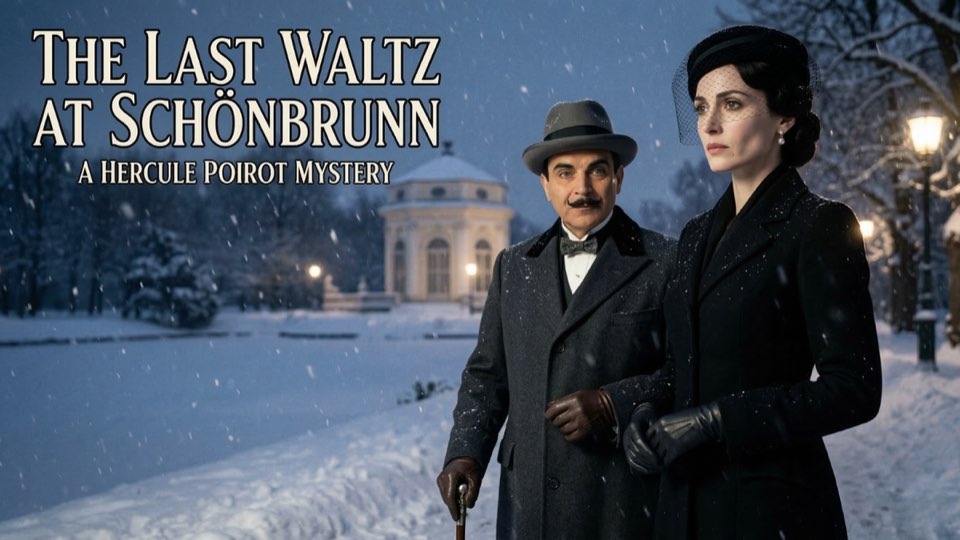
In winter 1928 Vienna, the Belgian Detective and his loyal companion are summoned to Schönbrunn after a count and a young diplomat’s daughter are found shot in a private pavilion, posed facing one another beside a single white rose as the city rushes to label it a romantic pact and move on; but a stopped clock, fresh soot where no fire burned, a scratched window latch, and a fragment of mother-of-pearl pull the case away from gossip and toward design, revealing a circle of debts, letters used as leverage, and a taste for staging tragedy to make inconvenient questions disappear; inspired by historical crime of its era while remaining entirely fictional, The Last Waltz at Schönbrunn is an original Golden Age–style mystery about reputation, blackmail, and the dangerous power of replacing truth with a legend.
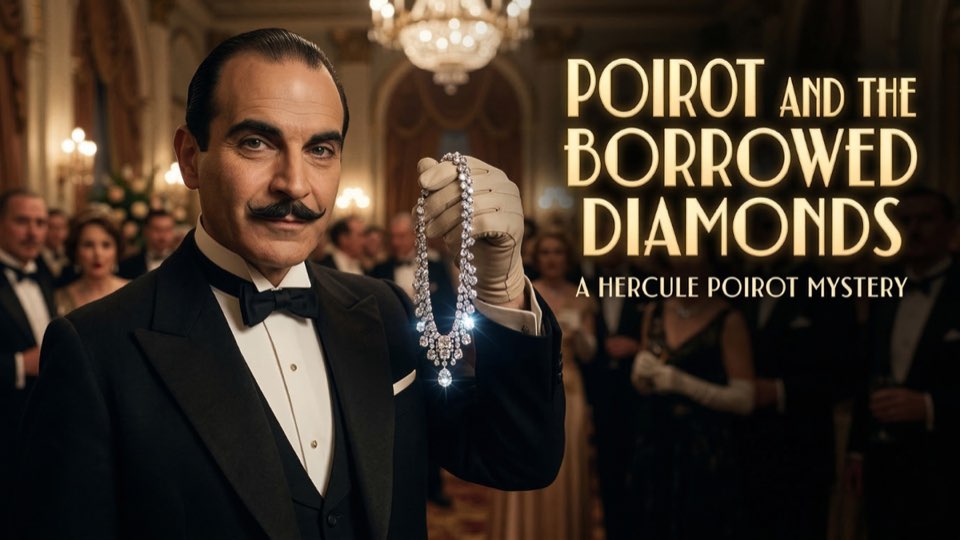
At a glittering London charity ball, a famed diamond necklace “vanishes” from a patron’s throat without a broken clasp, turning good intentions into panic as committees, photographers, and security men perform competence while searching for someone easy to blame; the Belgian Detective and his loyal companion follow the smallest staging details—a planted ribbon, a crest-marked handkerchief, a forged signature, and a courier who collapses after being “helped” too quietly—until the case reveals not a daring ballroom theft but a colder plan of substitution, paperwork leverage, and insurance-ready misdirection, where reputation is the real ransom and a respectable fraudster expects the crowd to chase sparkle instead of truth; The Borrowed Diamonds is an original Golden Age–style mystery about social theatre, scapegoats, and the lethal convenience of a tidy story.
In spring 1902, Sherlock Holmes is summoned to the West End when a celebrated Bond Street couturier is found dead in his bath with a telephone receiver in his hand, and what looks like a tidy accident becomes a ruthless design: a suspicious call that places the victim “alive” at the wrong hour, a Mayfair luncheon poised on money and engagement, and an American fashion journal that reveals betrayal in New York before London ever applauded; as Holmes and Dr.
A powerful Belgian financier vanishes from his private aeroplane between England and Brussels, leaving behind only offended respectability, conflicting witness statements, and a rear door found suggestively unlatched, and the Belgian Detective is summoned into a “locked-room-in-the-sky” puzzle where perfume, cigars, copied numbers, and an ominous note—“HAREN.
In autumn 1894, Sherlock Holmes is summoned from Baker Street to a rain-soaked county town where a chapel coronet is stolen, an innocent youth is arrested on a description that fits his borrowed clothes, and the case explodes into violence when a prison warder is shot dead during a staged “escape” and a bill-poster is murdered before he can speak; as Holmes and Dr.
On Scotland’s windswept coast, Duff House stands for tradition, hierarchy, and locked doors, until priceless silver, portrait miniatures, and a Dutch painting vanish in the night, leaving ropes, oil traces, and missing letters in their place; as butlers, porters, guests, and high society offer polished testimony, the Belgian Detective and his loyal companion sift manners from facts to reveal how a thief used the household’s own routines—and a carefully chosen smile—to turn certainty into misdirection; The Duff House Heist is an original Golden Age–style mystery of class performance, trust betrayed, and the precise mechanics of an “impossible” theft.
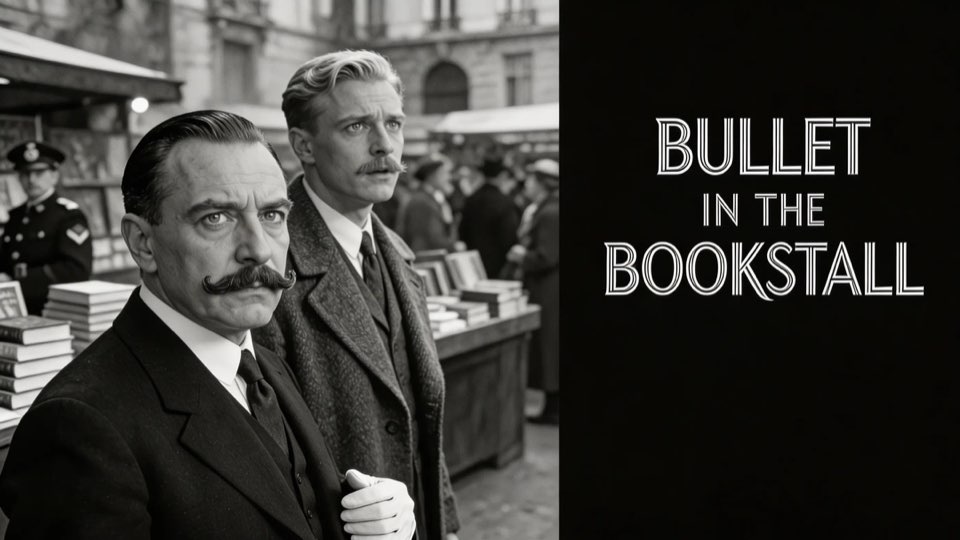
At a Paris book exhibition, a head of state is shot in daylight and the hall is sealed in a storm of procedure, panic, and “official” certainty, yet the Belgian Detective and his loyal companion quickly sense a second story moving beneath the polite banners: a man who would not applaud, a weapon that arrives like a delivery, a badge that opens service doors, a bookseller’s stand with no books, and a briefcase of papers passed hand to hand as the crowd is pushed toward a simple explanation; inspired by historical crime of its era while remaining entirely fictional, The Bullet in the Bookstall is an original Golden Age–style mystery about propaganda, scapegoats, and the quiet machinery that tries to manage truth into a headline.
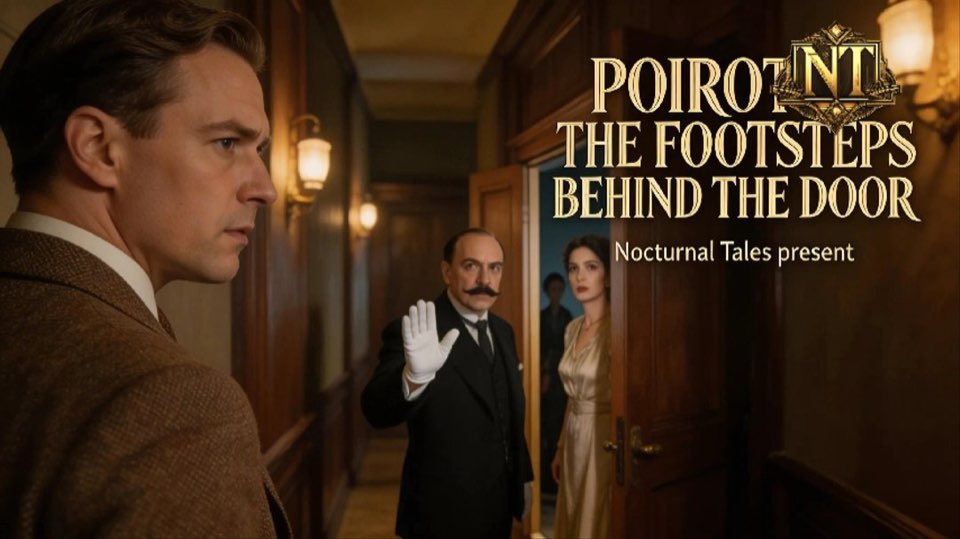
In 1932, a crested letter draws the Belgian Detective and his loyal companion to La Ventana, a vast Uruguayan estancia where a respected household is tightening around fear: locked doors found open, bridles cut, a prized horse ridden in secret, and a weary wife convinced that footsteps pace outside her room in the night; when a thrown glass and a hidden cord device reveal that the haunting is engineered, the investigation shifts from superstition to motive, exposing a desperate plan built on love, class boundaries, and the quiet weapon of calling a woman’s terror “nerves”; Footsteps Behind the Door is an original Golden Age–style mystery about manipulation, family control, and the dangerous power of a carefully staged illusion.
When an old friend summons a village sleuth to Bertram’s Hotel over an anonymous letter tied to a vanished aristocrat scandal, a frightened woman disappears, a watchful reporter circles the lobby, and a London house begins to reveal its truth through bells, delivery slips, staff memories, and one chauffeur who knows too much; as panic, gossip, and social respectability collide, the case turns on who is being hidden, who is being manipulated, and who profits when fear is mistaken for silence; inspired by historical crime of its era while remaining entirely fictional, The Real Shadow at Bertram’s is an original Golden Age–style mystery of disappearance, class pressure, and the quiet mechanics of coercion.
” Poirot FOR LISTENERS This is an original Golden Age–style mystery presented as a respectful homage to classic detective fiction. All characters and events in this story are fictional.
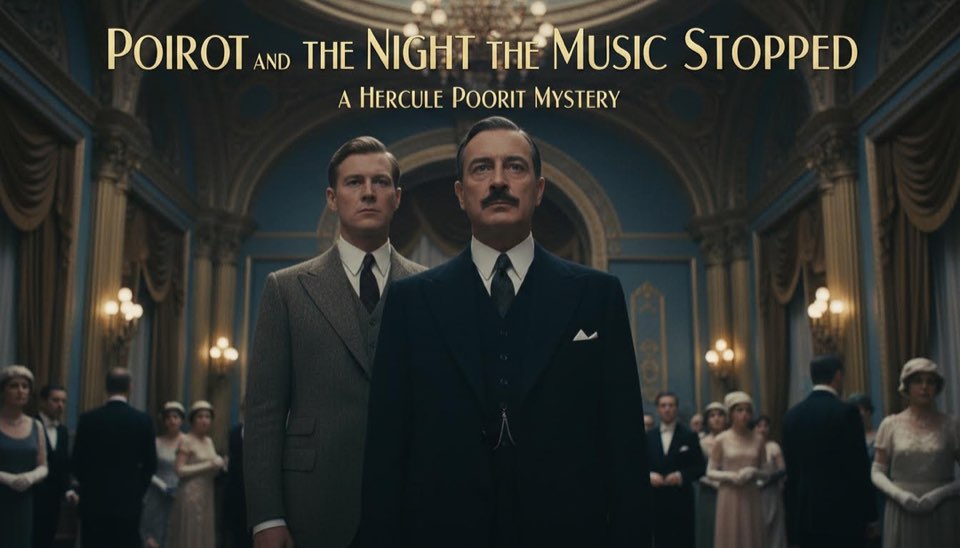
In early wartime London, a poised woman arrives with a compact mirror hiding a coded warning—“the music will stop once”—and the Belgian Detective and his loyal companion are drawn into a diplomatic Embassy reception where flags, manners, and orchestral cues become tools of control; as a missing courier, a velvet-handed hostess, and a covert exchange converge in a room designed for plausible denials, a planned pause in music turns into a test of attention, a public death, and a desperate distraction meant to let the real architect slip away; inspired by historical crime of its era while remaining entirely fictional, The Night the Music Stopped is an original Golden Age–style mystery about espionage, scapegoats, and the lethal power of directing where everyone chooses to look.
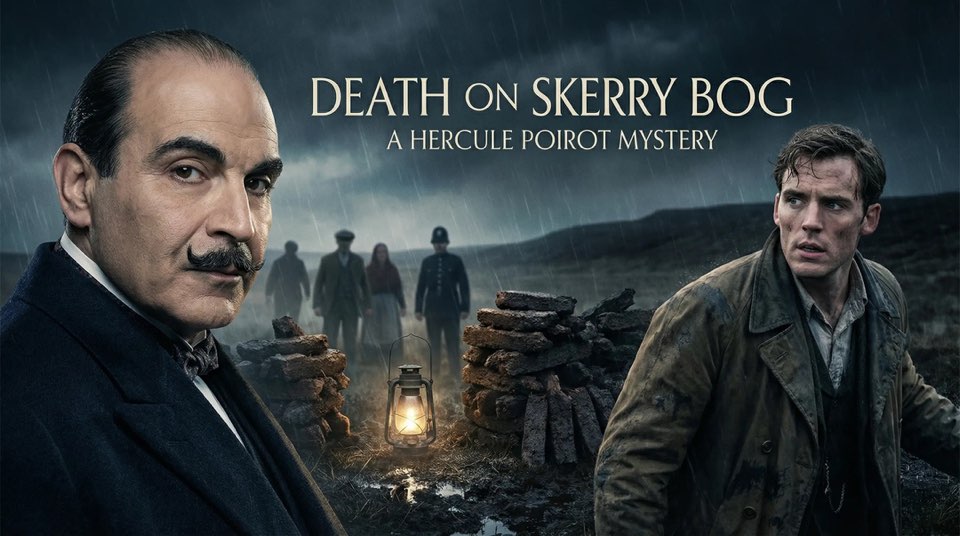
A doctor’s “quiet” invitation becomes anything but when two working sisters are shot dead beside turf stacks on Skerry Bog—broad daylight, no warning, and a village that already has the culprit rehearsed.
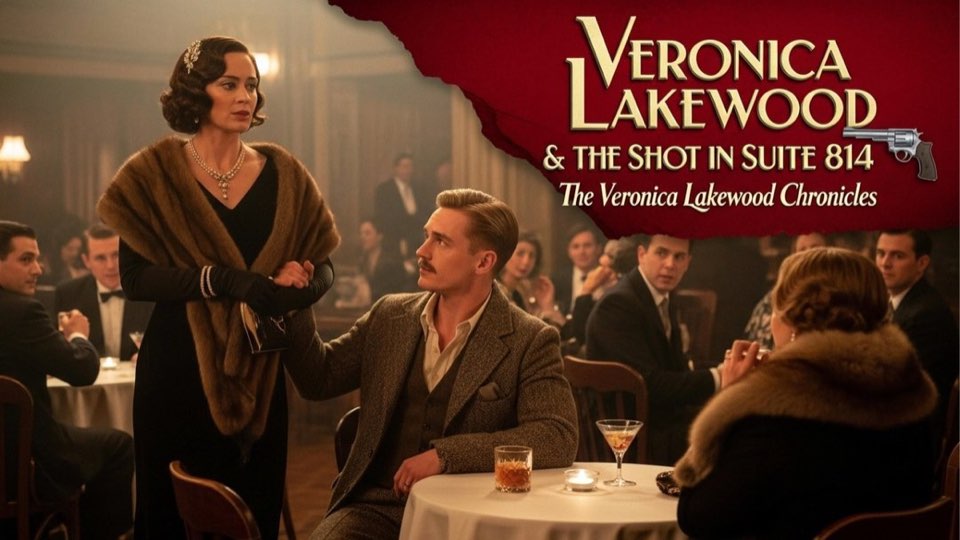
Chicago in winter does not lie—it exposes. When a young woman is found dead in a hotel room marked with the number 814, the crime is quickly framed as scandal and spectacle. But for Veronica Lakewood, the number is not a coincidence—it is a signature meant to turn her into a public villain.
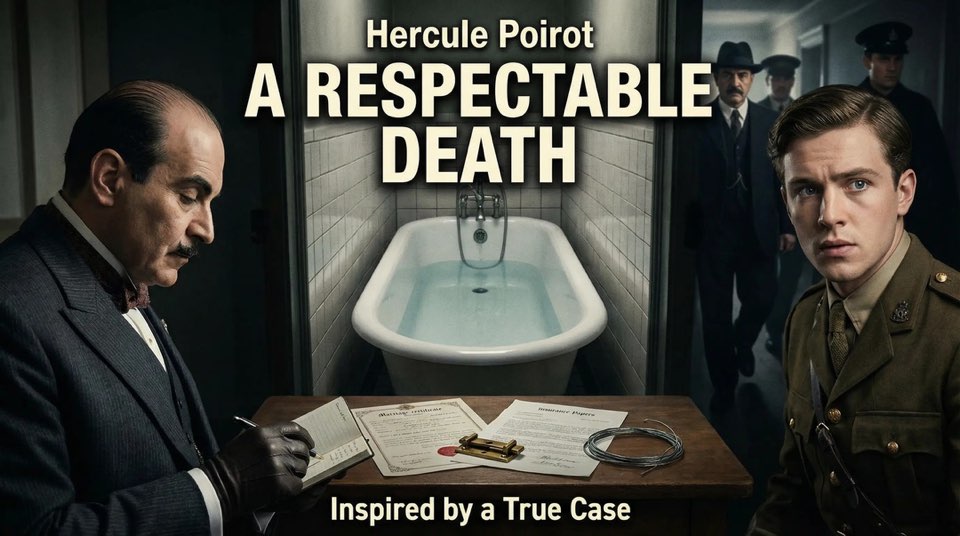
On a rain-soaked London afternoon, a grieving sister brings the Belgian Detective a damp household notebook and a claim no one wants to hear: her sister’s bath-time “accident” may have been arranged.
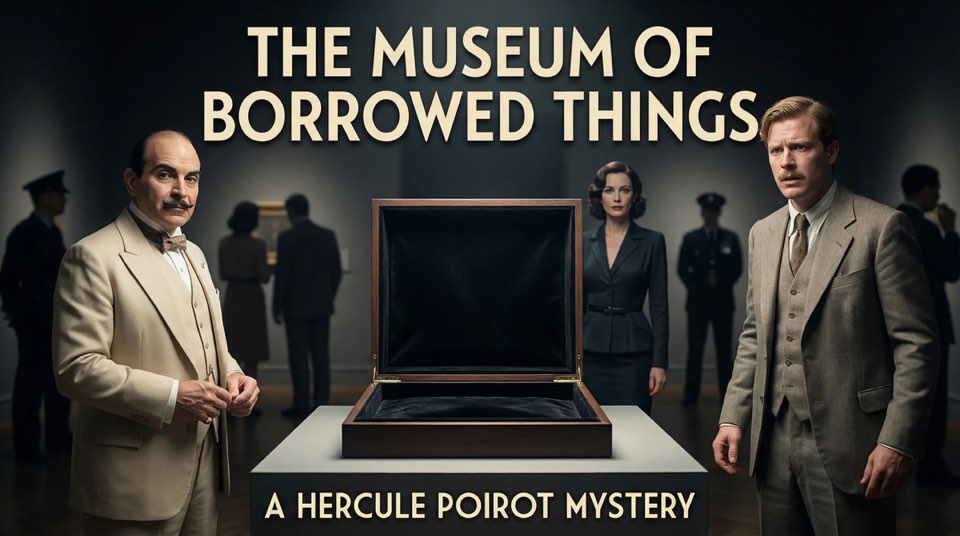
An after-hours private viewing at a prestigious London museum is meant to demonstrate order, generosity, and impeccable security—until a small but priceless gold object vanishes without force, noise, or visible theft.
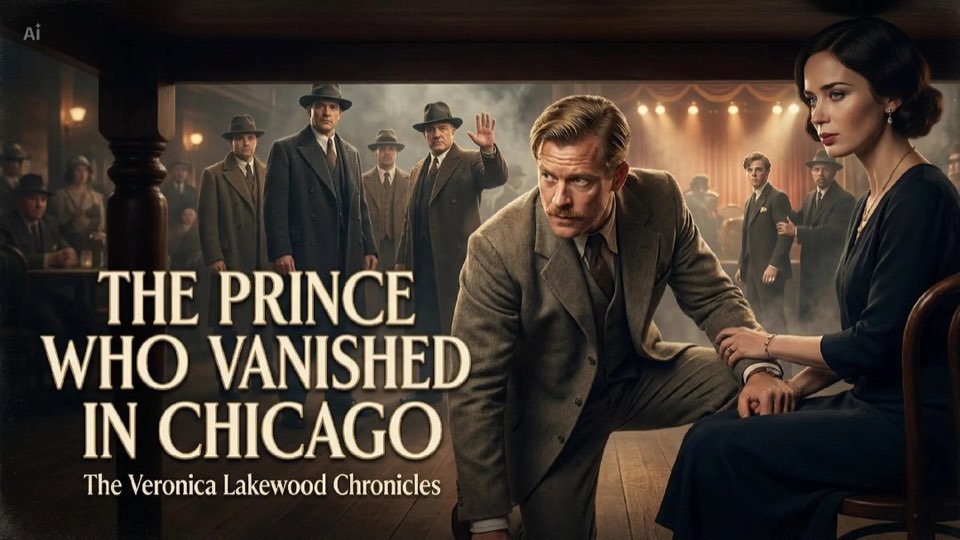
Chicago was supposed to be a quiet evening. A famous jazz bar, good music, no work—just Veronica Lakewood and Captain Hastings attempting something dangerously close to normal. Then the door opens with purpose.
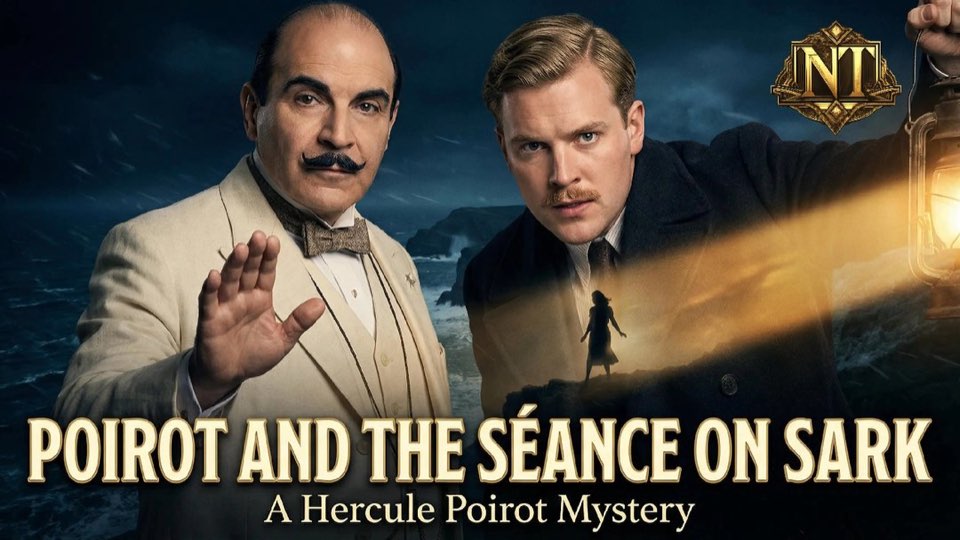
Sark is the kind of island that makes escape feel impossible: no motor-cars, narrow lanes, stone walls, and cliff paths where one wrong step becomes final.
In Istanbul, where continents stare at each other across the Bosphorus, Poirot boards an ordinary public ferry—crowded benches, salt-streaked windows, tea in little glasses, and nothing but routine.
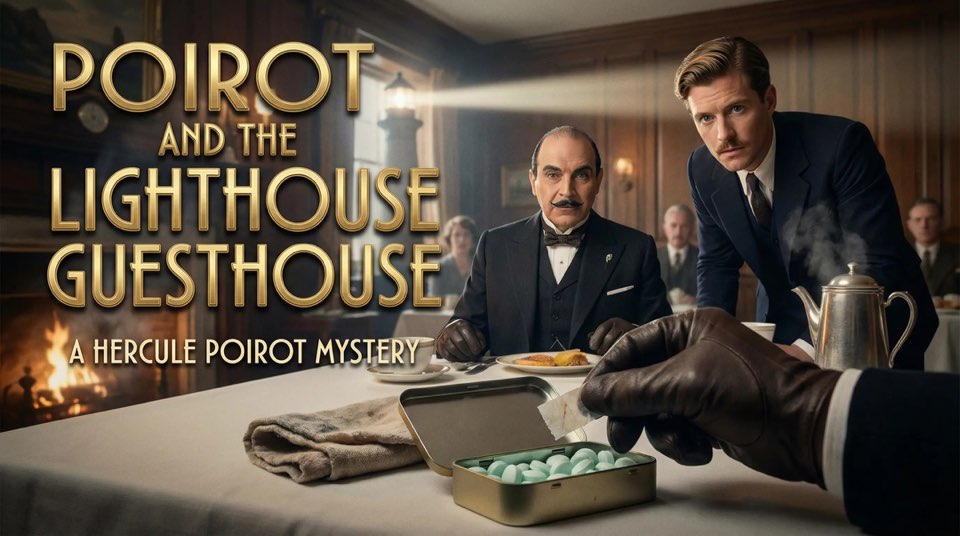
A storm cuts the last crossing. The tide rises like a verdict. And a handful of strangers find themselves stranded overnight on a jagged rock beside a working lighthouse—sealed in by wind, sea, and bad timing.
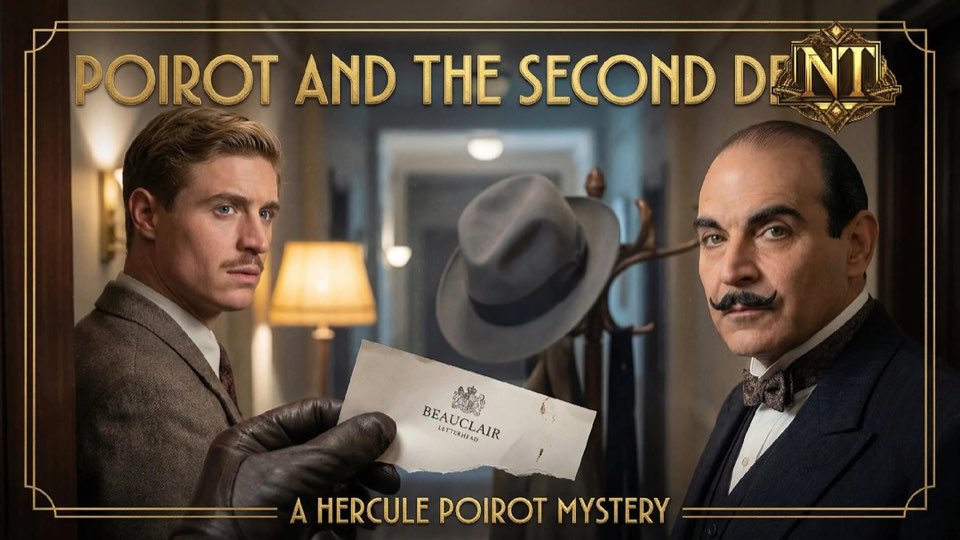
A foreign prince arrives in London and checks into the Hôtel Beauclair—polished brass, soft carpets, perfect discretion. By morning, he is dead in his suite. There’s no forced entry.
Rome is a city that forgives almost anything—so long as it happens quietly. Poirot and Hastings arrive for a restful fortnight, only to be drawn into the English colony’s favourite export: scandal.
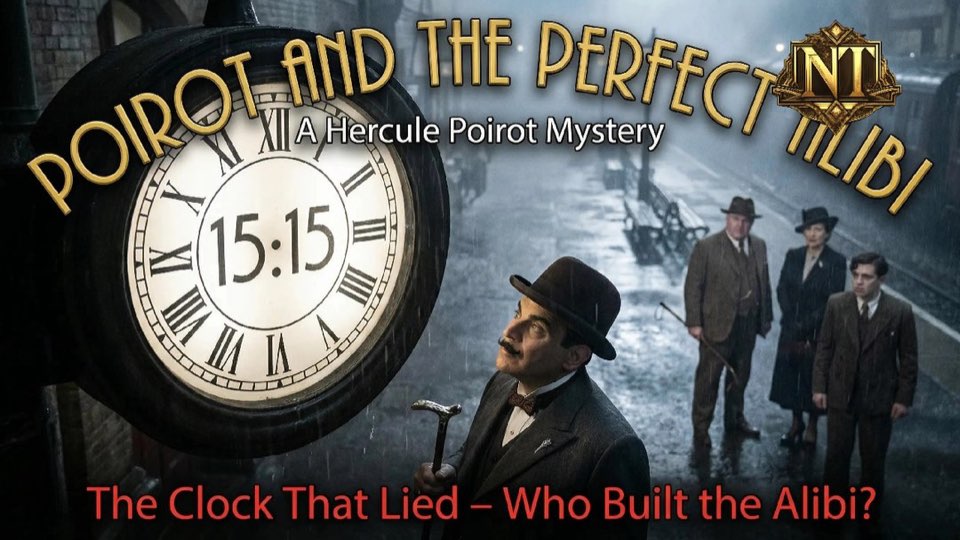
DESCRIPTION Marleigh Halt is the sort of country station where time doesn’t simply pass—it’s enforced. The station clock hangs over the platform like a judge, and everyone believes it.
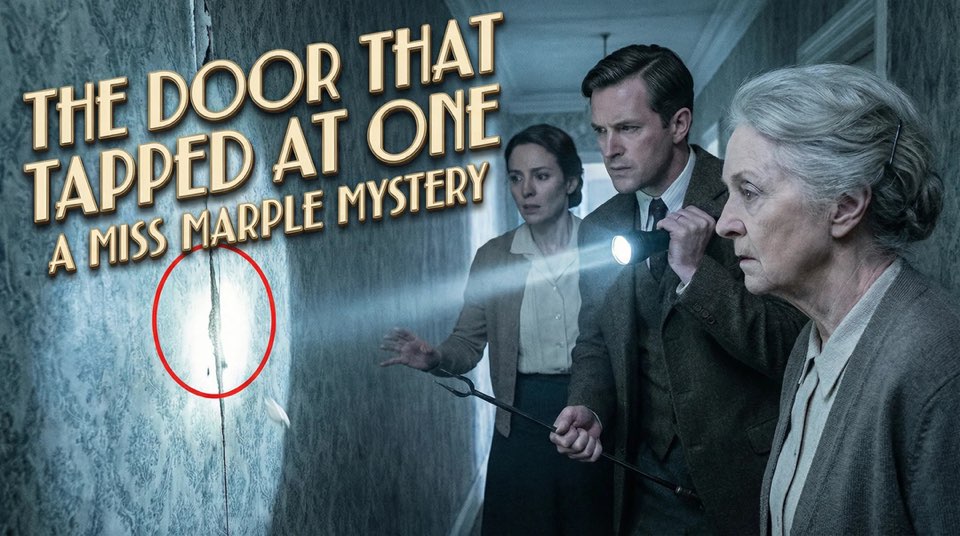
” But the house doesn’t add up. A corridor is too long. A wall holds the cold as if it’s hiding space. Tradesmen pause as if expecting a door where no door exists.
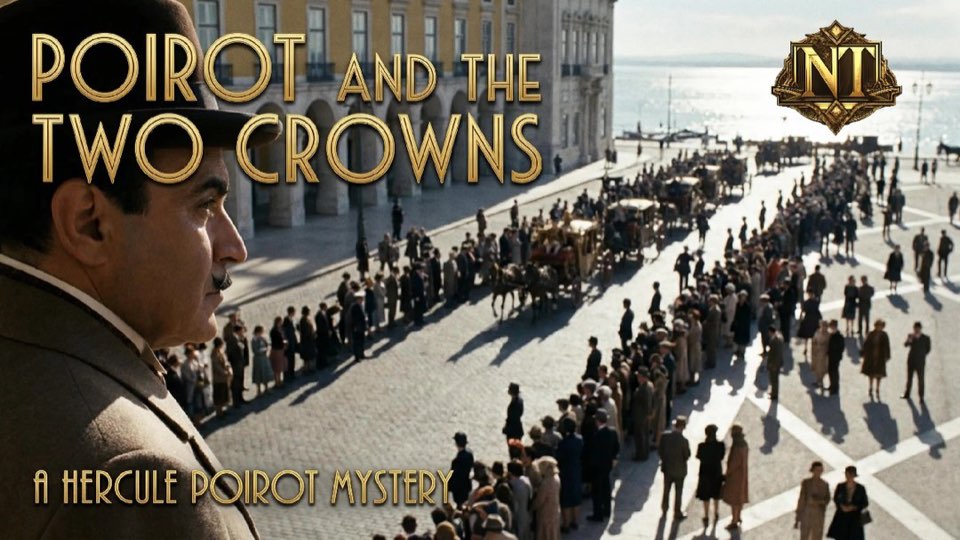
DESCRIPTIONLisbon, seen from the river, looks like a city built for peace—white hills, red roofs, and the Tagus glittering as if politics were merely a nuisance. Poirot does not trust it.
DESCRIPTIONLondon can turn from civilized to savage without changing its hat. One moment, Hercule Poirot is enjoying a modest lunch near Bloomsbury—watching the small “wrong” details in the crowd.
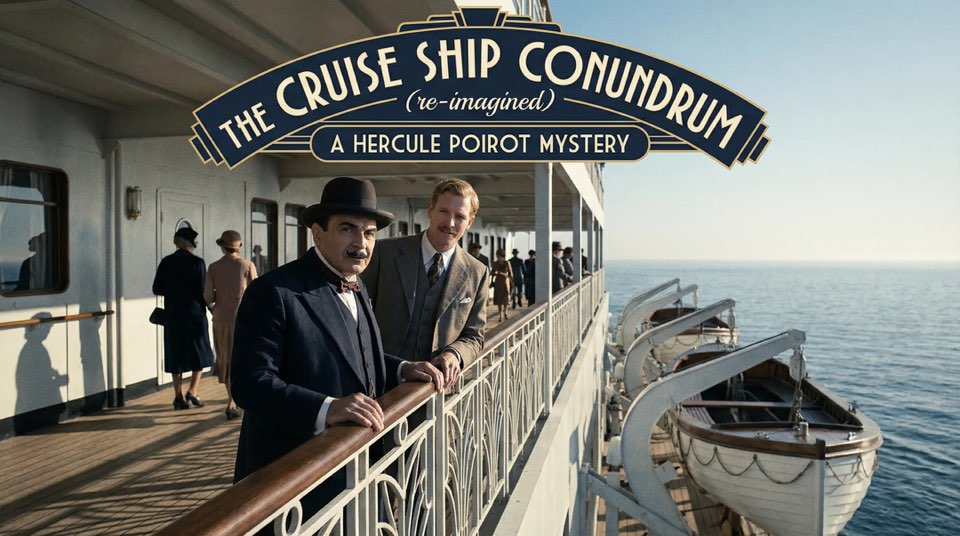
DESCRIPTIONThe SS Atlantica was built to sell an illusion: elegance, order, and escape. Then the sea starts moving… and so do the lies. Hercule Poirot boards the Atlantica hoping for rest—only to discover the ocean has declared war on his stomach.
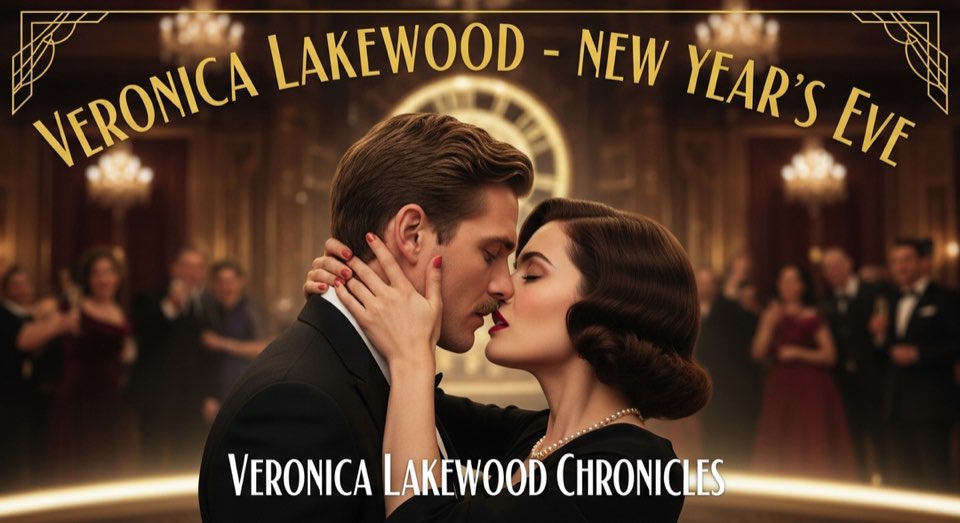
DESCRIPTION Chicago was counting down to midnight. Champagne flowed. Music rose. And beneath the glitter of wealth and confidence, something else was counting too.
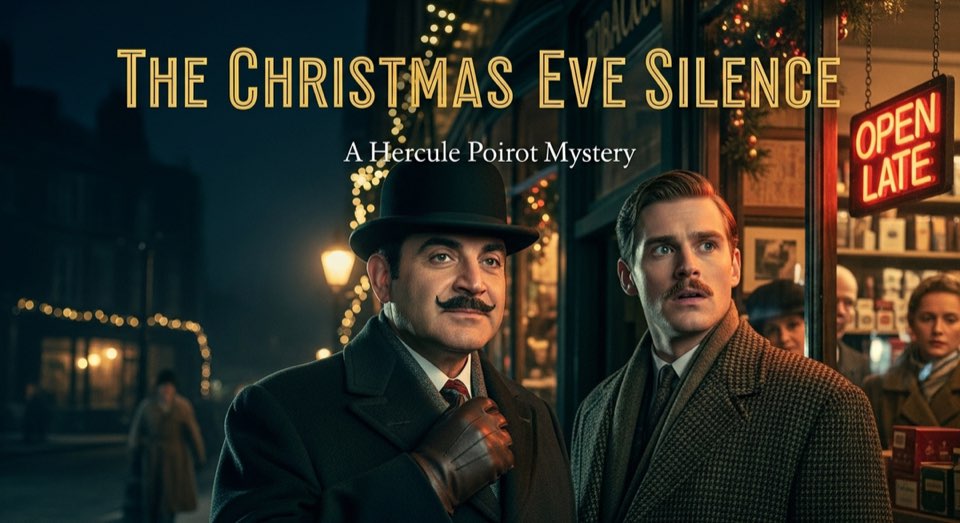
DESCRIPTION Christmas Eve makes honest people predictable. On Valette Street in London, a small tobacconist stays open late—lights on, till counted, routine unchanged. Then, behind the counter, two quiet shopkeepers are found shot dead… and the scene is staged to look simple.
DESCRIPTION Paris prides itself on elegance—especially on Christmas Eve. But beneath the glitter of Rue Montaigne, precision can become cruelty, and hospitality can conceal design.
DESCRIPTIONIreland’s western edge does not forgive mistakes. When Hercule Poirot and Captain Hastings arrive on Valentia Island, they find a community shaped by wind, duty, and silence—where men live with the sea as neighbour, judge, and grave.
DESCRIPTIONEdinburgh is a city of stone, sermons, and spotless reputations. It is also a city of keys quietly copied, doors politely unlocked, and secrets kept in careful columns.
Old English money doesn’t retire into peace. It retires into upholstery. At Wrenham Court, Mrs. Octavia Merrow ruled from a monstrous armchair with a silver bell at her elbow—an invalid in the English sense: less a medical condition than a position of power.
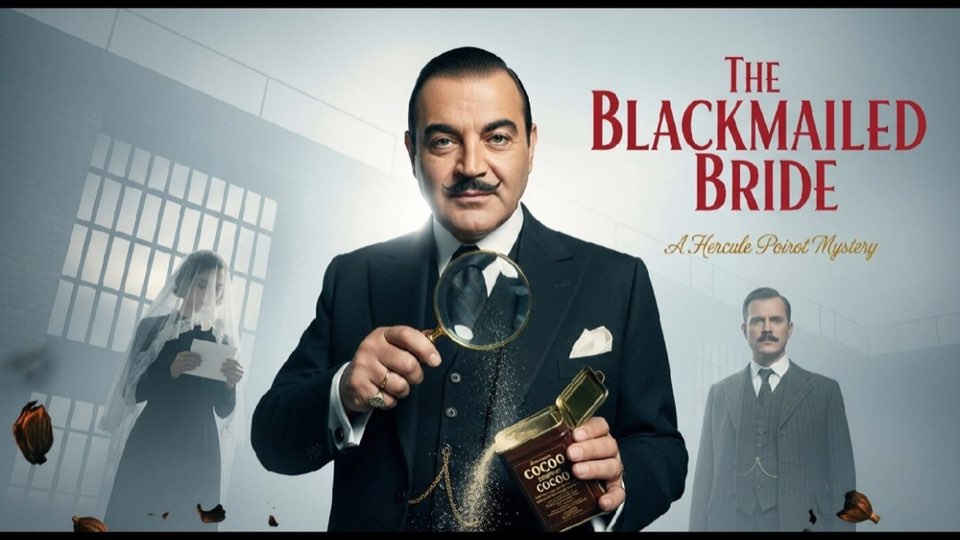
A poisoned cup of cocoa. A young woman arrested for murder. And a secret devotion hidden behind respectable smiles. When a sealed envelope arrives at Whitehaven Mansions, Hercule Poirot and Captain Hastings are drawn into a case that reeks of Victorian melodrama despite its modern setting.
A midnight shooting in a luxury hotel. A baseball idol who survives when he should have died. And a showgirl who fires twice — and still misses the truth.
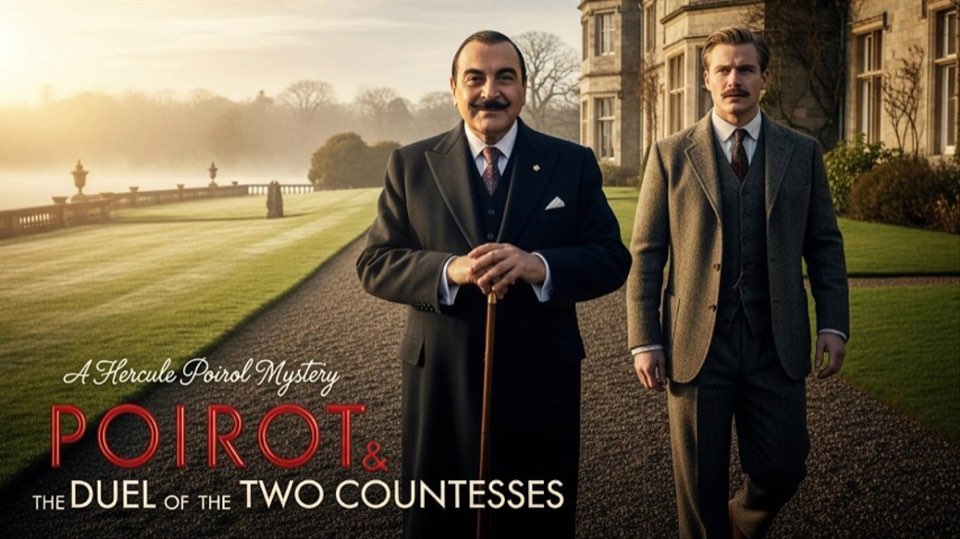
Two countesses. One duel at dawn. And a man found dead in the reeds before breakfast. When Lady Venetia Temple-Barrett and Lady Aurelia Westmarch settle a romantic rivalry with pistols at dawn, Poirot expects nothing more than aristocratic melodrama.
A bride and groom dead on their wedding night. A locked room in a “cursed” house. A perfect circle of scorched floorboards beneath a half-burnt bed. And one very determined little Belgian detective who refuses to believe in ghosts.
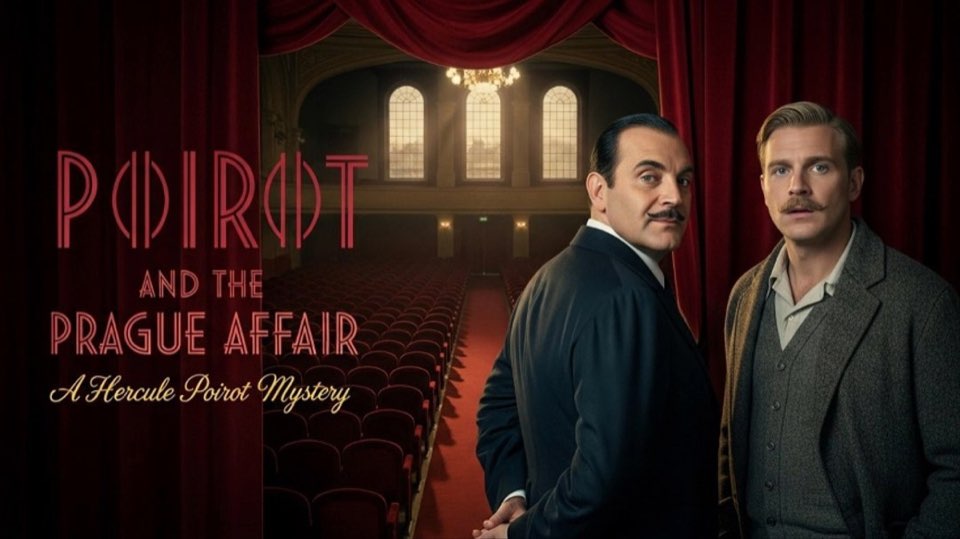
A divided city. A new opera called Eternal Love. And a baritone crushed to death behind the curtain on opening night. Hastings persuades Poirot to visit Prague for a “pleasant little cultural trip”, attending the premiere of Maestro Antonín Král’s controversial new opera.
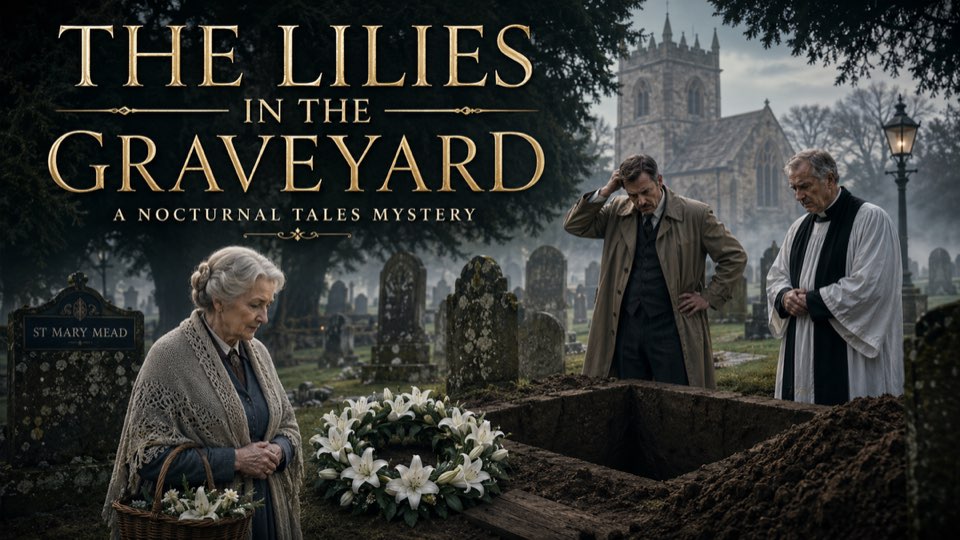
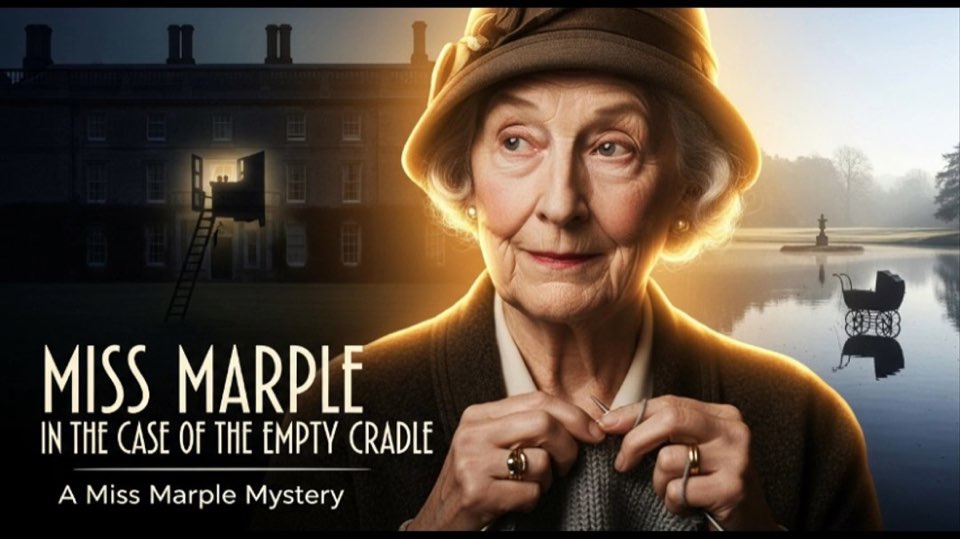
DESCRIPTIONA missing baby. A ladder at the nursery window. A ransom note demanding £10,000. And one very sharp old lady who sees what everyone else overlooks. When the Denhams’ infant son vanishes from his cot at Little Fellings, the whole of St Mary Mead is thrown into panic.
Thirty years ago, a young heir was believed drowned at sea. Now a stranger walks up to the gates of Tichborne Hall and claims to be the man who never came home. In a household split between hope and fury, Hercule Poirot is asked to decide the truth of a life.
London, 1920s: when a dazzling confidence artist begins leaving a trail of ruined men across the city — a jeweller dismissed as a lunatic after reporting vanished diamonds, a banker befriended at precisely the right moment then drugged and stripped of his holdings, a borrowed family left behind as collateral for a "baroness" who was never who she claimed — a brilliant Belgian detective and his faithful companion find themselves pursuing not a suspect but a phantom; she wears a hundred faces and answers to as many names, orchestrates illusions with the precision of a stage director, and turns every drawing room, jeweller's counter, and first-class hotel lobby into a theatre built entirely for her purposes — and when at last she steps from the shadows to confront her pursuer directly, the encounter becomes less an arrest than a duel between two minds that recognise, with mutual and uncomfortable clarity, how much they have in common; inspired by the real criminal prodigy Sheindlia-Sura Solomoniak, whose exploits fascinated police forces across Europe, while remaining entirely fictional, The Lady of Many Names is an original Golden Age-style mystery about elegance, deception, identity, and the dangerous art of illusion.
London, 1930s: when young American heiress Dorothea Willoughby vanishes without trace between Bond Street and Grosvenor Street — her book and chocolates found, her maid bewildered, and her wealthy uncle arriving from New York demanding answers the Metropolitan Police have no interest in finding — a brilliant Belgian detective and his faithful companion unravel a hidden world of secret appointments with a discreet Bayswater physician, a forbidden romance, a fifty-pound cheque drawn in desperation, and a young woman who chose her own fate over the one society had already written for her; what seems at first a scandalous elopement conceals a deeper moral reckoning, where family pride and a transatlantic fortune prove far less powerful than a single hidden letter that finally speaks the truth; inspired by the real 1910 disappearance of Dorothy Arnold while remaining entirely fictional, The Vanishing Heiress is an original Golden Age–style mystery about courage, secrecy, and the price of freedom.
A letter from America, a dead blackmailer in a luxury Chicago hotel, and Veronica Lakewood—very much alive—asking Captain Hastings to cross the Atlantic.
Marchford: a respected country solicitor stands in the dock accused of slow poisoning his wife and his senior partner with arsenic, and the town has already written its verdict in whispers; when an elderly physician, troubled by the first “influenza” death he certified, sends a private letter for help, the Belgian Detective and his loyal companion arrive to find tainted bottles, damning laboratory tests, and far too many everyday sources of arsenic—weedkiller, rat paste, chemists’ preparations—moving quietly through respectable hands; as Hereford Assizes approach, the case turns on a chemist’s ledger, a carefully timed dose, and the difference between what can be proven and what is merely believed, until a final reconstruction forces the court to see the murderer hiding behind manners, reputation, and the comforting logic of a perfect suspect; inspired by historical crime methods of its era while remaining entirely fictional, The Arsenic Brief is a Golden Age–style mystery of pride, gossip, and forensic misdirection where the truth must be reached before the wrong man hangs.
London, 1930s: a notorious society widow sits in Newgate awaiting the scaffold while newspapers turn her case into a fashionable obsession, and when her letter reaches the Belgian Detective insisting the fatal shot came after her husband was already dying, he and his loyal companion pursue the truth through Bloomsbury rooms, legal half-truths, and stage-bright gossip where reputations are curated, witnesses perform, and a missing alibi becomes the most valuable prop of all; as the execution date closes in, the investigation tightens around jealousy, theatre, and the quiet mechanics of a lie until the final revelation arrives like a last curtain call; inspired by historical crime of its era while remaining entirely fictional, The Woman on the Scaffold is an original Golden Age–style mystery about spectacle, vanity, and what a crowd is willing to believe.
Madrid, 1920s: expecting sunshine and civility, the Belgian Detective and his loyal companion step into a shabby boarding house where a devout widow lives like a miser while quietly sitting on a hidden fortune—until an anonymous blackmail letter tightens the air and the widow is found strangled and burned in her locked bedroom, with petrol, lies, and inheritance schemes smouldering in every corridor; as lodgers feud, a nephew sulks, and a second suspicious fire threatens to erase the truth, the investigation turns on who profited from fear, who forged “respectability,” and who needed the ashes to speak for them; inspired by historical crime of its era while remaining entirely fictional, this is an original Golden Age–style mystery of blackmail, false heirs, and a house where everyone dreads what daylight would prove.
England, 1930s: when a young heiress vanishes from the quiet village of Alderbury, the neighbours settle on the comforting story of elopement—until a feverish stepmother swears she has dreamt of a grave no dreamer should know and a red-painted barn begins to draw the wrong kind of attention; as the Belgian Detective and his loyal companion trace the case through barred footpaths, guarded fields, a peculiar bullet, and curtains that conceal more than lace, they discover that imagination can be a weapon, dreams can be staged, and the truth can be buried where the village insists no one would dare; inspired by classic Golden Age traditions while remaining entirely fictional, The Scarlet Barn Mystery is an original countryside whodunit about jealousy, delusion, and the danger of believing the first “reasonable” explanation.
Paris, 1935: beneath the painted ceilings of the Louvre’s Galerie d’Apollon, a “worker” with the right badge and the wrong eyes turns a routine morning into a precision theft—leaving empty mounts, a false crown, and a museum full of respectable witnesses who saw everything except the truth; as the Belgian Detective and his loyal companion follow the trail through restorers’ workshops, registrar ledgers, and carefully timed movements that lasted only minutes, they uncover a crime built on access, vanity, and the dangerous assumption that tradition itself is a lock; inspired by a real modern Louvre jewel theft while remaining entirely fictional, The Jewels of Apollon is an original Golden Age–style mystery about appearances, privilege, and the one person hiding in plain sight.
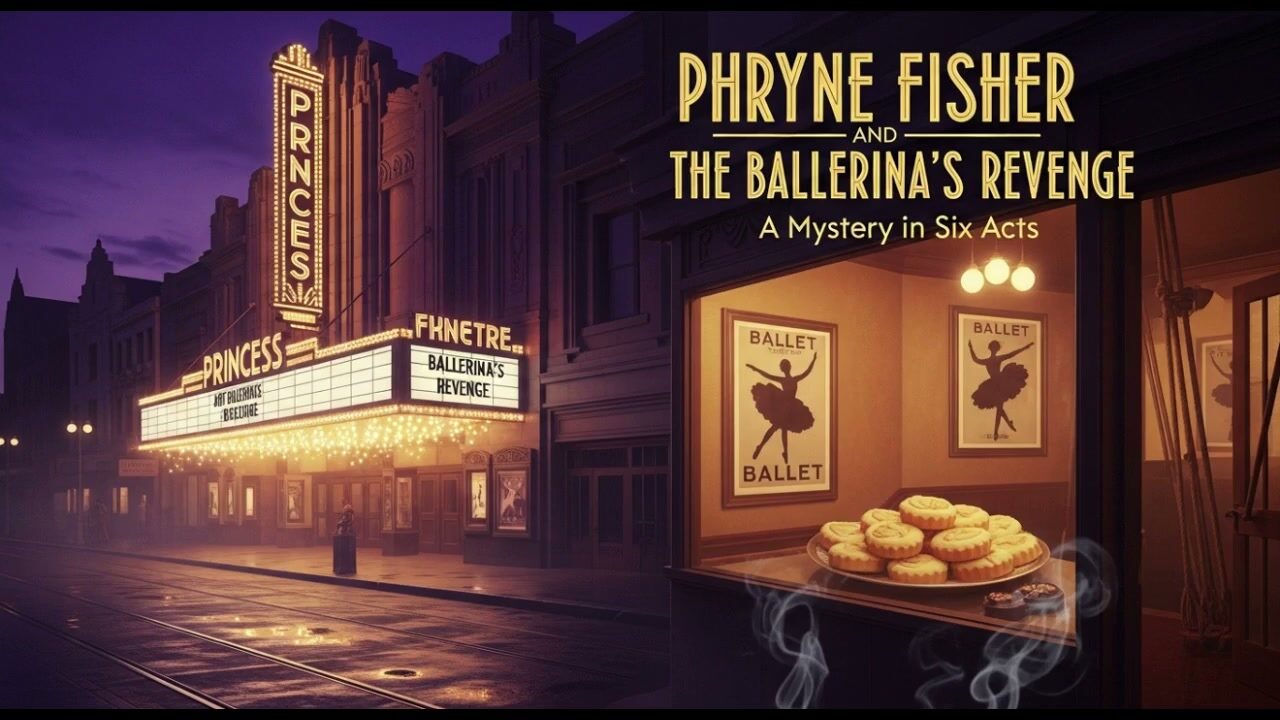
A poisoned pastry. A jealous prima ballerina. And one very elegant detective with an incurable weakness for cake. When Melbourne's Princess Theatre becomes the scene of an "accidental" poisoning, the city's most stylish lady detective finds herself surrounded by satin, rivalry and deceit.
London in winter: at Lady Calthorpe’s glittering engagement ball—champagne, diamonds, and a room full of perfect smiles—a single toast ends with a fallen glass and a death staged to look like misfortune, until the Belgian Detective and his loyal companion follow the quiet trail of green silk, sisterhood, and switched moments where the smallest exchange becomes fatal; as letters surface, secrets tighten around Lord Julian Ashbury and the American heiress Livia Armitage, and society’s manners begin to behave like alibis, the case turns on envy disguised as affection and poison disguised as elegance; inspired by historical crime of its era while remaining entirely fictional, The Ashbury Engagement is an original Golden Age–style mystery about reputation, romance, and the hand that moved among the glasses.
Jamaica, 1930s: seeking rest at Kingston’s Myrtle Bank Hotel, the Belgian Detective and his loyal companion are jolted awake by a late telephone call that names an address on Orange Street—yet the street, in the form described, does not exist; the “errand” leads into rain, misdirection, and a house of sticks and smoke, where a careful husband insists on order, a wife lies lifeless beneath polite explanations, and a crime is staged to pass as coincidence; following cheroot ash, mirror-bright timing, and the quiet square where truth waits, Poirot unmasks the hand that placed every detail just so; inspired by historical crime of its era while remaining entirely fictional, The Rain on Orange Street is an original Golden Age–style mystery about dignity, deception, and the danger of a perfectly arranged story.
” FOR LISTENERS This is an original Golden Age–style mystery presented as a respectful homage to classic detective fiction. All characters and events in this story are fictional. No affiliation, endorsement, or official connection is implied.
Venice, 1928: after a masked ball on the Grand Canal, two rivals meet for a dawn “duel” that looks honorable until a missing second pistol, a forged note, and a third boat among the piles reveal a performance designed to steer blame; the Belgian Detective and his loyal companion follow whispering portraits, perfume trails, and social power disguised as romance, exposing how persuasion can kill more neatly than a bullet; inspired by historical crime of its era while remaining entirely fictional, The Countess of Shadows is an original Golden Age–style mystery of jealousy, influence, and staged respectability.
Northern England, early 1930s: on the eve of All Hallows’, whispers spread through the village of Little Brackenby that a headless rider has returned to the lane, bringing hoofbeats in the mist, old fear, and the promise of death; when the Belgian Detective and his loyal companion arrive, they find a countryside thick with superstition, inheritance worries, nervous witnesses, and a haunting that seems to keep perfect time, where a village legend, a grand house, and a carefully managed fright begin to point not toward the supernatural, but toward motive; from fog-bound roads to porch stones and midnight movements, the case becomes a Halloween battle between ghost-story terror and cold human design, until reason rides down what fear has dressed as a phantom.
High in the Scottish Highlands, mist coils around Glencarron Castle as a laird is found dead beneath a locked tower, a black-wax seal is torn in two, and the household whispers of a Grey Lady seen on the ramparts at moonrise; the Belgian Detective and his loyal companion arrive to test superstition against evidence—tracking telegrams, broken seals, and private grief through stone corridors, peat smoke, and a loch that keeps its own counsel—until the case presses into a rare corner where motive and method do not fully answer the feeling of being watched; entirely fictional and written in homage to classic detective fiction, The Grey Lady of Glencarron is an original Golden Age–style mystery about pride, secrecy, and the uneasy border between reason and belief.
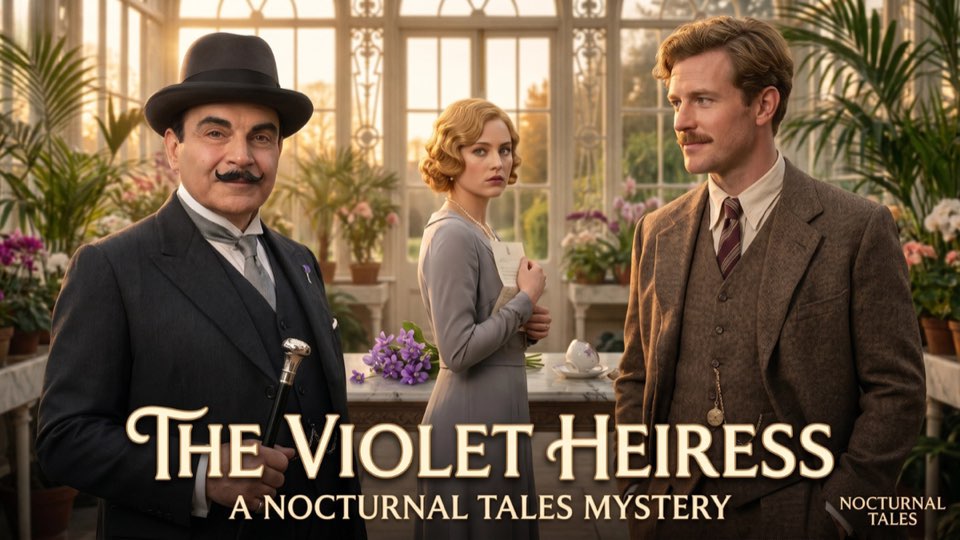
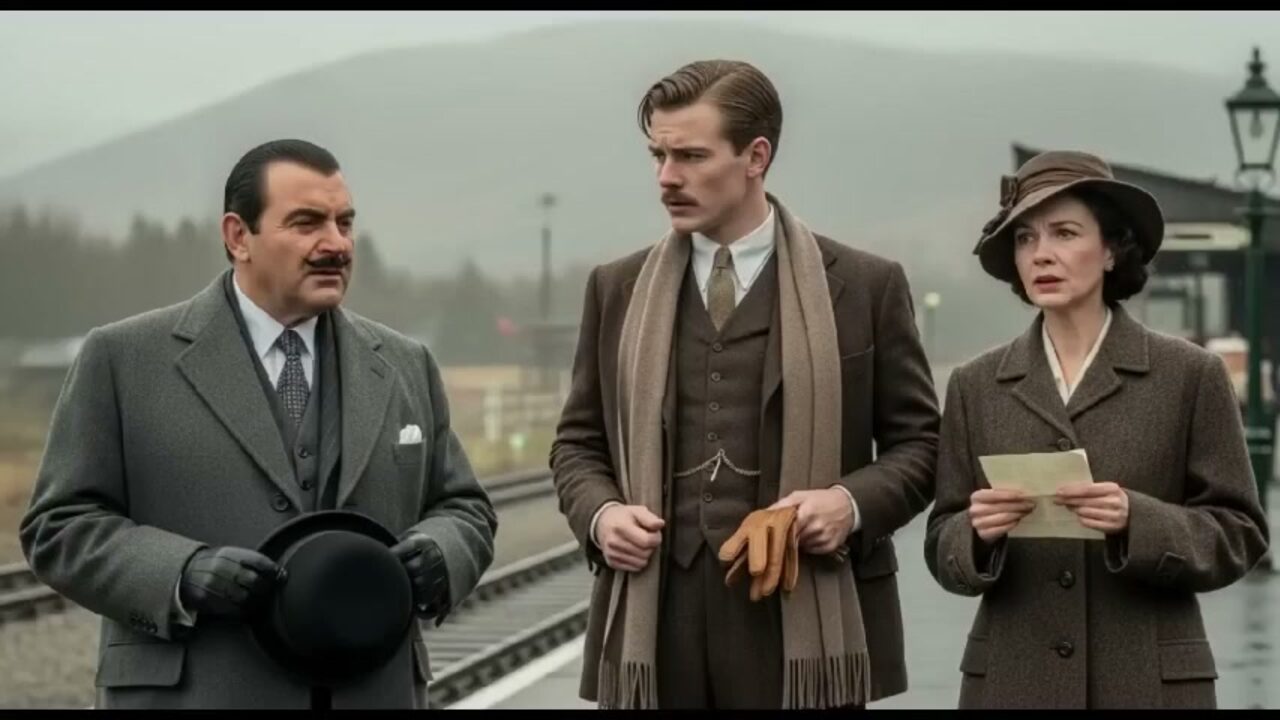
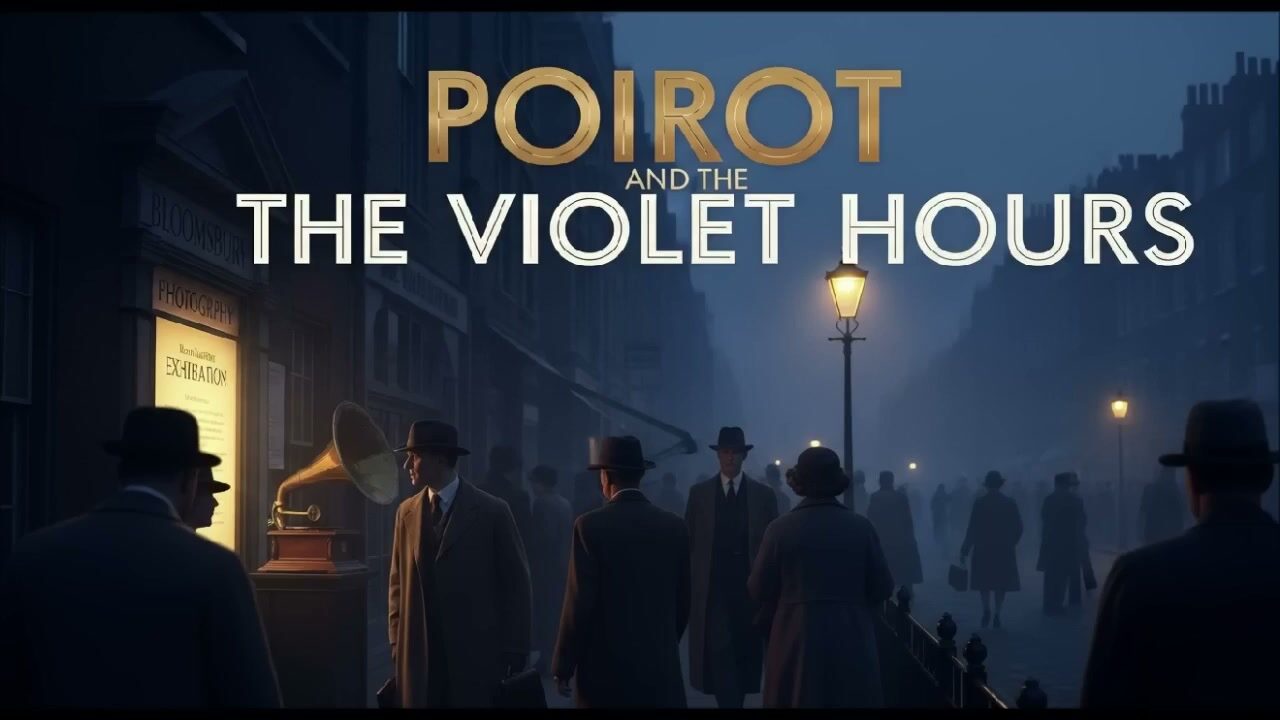
London, 1937: a rising young actress with violets pinned to her coat vanishes into fog and is found dead in Bayswater beneath a crime staged with theatrical precision, so the Belgian Detective and his loyal companion trace the trail through photographers’ studios, tea-rooms, agents’ offices, and late-night telephone calls where a single voice keeps returning like a cue that will not end; as plaster dust, studio lights, and carefully managed reputations pile up, the case becomes less about passion than about control—about the danger of becoming someone else’s “arrangement,” and the kind of mind that treats a human life like a production; entirely fictional and written in homage to classic detective fiction, The Violet Hours is an original Golden Age–style mystery of ambition, concealment, and the fatal cost of being curated.
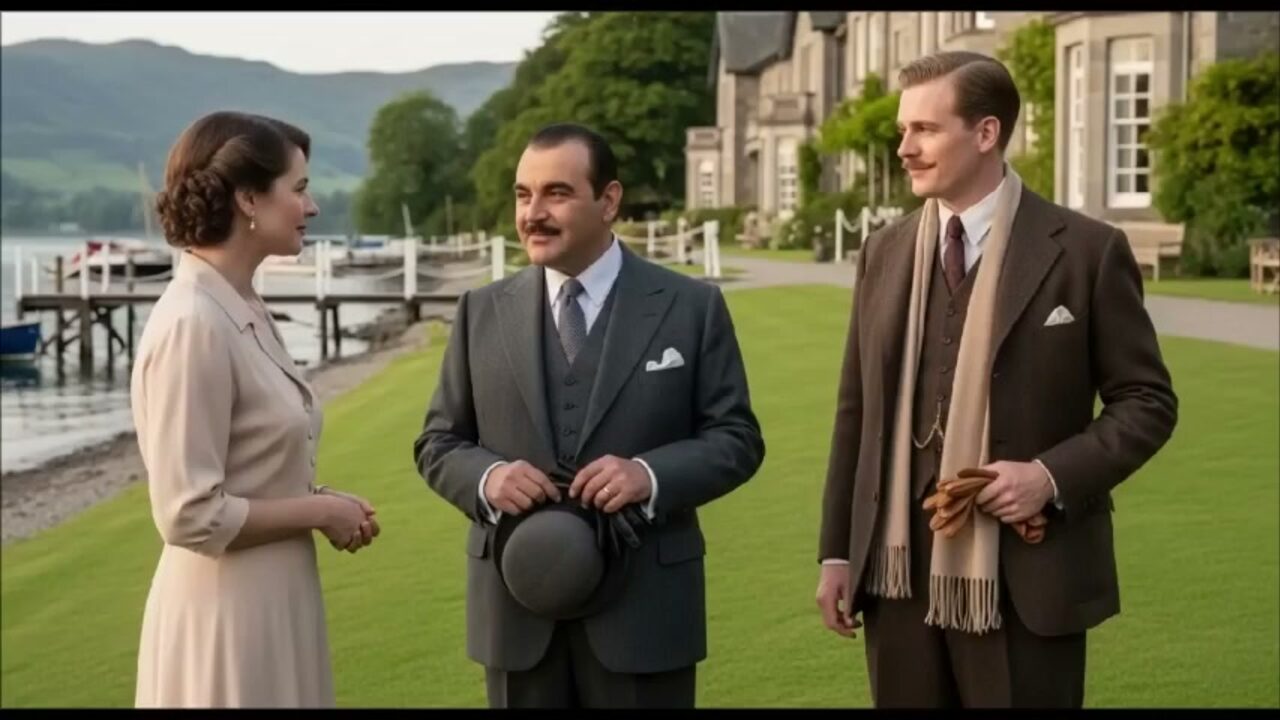
Lake Windermere, summer: at Brantmere House, a fashionable gathering of swimmers, journalists, and polite rivalries turns fatal when the hotel’s most famous guest is found drowned at dawn—an “accident” the room is eager to accept—until the Belgian Detective notices what the lake cannot disguise: a watch that stops minutes too late, footprints placed too carefully to be natural, and a bathing cap carrying a scent that should not be anywhere near cold morning water; as statements harden into convenient stories and reputations demand a quick conclusion, the investigation tightens around a husband with too tidy a grief, a doctor whose calm has an edge, and a journalist who knows exactly which truth sells; inspired by historical crime of its era while remaining entirely fictional, The Hour After Death is an original Golden Age–style mystery about time, performance, and what a quiet lake will not allow to stay hidden.
Fog over Schiphol, three sealed crates, and a “routine” hop to Antwerp turn into a national embarrassment when state bullion arrives as lead; the Belgian Detective and his loyal companion trace duplicated seals, forged manifests, and a rope that vanishes into a Dutch canal, moving from hangars and watch huts to towpaths at dusk where habit, not brilliance, betrays the thieves; with officials demanding a clean explanation and suspects smiling too easily, the investigation tightens through paperwork, timing, and the ninth minute that shouldn’t exist; inspired by the historical crime-feel of its era while remaining entirely fictional, The Flight to Antwerp is an original Golden Age–style mystery about appearances, procedure, and the quiet arrogance of men who think logistics makes them invisible.
Cairo at dusk: a marriage of pride and porcelain fractures in public, and in the cool shadow of the Nile a quarrel ends in two shots that powerful people would prefer to file away as “unfortunate”; when the prince of Zamalek is found dead and his French wife stands accused, the Belgian Detective and his loyal companion enter a world where diplomacy replaces truth, witnesses are managed, and appearances become weapons, leading from marble government halls to the corridors of the Savoy Hotel as a sealed letter, a carefully staged confrontation, and a verdict delivered too quickly point to a design deeper than jealousy; inspired by historical crime of its era while remaining entirely fictional, The House on the Nile is an original Golden Age–style mystery about reputation, influence, and the price of justice when politics demands silence.
London, 1938: a society wife falls ill after tasting an elegant gift—chocolates tied in green silk, delivered with flawless manners and a lingering whisper of gardenia—while the Belgian Detective and his loyal companion trace a crime designed to look like coincidence and taste like privilege; from famous confectioners’ counters to Park Lane drawing rooms, the case tightens through ribbons, receipts, telephone voices, and mirror-bright alibis where every bow hides a hand and every reflected face belongs to someone practicing a lie; inspired by historical crime of its era while remaining entirely fictional, The Mirror of Jealousy is an original Golden Age–style mystery about envy, performance, and the lethal power of a “respectable” gift.
Snow drifts along Arlington Street, and inside Boston’s grand Ritz-Carlton a young socialite is found dead in her suite with a revolver near her hand, an unfinished telegram, and a whisper of perfume that does not belong to her, while the authorities settle on suicide and move on; the Belgian Detective and his loyal companion call it theatre, and follow powder traces, a torn message, and the movements of a “lady in grey” through marble corridors into a world of galleries, stolen art, and reputations curated like exhibits, where a locked room is only as closed as the person who controls the story; The Ritz-Carlton Affair is an original Golden Age–style mystery about performance, social power, and the flaw that betrays every perfect surface.
In Norfolk’s marsh country, a beloved young man is found at dawn against the grating of Reedhaven’s old sluice tower, and by noon the village has already chosen its culprit, but the Belgian Detective and his loyal companion read a harsher, quieter narrative in paraffin on a rail, chalk on a cuff, and a knot tied the wrong way; as a publican’s ledger, a developer’s maps, and a mother and daughter on the marsh’s edge pull the case between money, inheritance, and local loyalty, the investigation becomes a fight against gossip that wants closure more than truth, until the spring-tide night reveals what the reeds have been hiding; The Whispering Reeds is an original Golden Age–style mystery about community judgment, land hunger, and the dangerous comfort of blaming the person everyone already mistrusts.
In dazzling Budapest, a count collapses during an opera gala with a ruby glass in hand and a lipstick “kiss” that condemns his wife in the salons by morning, but the Belgian Detective and his loyal companion suspect a colder design: a repeatable habit, a sweetened routine, and pride sharp enough to weaponize gossip as neatly as poison; from café whispers and military testimony to a midnight salon where reputations are traded like currency, the investigation follows sugar grains, timing, and the politics of appearances to a bitter-sweet truth—and a final reckoning on a Vienna platform; The Countess’s Kiss is an original Golden Age–style mystery about scandal, misdirection, and the danger of letting a city decide guilt before evidence speaks.
Under the blazing Florida sun at a grand Palm Beach hotel, a glittering birthday party ends with an English investor found dead the next morning, and the Belgian Detective and his loyal companion step into a closed circle of elegant guests where jealousy, blackmail, and quiet bargains hide beneath champagne manners and tropical brightness; as women and men offer competing testimonies and the “net” tightens through timings, overheard promises, and one orchid-scented detail that refuses to fit, the investigation exposes how high society turns passion into motive and scandal into leverage; inspired by historical crime of its era while remaining entirely fictional, The Palm Beach Tragedy is an original Golden Age–style mystery about reputation, desire, and the danger of treating murder as a private inconvenience.
In a perfectly punctual Swiss hotel in Lucerne, a millionaire’s cat vanishes without a sound—and with it a tiny ribbon-tied key to a jewel casket—pulling the Belgian Detective and his loyal companion into a light, closed-circle puzzle of immaculate timetables, fussy guests, and staff who hide behind “good hygiene” and louder complaints; as whispered suspicions multiply and an inconveniently well-fed Minou reappears, Poirot follows routine, appetite, and opportunity to expose a thief who counted on order to mask disorder; The Collar of Intrigue is an original Golden Age–style cozy mystery about misdirection, petty greed, and the quiet power of noticing what everyone else dismisses.
In Mayfair, a duke’s reputation teeters when indecent photographs surface and an heirloom snuffbox disappears, drawing the Belgian Detective and his loyal companion into a polished maze of solicitors, theatrical aristocracy, and carefully staged respectability where ribbons, rings, and “headless” photographs suggest a blackmail plot too elegant to be accidental; as a lethal “cherub” contrivance turns scandal into real danger and whispered gossip becomes a weapon, Poirot must separate what the camera shows from what it hides and expose who is trading vanity for power behind the drawing-room curtain; The Duchess, the Snuffbox & the Cherub is an original Golden Age–style mystery about deception, social leverage, and the ruthless art of making ruin look like coincidence.
In Jazz-Age Paris, violet ink, red wax seals, and duplicate bonds pull the Belgian Detective and his loyal companion into Montparnasse glamour where money moves behind art, theatre, and reputation, and an accountant’s death turns a sophisticated fraud into a locked-door moral problem: who forged the paper, who clipped the coupons twice, and who staged a dazzling public life to hide private leverage; as ledgers, signatures, and staged affections collide at the Théâtre de l’Aurore, the investigation exposes a predator who understands that in a city of masks, the cleanest crime is the one that looks like dancing.
In 1920s Kenya, a winter safari meant for sunshine turns lethal when a “hunting accident” unfolds a little too perfectly, drawing the Belgian Detective and his loyal companion into a closed circle of brash wealth, hard-edged professionalism, wary partnership, and a fiancée whose charm conceals steel; with rifles, routes, and witness stories competing under the equatorial glare, Poirot must determine whether fate truly misfired—or whether murder was staged to look like mischance, with inheritance and power waiting quietly behind the tents; The Will of the Savannah is an original Golden Age–style mystery about entitlement, misdirection, and the dangerous belief that distance and wilderness erase accountability.
At a Piccadilly theatre, a celebrated conjurer attempts the notorious “bullet catch” illusion, but when a second bang echoes and the magician collapses, the Belgian Detective and his loyal companion are pulled into a world of contracts, rival performers, stagehands, and polished showmanship where smoke, mirrors, and motive hide in plain sight; as prop rooms lock, gloves change hands, and the line between accident and design narrows to a single timed moment, the investigation becomes a test of who controlled the apparatus, who profited from failure, and who needed the audience to believe in misfortune; inspired by historical crime of its era while remaining entirely fictional, The Magician’s Last Trick is an original Golden Age–style mystery of performance, deception, and the lethal precision of stagecraft.
In the Irish village of Ballycarrick, a minister and a choir singer are found dead beneath a crabapple tree with love letters scattered like confetti and one crucial hat missing, and as the entire town rushes to supply its own version of events, the Belgian Detective and his loyal companion must separate theatre from evidence before vanity and gossip decide the verdict; keys that do not speak, umbrellas that move without explanation, and silences carefully rehearsed in shops and schoolrooms turn a supposed crime of passion into a problem of timing, reputation, and what a community is willing to pretend it did not see; inspired by historical crime of its era while remaining entirely fictional, The Shadows of Ballycarrick is an original Golden Age–style mystery about public performance, private sin, and the danger of letting rumor write the ending.
In Norfolk, the famed “Lady in Brown” legend clings to a grand country house staircase, and when a death occurs amid whispered sightings and nervous servants, the Belgian Detective and his loyal companion must decide whether the haunting is superstition—or a practical murderer using folklore as camouflage; as suspects multiply, traps are laid, and reputation collides with fear, the case turns on staged appearances, timed footsteps, and the ruthless advantage of letting everyone chase a ghost instead of a human hand; inspired by historical crime of its era while remaining entirely fictional, The Lady in Brown is an original Golden Age–style mystery about deception, social performance, and the lethal usefulness of a legend.
In 1920s New York, a nightclub cigarette girl is pulled from the Hudson and the city’s glitter turns instantly to whispers, drawing the Belgian Detective and his loyal companion into a Jazz Age web of secrets where scandal, blackmail, and betrayal move as easily as cash and favors; as a silver cigarette case, a shadowed alley, and a gentleman’s carefully protected name reshape what the police think they know, the investigation becomes a battle between appearances and evidence in a world built to tidy messes before anyone asks who made them; inspired by historical crime of its era while remaining entirely fictional, The Lady of the Hudson is an original Golden Age–style mystery about reputation, exploitation, and the price of silence.
In a polished London townhouse, a nurse-companion is found dead and the case is filed away as suicide with suspicious haste, yet the Belgian Detective and his loyal companion notice the small frictions that should not exist in a “tidy” tragedy—candles that burn for the wrong purpose, keys that travel too easily, and a version of events arranged to look finished before anyone asks questions; as a too-perfect household story begins to crack, the investigation follows letters, basement movements, and quiet medical authority toward a colder truth about control and concealment; inspired by historical crime of its era while remaining entirely fictional, The Case of the Polished Stairs is an original Golden Age–style mystery about manipulation, procedure, and the danger of accepting convenient explanations.
In 1930s London, a self-possessed princess arrives at Whitehaven Mansions with missing letters capable of toppling reputations, drawing the Belgian Detective and his loyal companion into a maze of salons, private bargains, and social leverage where charm is currency and discretion is a weapon; as claims tighten, traps are laid, and ledgers begin to speak, the investigation turns on who profits from ruin, who is protecting legacy, and how easily “respectability” can be bought with ink and silence; inspired by historical crime of its era while remaining entirely fictional, The Shadow of Scandal is an original Golden Age–style mystery about blackmail, loyalty, and the quiet violence of social power.
In 1840s Munich, a glittering gala becomes a pressure-cooker of scandal when a celebrated dancer enthralls high society and quietly collects enemies, and after tragedy strikes behind the ballroom doors the Belgian Detective must read the room as carefully as the evidence—roses that signal allegiance, letters that trade secrets, whispered threats, and a timetable that proves someone moved at exactly the wrong moment; inspired by historical crime of its era while remaining entirely fictional, The Last Dance in Munich is an original Golden Age–style mystery of reputation, jealousy, and the fatal cost of turning a public performance into a private war.
Summoned to the Old Bailey to sit on a Special Jury, the Belgian Detective enters a trial that appears simple—a quarrel overheard, a father dead, a son arrested with a bloodied knife—yet inside the solemn woodwork and ticking clocks, certainty fractures as voices through walls, missing keys, and disputed timing complicate what the courtroom wants to call “obvious”; as twelve jurors divide between swift judgment and disciplined caution, the case becomes a battle between conscience and momentum, where the true stakes are not pride but a life that cannot be returned once taken; The Jury of Doubt is an original Golden Age–style mystery about persuasion, procedure, and the moral weight of deciding what “proof” really means.
In 1930s Buenos Aires, the Belgian Detective and his steadfast companion enter the glittering household of a young, wealthy widow surrounded by jealous admirers, whispered letters, pious scrutiny, and a woman with a shadowed past, only for the hostess to be found dead beside an antique pistol and suspicion to spread through every devotion and every virtue; as motives sharpen into obsession and loyalty begins to look like leverage, the investigation exposes betrayal beneath elegance—and tests the companion’s own resolve when an old fascination resurfaces in the heat of a foreign city; The Pistols of Buenos Aires is an original Golden Age–style mystery of passion, reputation, and the perilous line between love and possession.
When the Belgian Detective departs for Brussels, his loyal companion expects a quiet weekend but is instead drawn to Chudleigh Manor, where missing jewels, mounting debts, and suspicion over the heir turn a country-house visit into a test of nerve, luck, and amateur deduction; with Inspector Graves watching closely and no master detective at hand, the case unfolds through comic missteps, false leads, and one brave attempt after another until an apparent muddle reveals a sharper pattern beneath; The Case of the Unwitting Detective is an original Golden Age–style mystery about appearances, loyalty, and the surprising value of persistence when brilliance is out of town.
In the bleak northern dales, the Belgian Detective and his steadfast companion arrive at Blackwood Grange, where whispers of a child’s ghost and eerie organ music in the night have turned a troubled household into a stage of fear, suspicion, and private advantage; as family tensions sharpen and the supposed haunting presses its chosen victim toward despair, reason must cut through moorland gloom, staged phenomena, and calculated manipulation to expose the human design behind the terror; The Ghost of Blackwood Grange is an original Golden Age–style mystery about deception, inheritance pressure, jealousy, and the danger of weaponizing superstition.
At Wealdon Lodge, a country house weekend of sport, poker, and polished hospitality turns deadly when a quarrel ends in a death in the mist, drawing the Belgian Detective and his loyal companion into a web of jealousy, rivalry, gambling tensions, and carefully managed appearances where each conversation feels like a wager and betrayal waits for the final hand; inspired by historical crime of its era while remaining entirely fictional, A Game of Hearts is an original Golden Age–style mystery of pride, deception, and the dangerous moment when competition becomes motive.
London in the 1920s hosts a glittering masquerade at Albemarle Hall where midnight brings not romance but danger, drawing the Belgian Detective and his trusted companion into a maze of disguises, staged encounters, and whispered loyalties as a royal guest becomes the target of a carefully choreographed conspiracy; inspired by historical crime of its era while remaining entirely fictional, A Royal Masquerade is an original Golden Age–style mystery of political intrigue, theatrical misdirection, and the lethal advantage of hiding in plain sight.
A lady in grey appears, a crucial signature is forged, and quiet rumors of a double spread through Greybourne Court as the Belgian Detective and his trusted companion enter a Kentish case of inheritance conflict, legal peril, and identity fraud where every polite conversation hides a private calculation and every document may be a weapon; blending elegant deduction with gothic tension while remaining entirely fictional, The Silent Signature is an original Golden Age–style mystery about deception, control, and the high price of trusting appearances.
At a glittering country house gathering, a famous diamond vanishes in full view of respectable guests, servants, and locked routines, and the Belgian Detective must untangle a chain of witness statements shaped by pride, fear, vanity, and selective memory until a seemingly impossible theft becomes a precise human design; inspired by historical crime fiction of its era while remaining entirely fictional, The Castlecourt Diamond Affair is an original Golden Age–style mystery of perception, class performance, and the danger of trusting what appears obvious.
Florence, 1928: behind the beauty and order of a Renaissance palazzo, Count Alessandro is found dead in his study—and the household closes ranks before the questions even begin.
On a winter journey to a country house, a chance encounter on the railway turns unsettling when Captain Hastings meets a courteous gentleman carrying a large sum of money—only for the man to vanish without explanation at Brackwell Station.
In the hushed corridors of a Wiltshire country estate, a sudden death casts a very long shadow. When Lady Blaine dies in her bedroom at Winterleigh Hall and the local doctor calls it a tragic accident, the family would prefer the matter closed.
In the grimy backstreets of 1930s London, the regulars of Mutton Lane know Michael Malloy as a man the world barely sees — except when he is propping up the bar of O’Shaughnessy’s.
Snow lies thick over a quiet English village at Christmas… and the postman who should be bringing letters and cards simply never finishes his round. When a well-liked village postman disappears on a winter’s afternoon, most people mutter about accidents and snowdrifts.
A man without a past. A confession without a name. And a father willing to pay any price for his son. In 1925 London, a distressed man walks into Scotland Yard and calmly confesses to murder — but he cannot remember who he is, or whom he has supposedly killed.
In the shadowed hills of West Virginia, the dead do not always stay silent. When a young woman dies under “natural” circumstances, her sister begins waking in the night to the sound of her voice — begging her to look again.
In a paneled hall lit by candles and whispered oaths, one man does not rise from the toast. At a formal Freemasons’ banquet in 1930s London, Brother Linton collapses with his glass still in hand.
Winter settles over the Dordogne — and death comes quietly with it. During a tranquil holiday at a secluded French estate, Hercule Poirot is called upon to investigate the sudden poisoning of Étienne Vernet, the wealthy landowner of the Château Vernet.
After the final note fades, someone does not come back for the curtain call. When celebrated opera star Cora Lyle vanishes after her triumphant farewell concert, London whispers of secret lovers, jealous rivals, and the price of fame.
Unravel a gripping 1960s Broadway mystery in Three Knocks in Vain. When star actor Henry Marshall collapses onstage during a performance of Three Strikes Out, poisoned in front of a live audience, Inspector Jack Rivera finds himself investigating a murder committed under the brightest possible spotlight.
A midnight kidnapping in the middle of oil country. A ransom that could buy half a city. And Hercule Poirot, far from London, listening to the wind over the fields of Oklahoma. When oil magnate Charles Urschel is snatched from his own home and spirited away into the night, the crime seems as brutal as it is efficient.
Description A spectral figure. A family curse. A trail of clues that glitters like broken glass in the moonlit halls of Ashworth Hall. Hercule Poirot is summoned to the grand English estate to investigate a series of chilling “phantom” visitations tied to a centuries-old legend of missing jewels.
Dive into the glittering — and treacherous — world of 1930s London society. When Anthony DeLacey, a troubled young aristocrat, is found shot dead in Iris Montford’s Chelsea drawing room, the Bright Young Things close ranks.
Eight million francs gone from a sealed Paris vault. No broken locks. No signs of entry. Only whispers of a name: the Golden Ghost. When an audacious theft empties a bank vault without a trace, Hercule Poirot is invited to Paris to pit his “little grey cells” against legend itself.
A financier dead in a locked room. A pistol in his hand. And a widow who refuses to believe in suicide. When Gerald Ashcombe is found dead in his study, the police are satisfied: locked door, weapon present, troubled finances — an open-and-shut case of despair.
Step into jazz-age London, where the smoke is thick, the champagne is cold, and everyone is watching the star on stage. When Veronica Lakewood, the captivating songbird of the Kit Kat Club, vanishes after a triumphant night’s performance, Hercule Poirot finds himself drawn into a world of footlights and shadows.
Step into the glittering world of 1920s London… When a string of discreet but devastating thefts threatens to ruin a young debutante’s reputation, Hercule Poirot finds himself drawn into the closed, sparkling world of London’s Season.
On the wild Scottish coast, the wind never quite stops whispering of the past. When Hercule Poirot is summoned to Linthill House by Lady Frances Cavendish, he finds more than a family dispute: an old manor haunted by a centuries-old murder, hidden wills, and a legacy built on silence.
The evening train from Winchester to London runs like clockwork — until it doesn’t. When a sudden delay at Badsham Junction reveals a body on the tracks, Hercule Poirot finds himself entangled in a mystery that seems, at first, an accident.
In the glittering glare of 1930s Hollywood, a celebrated film director is found dead in his hillside mansion — and behind the glamour lies a tangle of secrets, jealousies, and broken careers.
Fog drifts over the spires of 1920s Oxford, where intellect and ambition conceal dangerous secrets. On New Year’s Eve, during a glittering gala at the Ashmolean Museum, a priceless Cézanne disappears from its frame — and with it, the peace of the academic elite.
London, 1936: a young woman stands in the dock at the Old Bailey accused of poisoning her husband with arsenic — Lady Beatrice Langston, clever, composed, and inconvenient, married Sir Hugh Langston three months ago and now the books on toxicology were in her library, the quarrels were overheard, the servants have testified, and the prosecution's case is neat, complete, and very convenient; as the Belgian Detective and his loyal companion move through a Belgravia house thick with pride, silence, and the slow decay of an old family name, they follow a hidden compartment behind a dining-room panel, a butler whose loyalty hardened into something lethal, a family lawyer whose debts outpaced his charm, a mother-in-law who chose the house over the truth, and a dying man's letter hidden where only a frightened husband would think to look; The Newlywed's Shadow is an original Golden Age–style mystery about poison, prejudice, and the discovery that the most dangerous thing a woman can do in a great house is refuse to be small.