Los Angeles after midnight. The white buildings turn grey, the palm trees turn black, and the city finally stops pretending. Veronica Lakewood likes it better that way. At least now it is being honest, she says.
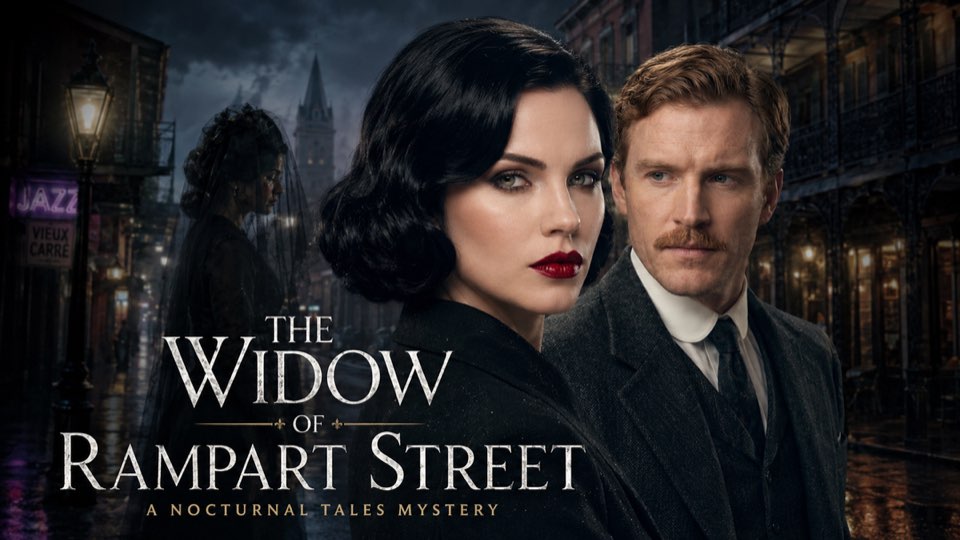
New Orleans does not sleep — it sweats. When the newspapers announce that Mrs. Alma Lafitte has buried a second wealthy husband before the age of thirty, the whole city whispers the word it dares not print: murderess.
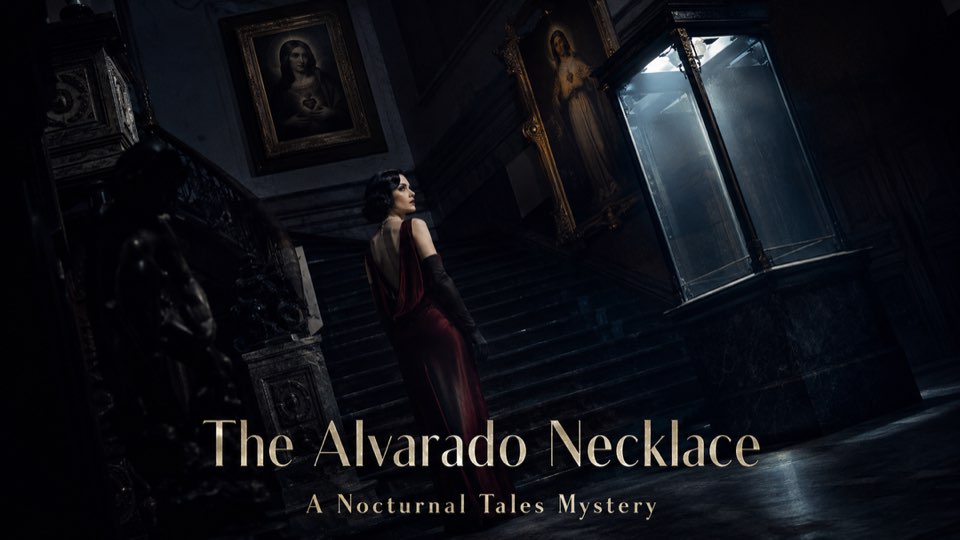
In a white house in Palermo behind iron gates and jacaranda trees, two thieves posing as a married French couple accept a dinner invitation from a wealthy Argentine widow who wears at her throat a necklace of diamonds and sapphires said to have belonged to a Russian grand duchess — they have come to steal it, but before the fish course is cleared the necklace vanishes from the hostess's throat without a hand being raised and a note appears on a silver tray, turning the evening from a planned robbery into a locked-room puzzle involving a bitter ex-lover from one thief's past, a lovesick colonel manipulated by charm, a desperate daughter already stealing from her own mother, and a midnight trail through the backstreets of Buenos Aires to a shuttered restaurant above a gaming house; The Alvarado Necklace is an original Golden Age–style mystery about thieves forced to become detectives by another thief's bad manners — and the unsettling discovery that solving a crime can be as dangerous a habit as committing one.
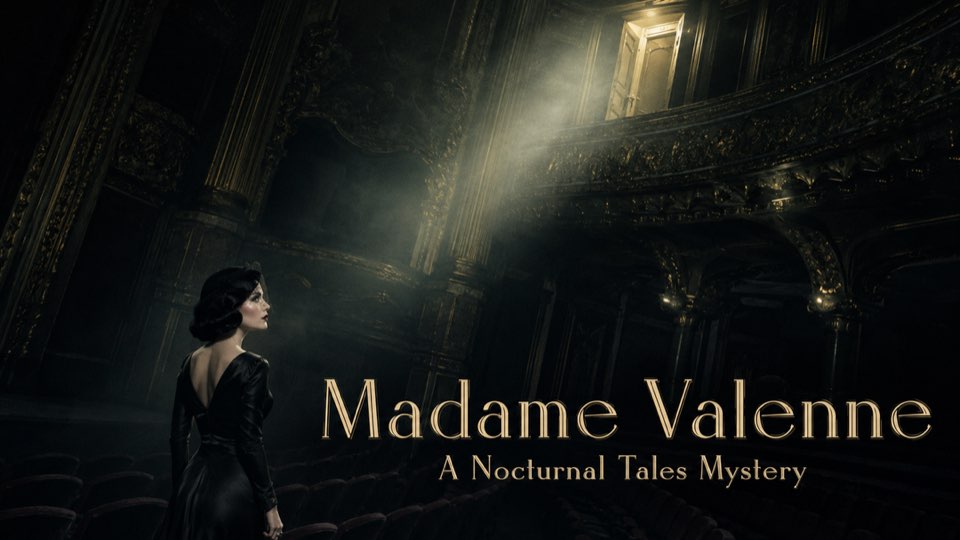
Paris, before Hastings, before Chicago, before any of it: a woman arrives at the Gare du Nord with one suitcase, three false names, and several thousand pounds' worth of stolen jewellery sewn beneath the lining — by the time she reaches the Hôtel Saint-James, Veronica Lakewood no longer exists and in her place stands Madame Valenne, widow, traveller, no forwarding address; in a hotel salon near the Parc Monceau she meets the people who will shape the next years of her life — Dolores Vega, a Cuban singer with a mended green dress and a lover too honest for Paris; Armand Séguret, a melancholy thief watching from the fireplace; and Emilio Vargas, dark, elegant, and dangerous, a man who looks at women as if they were jewels temporarily misplaced; when a midnight knock draws her into a world of stolen papers, opera boxes, hidden curtains, and a powerful woman whose missing hour holds the key to everything, what unfolds is the story Veronica never told anyone — the Paris chapter that made her who she became and the one she spent years trying to forget; Madame Valenne is an original Golden Age–style mystery about reinvention, survival, and the discovery that the most dangerous thing a woman on the run can do is stop running long enough to care about someone.
Chicago in the 1930s: a wealthy English widow walks into police headquarters and asks what it would cost to report a murder before it happened — her own; Mrs.
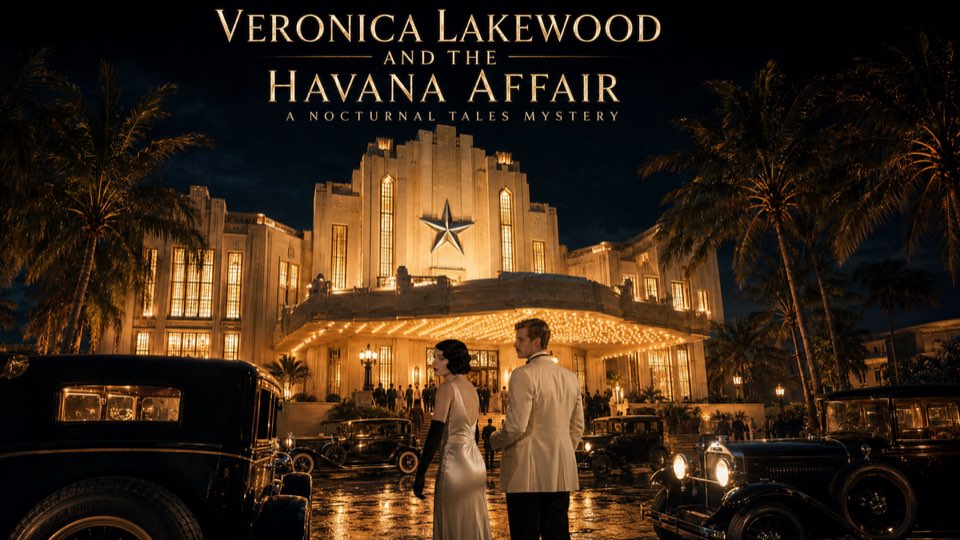
Havana in the 1930s: a white Art Deco casino blazing with light, American millionaires in cream dinner jackets, Cuban officials with diamond pins, and upstairs behind a locked mahogany door a beautiful young heir lies dead with a knife wound below the heart — Julian Ashcroft, son of a shipping magnate, has been stabbed during a private card game in a room locked from the inside with only his father and his father's partner present, no weapon, no witness, and no explanation; as Veronica Lakewood and Captain Hastings follow a black sequin that belonged to no one's gown, a glove scented with orange blossom on a service stair, a private ledger of blackmail now missing, and a Cuban singer whose silence means more than her song, what begins as a locked-room puzzle becomes deeply personal when Veronica's own name appears in the dead man's book and the secrets of a Paris nightclub she thought she'd buried rise through the floorboards of a Havana casino; The Casino Estrella is an original Golden Age–style mystery about old debts, new cruelty, and the discovery that in Havana every crime arrives already wearing a disguise and the most dangerous secrets belong to the people who got out.
Chicago, 1930s. The notebook marked PART ONE has been opened — and Alice Mercer's small, careful handwriting tells a story the police never heard while she was alive. Moved dresses.
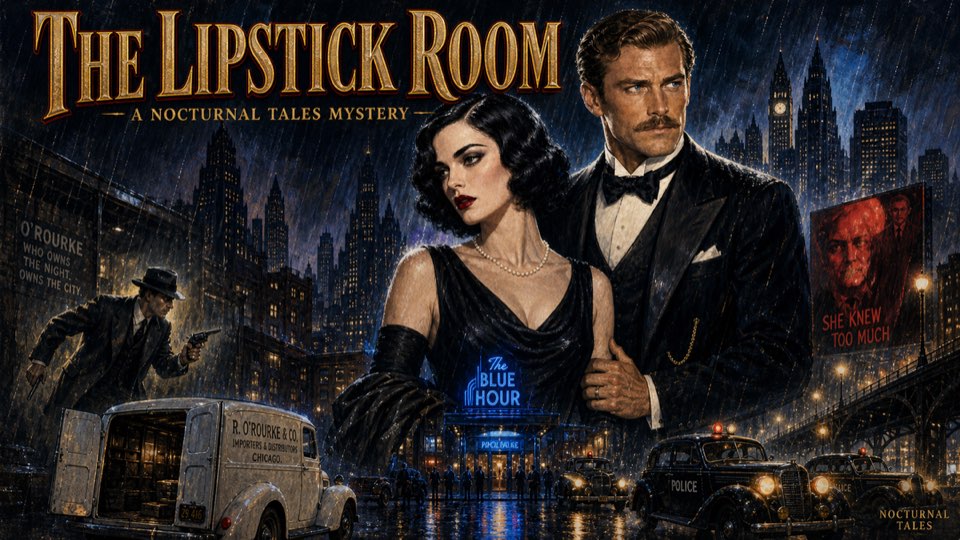
Chicago, 1930s: when nightclub singer Veronica Lakewood returns to her hotel after midnight to find Detective O'Rourke waiting with the news that a young typist named Alice Mercer has been found strangled in her locked room — the words VERA LANE WILL UNDERSTAND written on the dead girl's mirror in lipstick, and a card already waiting at the club reading YOU SING LIKE THE DOOR IS LOCKED.
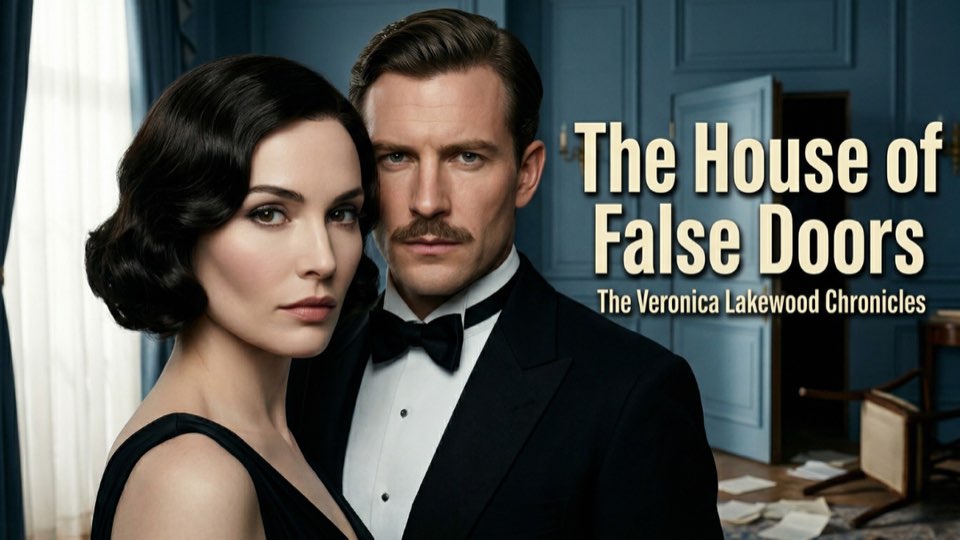
Chicago in the late Jazz Age: a wealthy widow on Prairie Avenue fears she is being watched inside her own immaculate home, and a “respectable” adviser appears at the right moments, speaks with soothing certainty, and knows the house too well; when a hidden panel is discovered behind linen shelves and an allegedly empty house next door proves inconveniently occupied, the investigation turns from simple intimidation into architecture—false doors, rehearsed timings, and a scheme that relies on society’s habit of trusting the confident voice; The House of False Doors is an original Golden Age–style mystery about persuasion, class camouflage, and the moment a victim realises the trap was built into the walls.
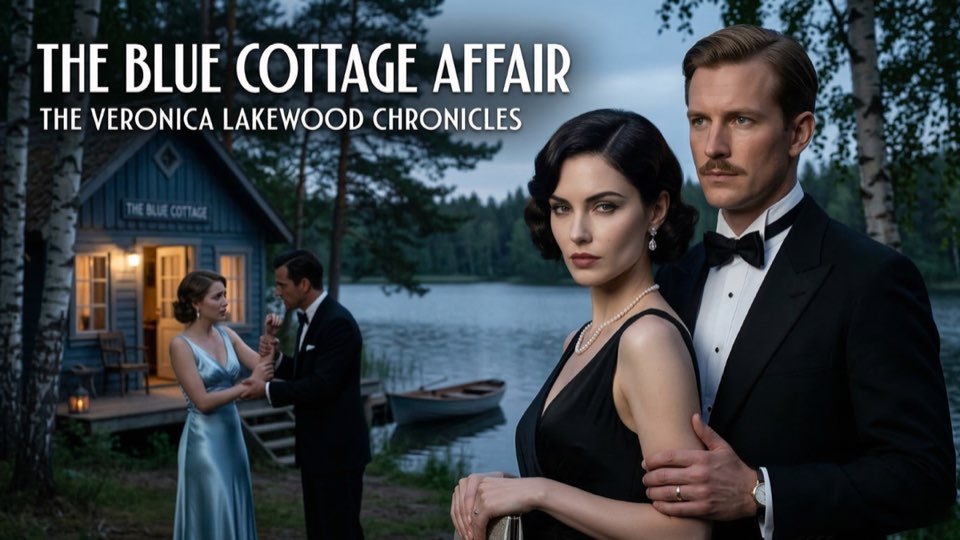
A “restful” three-day escape to Briar Glen House curdles into scandal when a hunted young widow knocks at the wrong window after midnight, insisting that the man posing as her brother is controlling her money, her movements, and a missing letter that could ruin him; as secret meetings multiply around a blue cottage and a lake-side boat-house, a missing shoe, a dropped compact, and a third man on the path turn a romantic quarrel into a carefully staged disturbance where every guest is playing a part and the hotel’s sharp-eyed hostess refuses to let gossip write the verdict; inspired by historical crime of its era while remaining entirely fictional, The Blue Cottage Affair is an original Golden Age–style mystery about coercion, inheritance, and the dangerous ease with which a “helpful” man becomes a jailer.
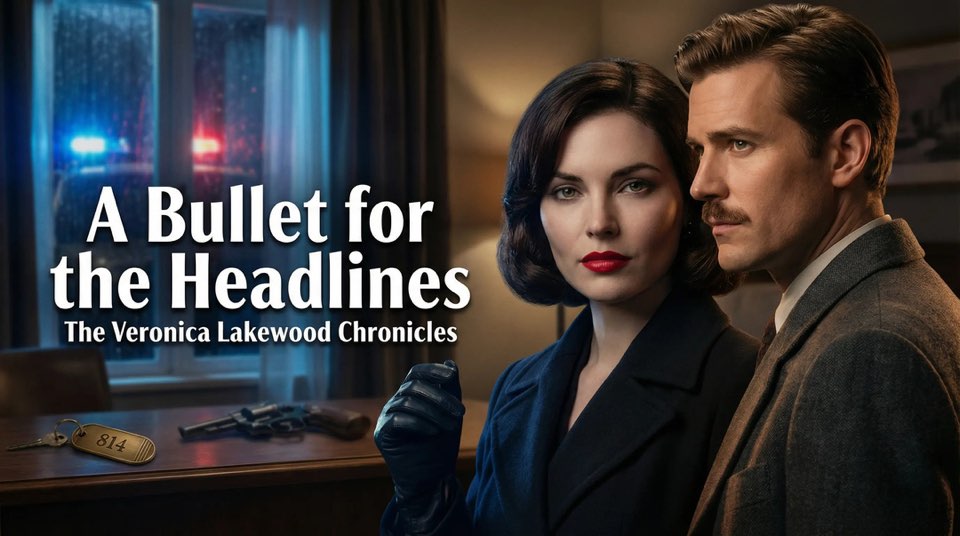
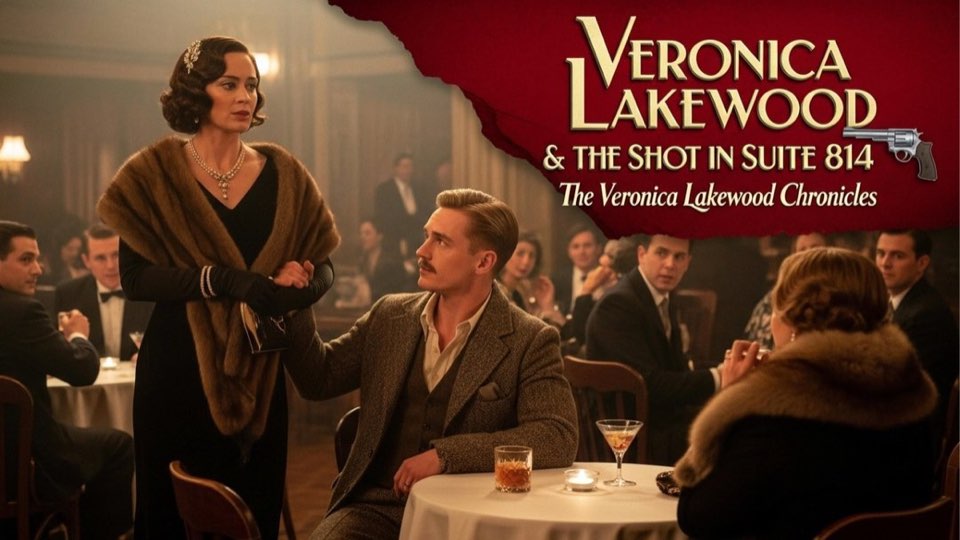
Chicago in winter does not lie—it exposes. When a young woman is found dead in a hotel room marked with the number 814, the crime is quickly framed as scandal and spectacle. But for Veronica Lakewood, the number is not a coincidence—it is a signature meant to turn her into a public villain.
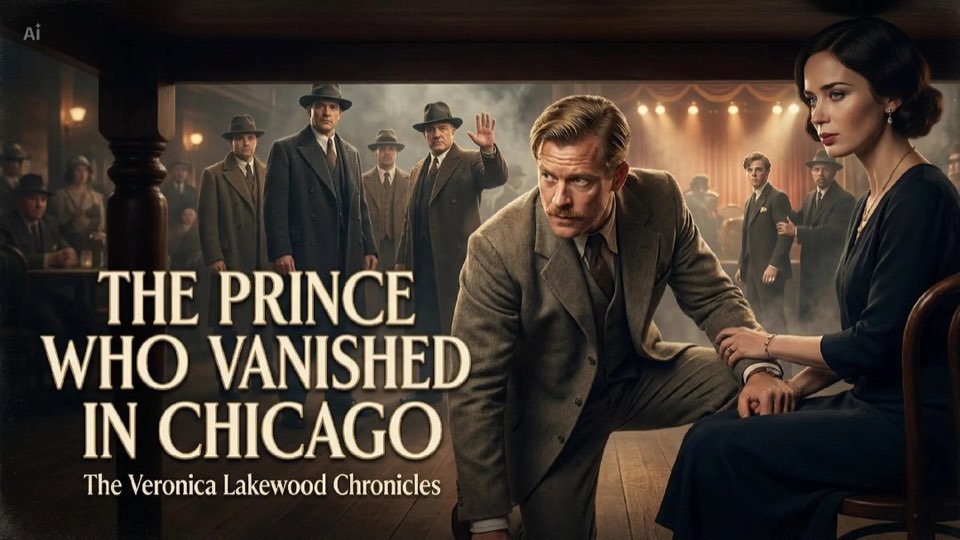
Chicago was supposed to be a quiet evening. A famous jazz bar, good music, no work—just Veronica Lakewood and Captain Hastings attempting something dangerously close to normal. Then the door opens with purpose.
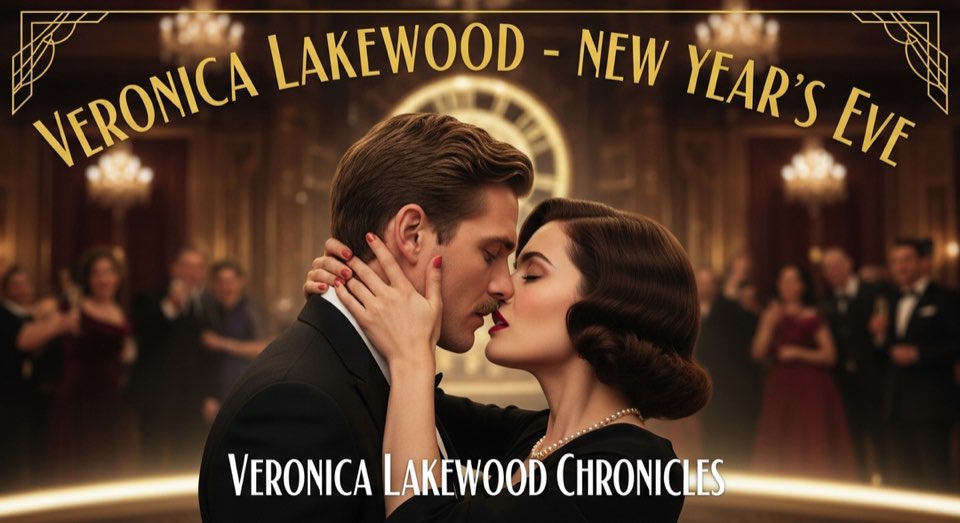
DESCRIPTION Chicago was counting down to midnight. Champagne flowed. Music rose. And beneath the glitter of wealth and confidence, something else was counting too.
A midnight shooting in a luxury hotel. A baseball idol who survives when he should have died. And a showgirl who fires twice — and still misses the truth.
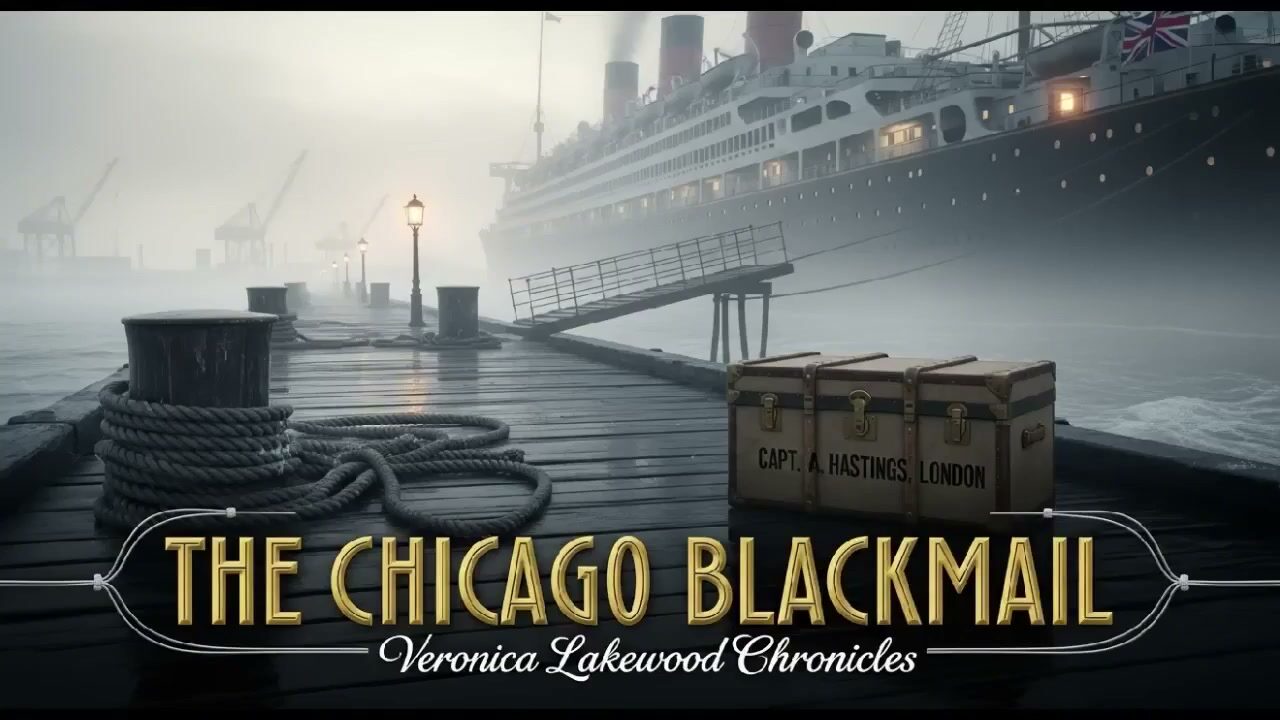
A letter from America, a dead blackmailer in a luxury Chicago hotel, and Veronica Lakewood—very much alive—asking Captain Hastings to cross the Atlantic.