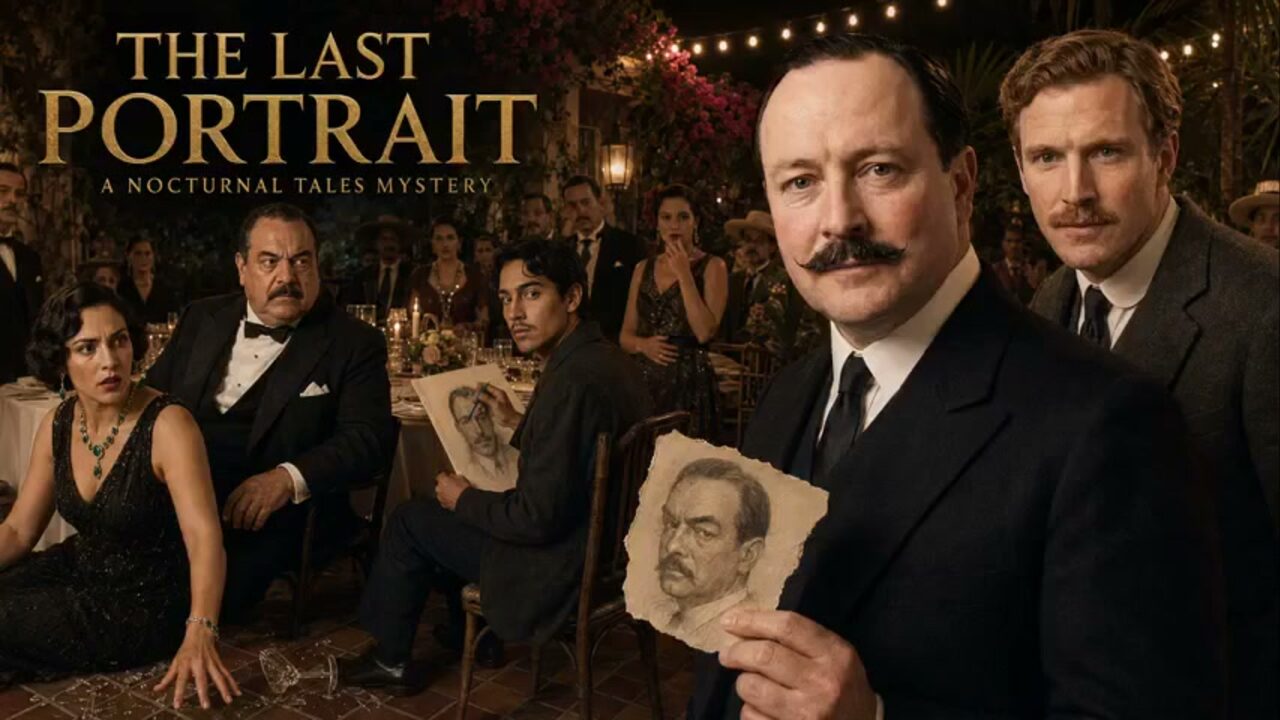
Rome, June 1930s: when fifteen-year-old Caterina Bernardi — dutiful, devout, and entirely without enemies — vanishes after her flute lesson near Sant'Apollinare, leaving behind only a scratched-out name in her notebook and a telephone call home that her sister knew was not entirely free, a brilliant Belgian detective finds himself navigating a city where the Vatican's closed walls and Roman society's overlapping circles conspire to hide an ordinary wickedness behind an extraordinary spectacle; anonymous callers speak of "protection" and "serious matters," journalists begin feeding political rumours, an elegant contessa lies about her alibi, and a woman who knew too much is found dead of a convenient overdose — all of it a staircase of manufactured scandal designed by a cold-eyed fixer to lift one frightened girl so high into the theatre of state affairs that no one thinks to inspect the cellar; the real crime is not espionage, not ideology, but the commonest ugliness of all — a circle of influence that recruits the innocent by exploiting obedience, money, and trust in respectable faces; inspired by the eternal city's layered secrets while remaining entirely fictional, The Vatican Disappearance is an original Golden Age-style mystery about innocence used, truth buried in ceremony, and the theft of simplicity.